
CO2 levels in the atmosphere have risen to record levels, and Europe has been sweltering under a heat dome. But climate scientist Mark Lynas caused a stir in the environmental movement by suggesting that nuclear war is now a bigger threat than our changing climate.
Nuclear war could indeed lead to the extinction of humankind. Mark said, “There are no adaptation options for nuclear war. “Nuclear winter will kill virtually the entire human population. And there’s nothing you can do to prepare, and there’s nothing you can do to adapt when it happens, because it happens over the space of hours.”
“It is a vastly more catastrophic, existential risk than climate change,” he said.
There are 4,000 nuclear weapons poised for a first strike across the northern hemisphere, enough firepower to kill as many as 700 million people from blasts and burning alone. The explosions and fires would loft enough soot into the stratosphere to cast an impenetrable shadow over the globe. No light means no photosynthesis, the basis of planetary foodwebs. No heat means that the surface of the Earth would plunge into an icy, years-long winter.
India and Pakistan both have nuclear weapons and are in a state of constant tension. Russia has invaded Ukraine and threatens nuclear war. Israel has nuclear weapons. This country, which is starving the population of Gaza and regularly bombs neighbouring countries, does not let the International Atomic Energy Agency (IAEA) inspect its nuclear facilities.
Iran had opened up its facilities to the IAEA and was negotiating when America decided to bomb its nuclear facilities. This appears to have been carried out without a second thought as to what effect bombing nuclear sites could have on the environment or the health of Iranian and other Middle Eastern people.
We seem to have forgotten the dangers of both nuclear power and nuclear weapons.
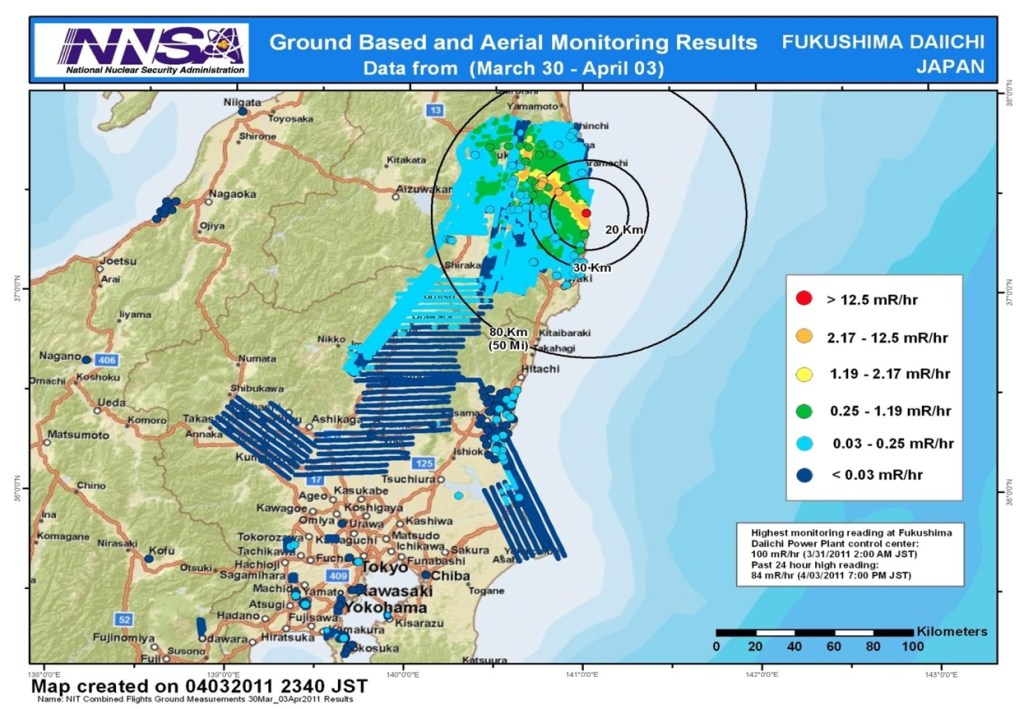
Mayor Oliver Coppard is trying to bring the manufacture of small nuclear reactors to South Yorkshire. The Starmer Government are ignoring the past history of nuclear accidents. Windscale, Three Mile Island, Chernobyl and Fukushima should all make us think very carefully before expanding our civil nuclear power. The Fukushima nuclear disaster in 2011 was triggered by a tsunami that flooded and damaged the 3 active reactors at the Fukushima Daiichi nuclear power plant. Loss of backup electrical power led to overheating, meltdowns, and evacuations. Radioactive isotopes were released into the air and sea, resulting in Japan implementing a 30km exclusion zone and evacuating nearly 50,000 people. This radiation spread around the world. We will never know how many cancer deaths it was responsible for.
Accidents are only half the problem. The radioactive waste that nuclear reactors produce needs to be stored safely for many generations. How can this be guaranteed?
Nuclear Power stations are usually located on the coast to make cooling easy. But as climate change heats up, the oceans are rising. How many will be subject to flooding in the future?
Nuclear weapons have only been used twice in anger, completely destroying the cities of Hiroshima and Nagasaki in Japan at the end of the Second World War in 1945.
The bombing killed an estimated 140,000 people in Hiroshima and 74,000 in Nagasaki. Many of the survivors faced leukaemia or cancer. If a nuclear weapon were to be detonated over a city today, first responders – hospitals, firemen, aid organisations – would simply be unable to help. The extent of the damage in Hiroshima and Nagasaki made it nearly impossible to provide aid. In Hiroshima 90 per cent of physicians and nurses were killed or injured; 42 of 45 hospitals were rendered non-functional; and 70 per cent of victims had combined injuries, including, in most cases, severe burns.
All the dedicated burn beds around the world would be insufficient to care for the survivors of a single nuclear bomb on any city.
The UK is to substantially expand its nuclear weapons by buying a squadron of American-made fighter jets that are capable of delivering US tactical warheads, which are likely to be stored on British soil.
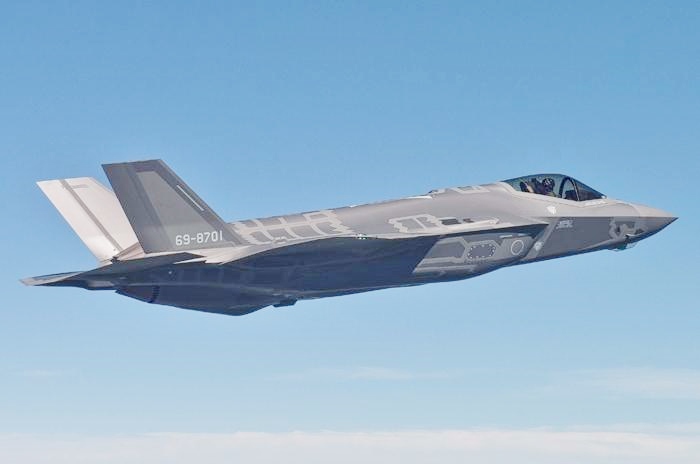
The UK will buy 12 F-35A jets, which are capable of carrying conventional munitions and also the US B61-12 gravity bomb, a variant of which has the explosive power of more than three times the weapon dropped on Hiroshima. F-35As cost $82.5 million each, so about a billion dollars for 12, roughly the cost of a new hospital. This is before the cost of the fuel to fly them and the bombs. Labour politicians happy with this should watch the Sheffield-based film Threads that envisages a nuclear bomb exploding in our city centre and its after-effects.
Britain is a signatory to the 1968 Nuclear Non-Proliferation Treaty (NPT), which commits each of the ‘official’ nuclear states (Britain, United States, Russia, China and France) to eliminate their nuclear arsenal, while the other 185 signatories commit to remaining nuclear-weapon free. We are clearly flouting this agreement as we seek to increase our nuclear weapons capability. We can’t complain about other countries developing nuclear weapons when we are expanding ours.
Both threats, climate catastrophe and nuclear war, are existential and need to be urgently addressed by our leaders.
Find out more on the CND website or Sheffield Creative Action for Peace on Facebook
Discover more from Tell the Truth Sheffield
Subscribe to get the latest posts sent to your email.
