
Sheffield Energy Works, a local Community Benefit Society, is delivering community-owned clean energy projects right here in South Yorkshire.
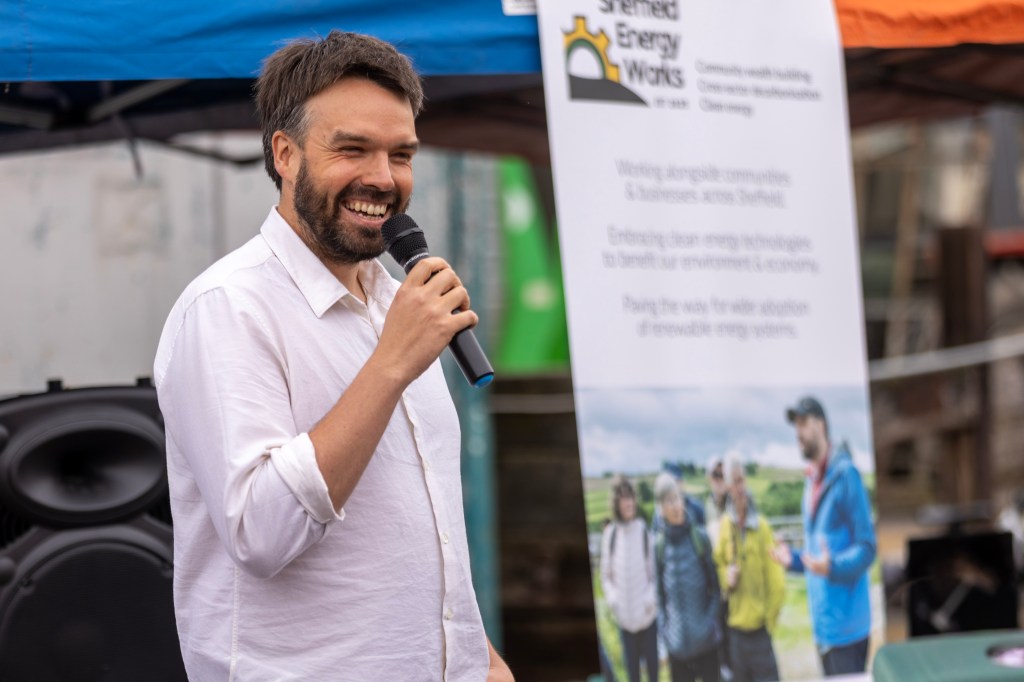
Speaking about their flagship energy project at Our Cow Molly family-owned dairy and ice cream producer, director Jonathan Hind says,
“The clean energy transition should be owned by the communities it serves. That’s why we’ve launched reMooable Energy 2026, giving local people the chance to play a part in local energy generation, powering local food production.”
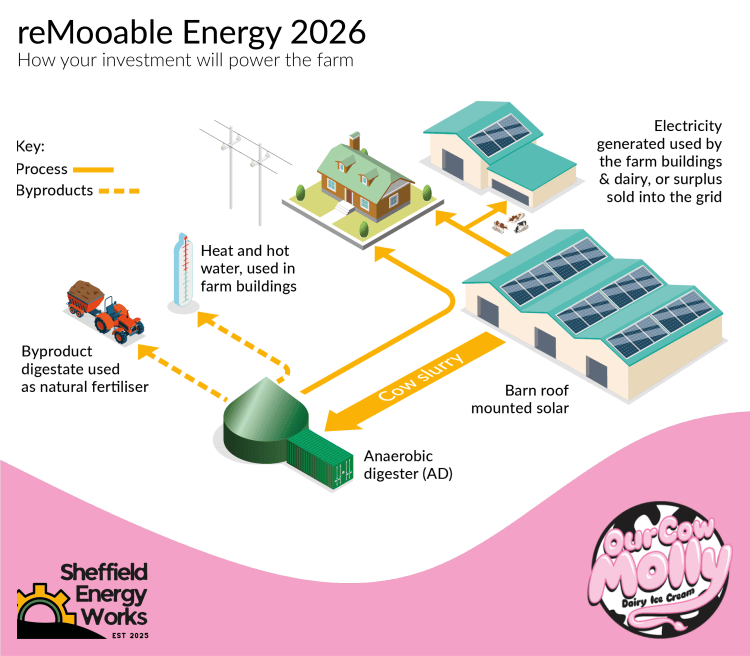
Sheffield Energy Works is selling shares to local people – whether individuals or businesses. We’ll use these shares to buy the renewable energy technology for the farm – an anaerobic digester and a roof-mounted solar power array. These will turn cow muck and sunshine into hot water and electricity, which will be sold to the farm, meeting ~90% of Our Cow Molly’s daily energy needs. Profits will be used to repay community investors, ensuring money spent on energy goes back to local people and supports our local community.
The farm benefits too! Grid instability and volatile fuel prices are expected to worsen over the coming decades, as we experience the increasing effects of climate change and political unrest. This project will give Our Cow Molly a stable energy supply and prices for the next 25 years.
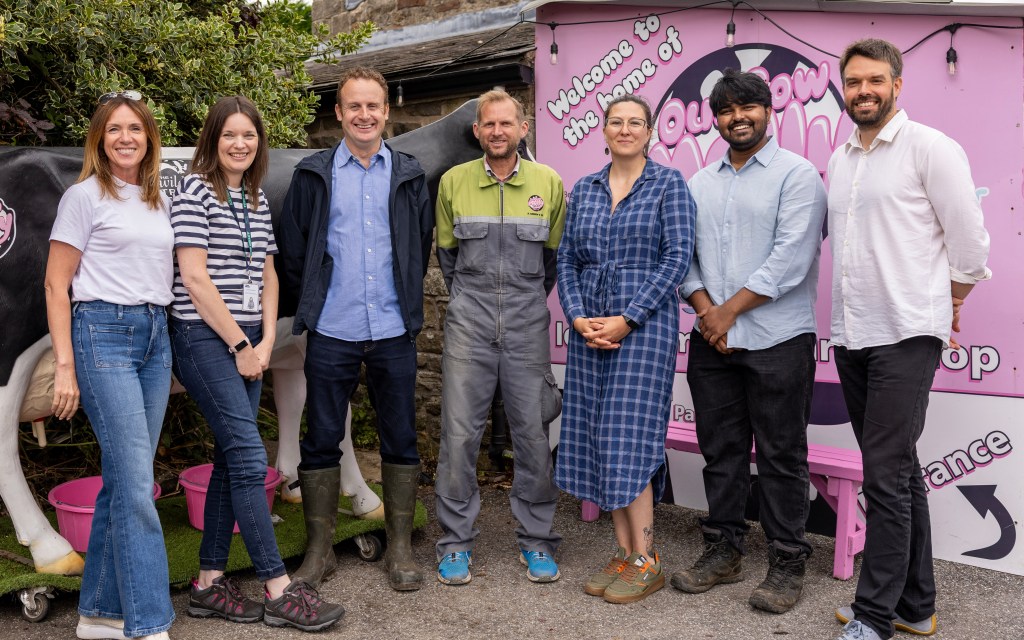
So how do you become a part of this?
reMooable Energy 2026, the Community Share Offer, is open to local investors now, meaning residents across the region can invest from £5-£60,000 in our local energy transition until the 20th of October. It’s a similar interest rate to a savings account, at ~4%, but knowing that your money is supporting clean energy and local economies.
When you invest, you become a member of the Community Benefit Society, meaning you get a vote in how profits are invested back into the community, and how future clean energy projects are delivered in the region.
Project Developer Lizzie Stygall says,
“We know that people are worried and want to act on climate change. This is something you can do today to make a tangible difference, knowing that it’ll benefit our region, our future generations, and a beloved third-generation family-run business. Local investment, local energy generation, local food production.”
To find out more about the project and to invest, visit www.sheffieldenergy.works/remooable
Lizzie & Jonathan are conducting a series of community talks and webinars this autumn. Visit the website for more information.
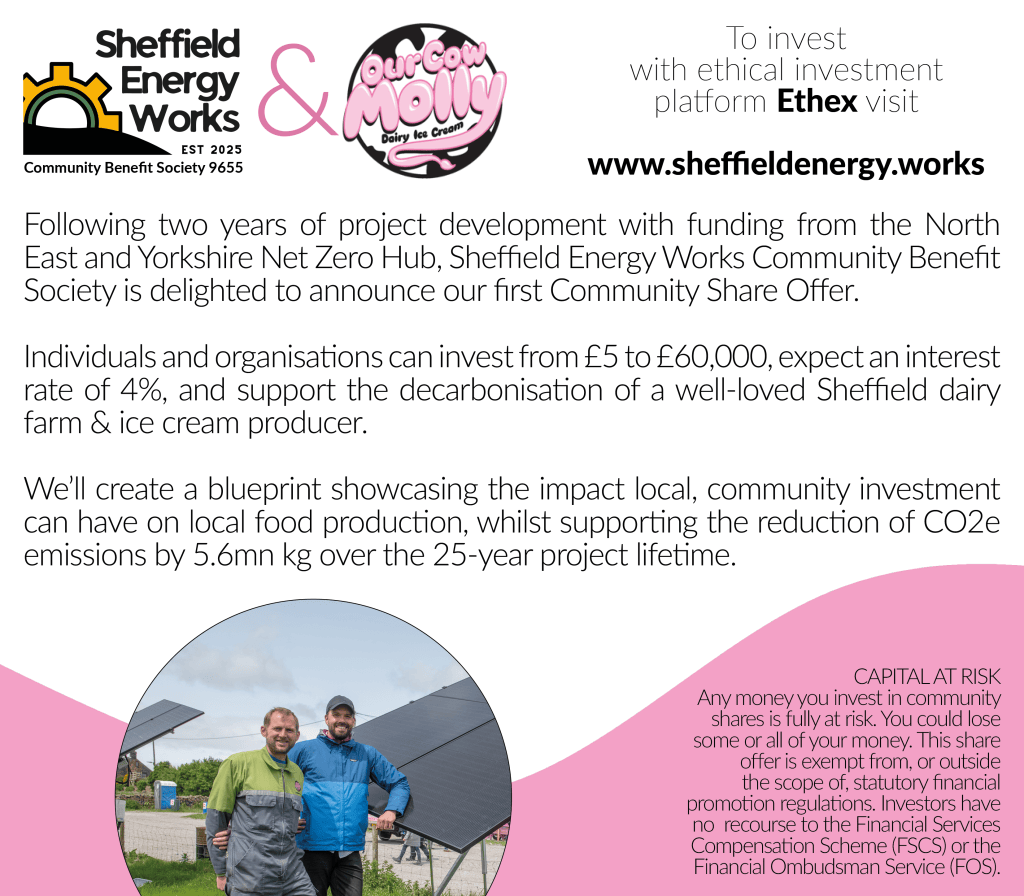
The above article will be appearing in the Sheffield Telegraph, but I thought Tell the Truth Sheffield readers would appreciate some more in-depth analysis, so I asked Lizzie and Lakshmi some further questions, and here are the replies.
1. How is Our Cow Molly boosting biodiversity on the farm?
Our Cow Molly is already working with the Sheffield & Rotherham Wildlife Trust on embedding regenerative farming practices, focusing on helping nature thrive and creating healthier soils.
2. Have you been able to reduce inputs of fertiliser and pesticides?
The resulting digestate from the anaerobic digester is a nutrient-dense fertiliser, which can replace the need for synthetic fertilisers. We’re expecting the farm to generate ~5000 tonnes of digestate on the site each year. Synthetic fertiliser is incredibly harmful to produce, with an estimated global footprint of 450million tonnes of CO2 per year, not including transportation.
3. Methane is a very powerful greenhouse gas that has a short-term warming effect that is 80 to 86 times stronger than carbon dioxide per unit of mass over a 20-year period. Unfortunately, cows burp large quantities of this gas. Are there ways this can be reduced or captured?
Methane from grazing dairy cattle is part of a natural biogenic carbon cycle, where carbon absorbed by grass is converted to methane and ultimately returned to the atmosphere for reuse by plants. While technologies to capture methane directly from livestock are being explored, many are currently impractical for grazing systems and may raise animal welfare considerations. As a result, greater emphasis is often placed on improving efficiency and capturing methane from farm waste streams, where it can be utilised as a renewable energy source to displace fossil fuel use.
4. When the energy project is complete, how else does Our Cow Molly plan to boost its regenerative farming?
The operation of the farm itself is not within the scope of this project. However, through collaboration with partners such as the University of Sheffield (UoS), we are assessing and demonstrating the wider sustainability benefits associated with the project. This includes understanding how project outcomes may support improvements in environmental performance, resource efficiency and the long-term sustainability of farm businesses, helping to evidence the broader value and impact of the project.
5. Have any other forms of renewable energy production been considered at the farm?
Yes! We’re already working on Phase 2, which will explore wind and ground-mounted solar technology to produce hydrogen, which again will be owned by community investors.
Sheffield Energy Works is aiming to raise £600,000 from the Community Share Offer. On going to press, they have, so far, raised £132,990, 22% of the target. Find out more about investing here. The closing date is 20th October 2026.
Discover more from Tell the Truth Sheffield
Subscribe to get the latest posts sent to your email.
