by Dr Karine Hohr

World Water Day on 22nd March is designated to highlight the importance of fresh water and sustainable management of fresh water resources. Clean water, like clean air and clean soil, should be a basic human right. A quarter of people globally don’t have access to clean water, but what is the situation in the UK?
The recently aired Channel 4 British docudrama ‘Dirty Business’ series, about the state of the British water and sewage system, charts the catastrophic outcomes of privatising water utilities in 1989. Since then, these private water companies have utterly fleeced the public. Instead of maintaining water and sewage systems infrastructure (for which the Environment Agency had laughingly instituted so-called ‘self-monitoring’), most of the profits have been carved up and distributed to shareholders, whilst at the same time, asset-stripping the company. Water companies are losing over a trillion litres of water a year to leaky pipes. Sewage has been dumped in rivers, lakes and seas for nearly four million hours, damaging human health, biodiversity and aquatic life. These companies have been convicted of over 1200 criminal acts, but none have had their licence to operate revoked, and despite dumping megatonnes of s**t in our water, no CEO’s of these companies have gone to jail.
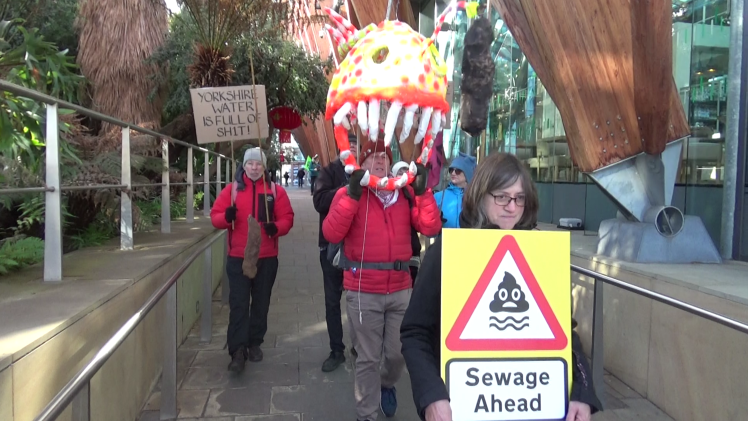
People across the country have witnessed the horrors of their rivers and waterways being polluted and observed that where there were once fish, the fish stocks have disappeared, leading to the development of small local activist groups. ‘The Sewage Campaign Network’ are local community grassroot campaigners, working to save our rivers, lakes, and seas from sewage pollution. Locally formed Citizen Science Groups have developed monitoring of the pollution levels of their local river and collect data, so that what is observed can be backed up with numbers. This evidence is now collated by ‘CastCo’, who say they are unifying all the individual local campaigns, regulators, utilities, researchers, businesses and communities with the aim of faster action on pollution and clear accountability of the health of our Rivers.
The public has never been consulted on what happens with our water systems. There has to be a better way. Most believe that the water companies should be restructured and taken back into public ownership, allowing protection of both people and the Environment, with proper investment into infrastructure. Various business models proposed by ‘Surfers against Sewage’ include several variations of public ownership; details are on their website.
So how is this story playing out in Yorkshire?
Yorkshire Water paid hundreds of millions of pounds in dividends to the parent company (Kelda Group). Between financial years 2017-18 and 2023-24, total dividends paid from the profits were £522 million. Meanwhile, the company has stripped its assets and amassed £6 billion in debt. One third of our water bills goes on these dividends and servicing this debt. Moreover, our bills will rise by 6% next month.
In the Polluted Waters Report, over 77,000 sewage spills were recorded in Yorkshire in 2023. Last year, it was fined £700,000 for sewage spills. Meanwhile, since 2023, the Chief Executive, Nicola Shaw, has received £1.3 million in previously undisclosed pay, despite a ban on these payments passed last year.
On World Water Day, many local groups are holding community events to highlight the failings of the Government White Paper, “A New Vision for Water”, which many say is both a greenwash and a whitewash. In Sheffield, World Water events include Wild Swim & Water Films, part of the Sheffield Adventure Film Festival (https://shaff.co.uk/shaff26), as well as many other sports and outdoor films.
Sheffield is known as the city of Rivers because it was built along the confluence of 5 main rivers: the Don, Sheaf, Porterbrook, Rivelin and Loxley. In terms of local activist groups protecting rivers, in South Yorkshire, we have the RIver Don Project. This aims to bring back life to Sheffield’s nature-depleted rivers and their surrounding ecosystems. This multidisciplinary and collaborative initiative recognises that clean water is one of a triad of 3 basic human rights, along with clean air and clean soil. By recognising the Rights of Nature, it grants the Don personhood and so encourages local people to “care about the river” and its stewardship. It works on making the river’s complex ecosystems visible through data, mapping, and storytelling to inform better decision-making. Operating across several realms, including art, research and others, it aims “to model and demonstrate how restoring the river can address intersectional crises like climate change, biodiversity loss, and community health”.
People are welcome to get involved with the Project. https://www.theriverdon.org/.
Discover more from Tell the Truth Sheffield
Subscribe to get the latest posts sent to your email.
