
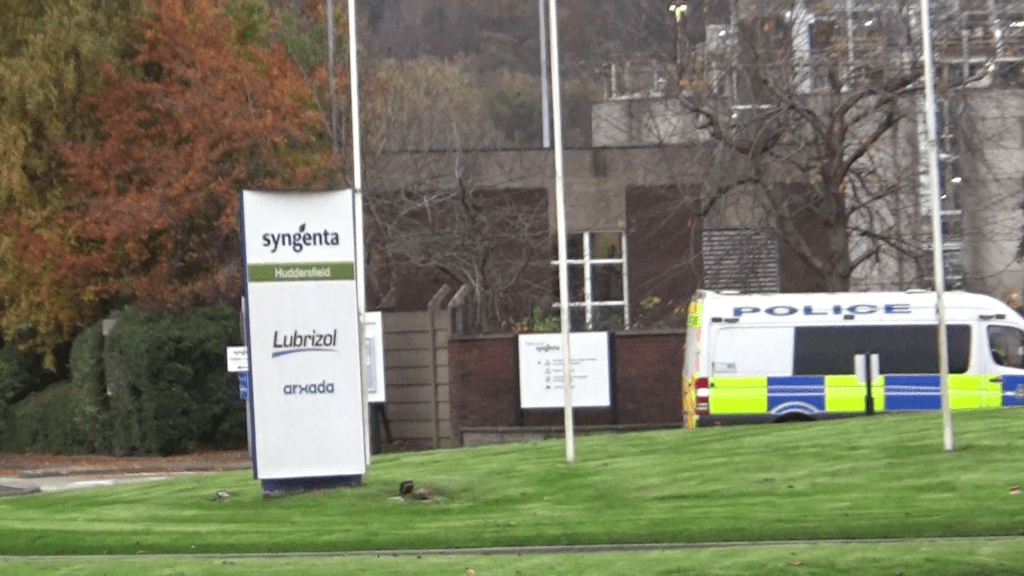
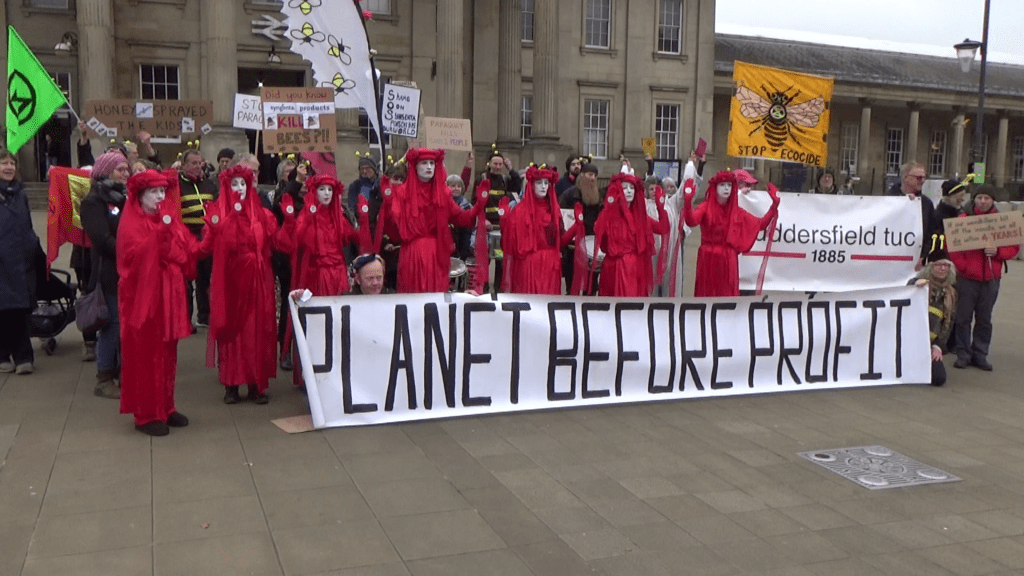
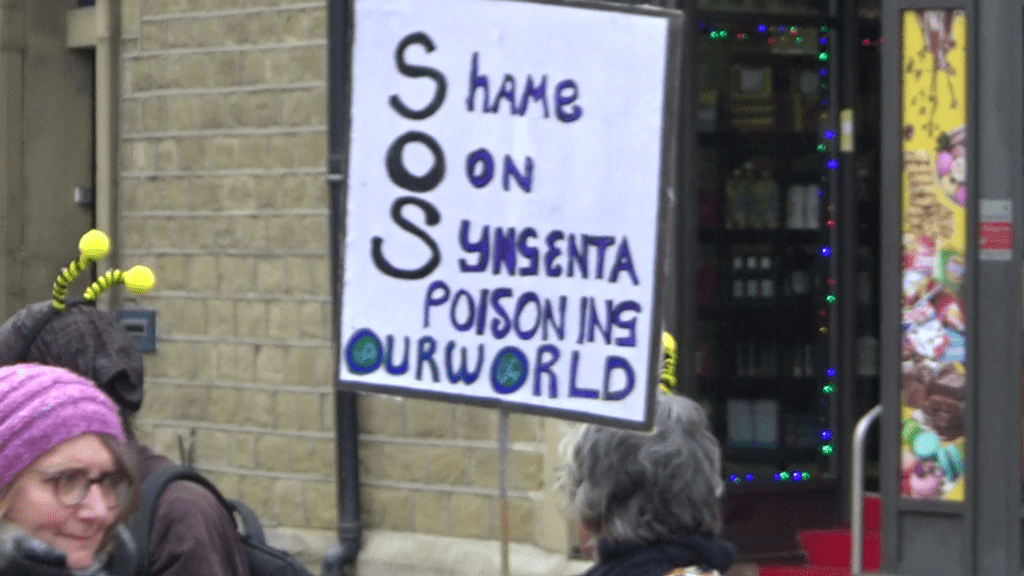
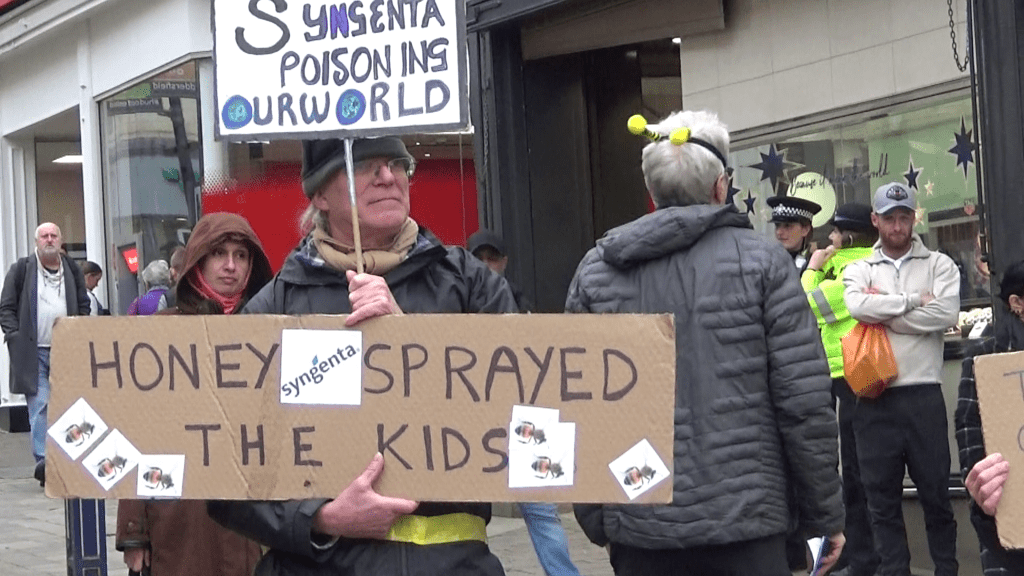
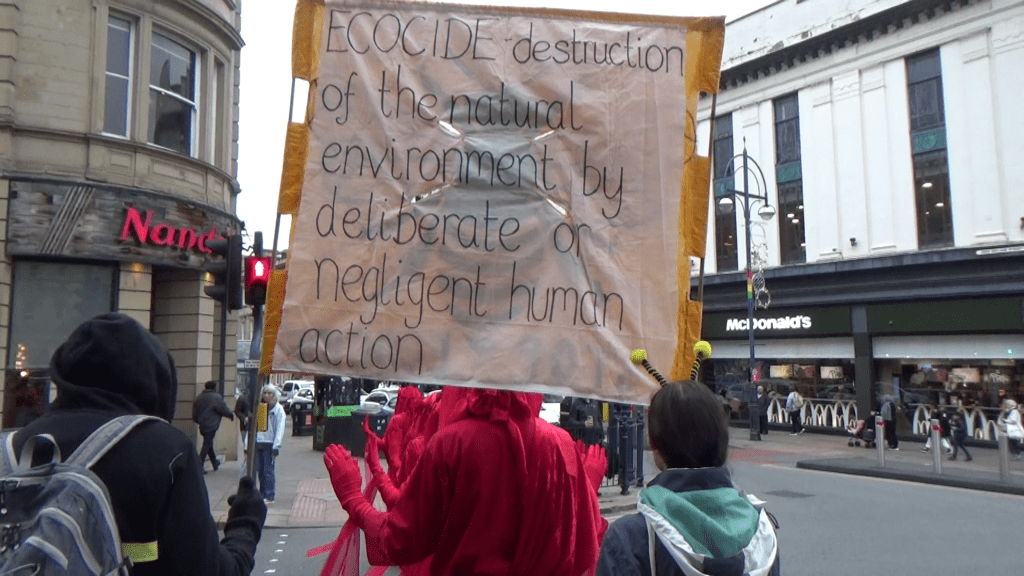
Activists from Extinction Rebellion, Friends of the Earth and other groups around the North of England, many from Sheffield, gathered in Huddersfield on Saturday, November 9th, to raise awareness about Syngenta’s shameful operations. The company exports dangerous pesticides banned for use in this country to other countries worldwide.
Campaigners visited three city centre locations, starting at St George’s Square.
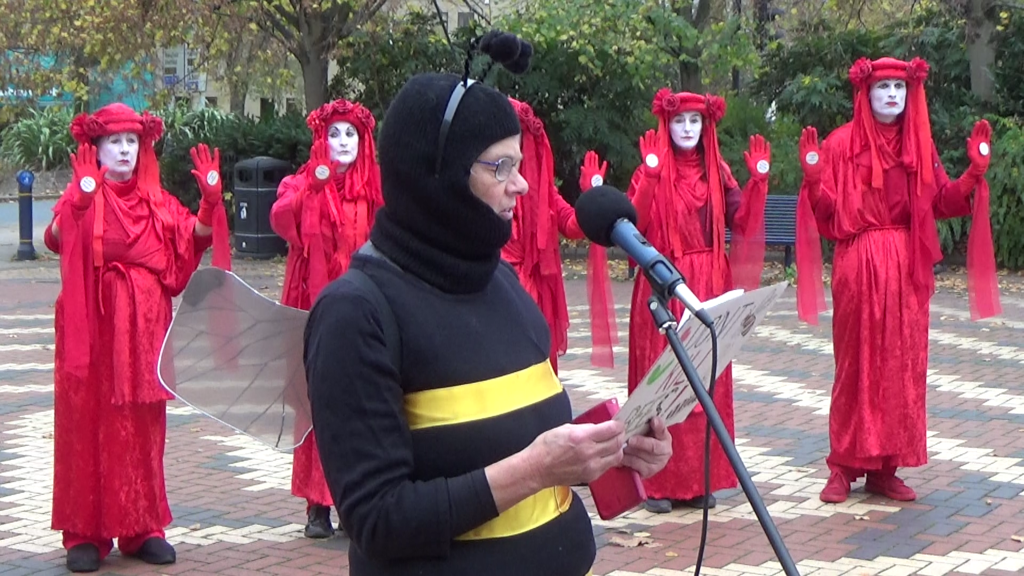
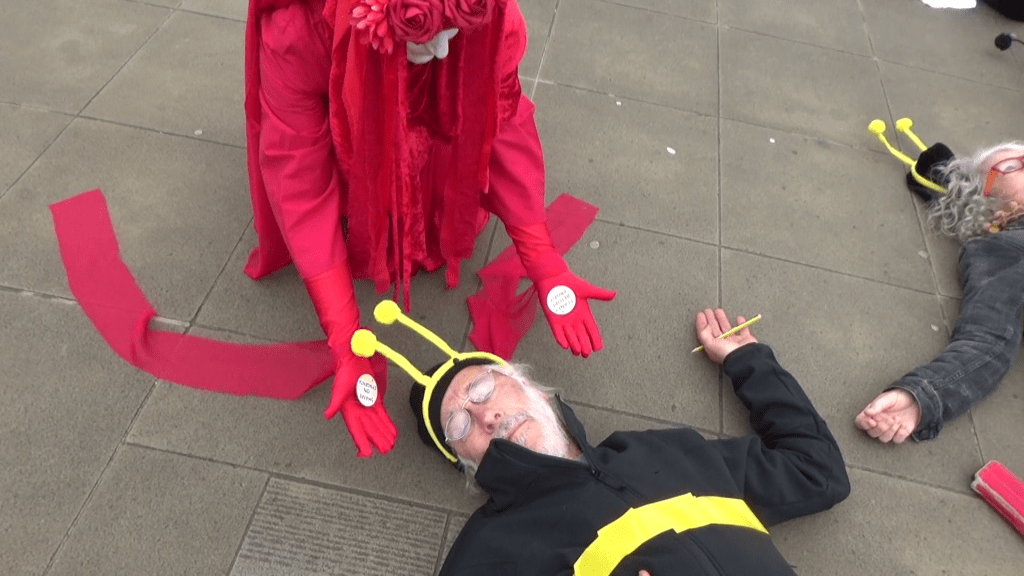
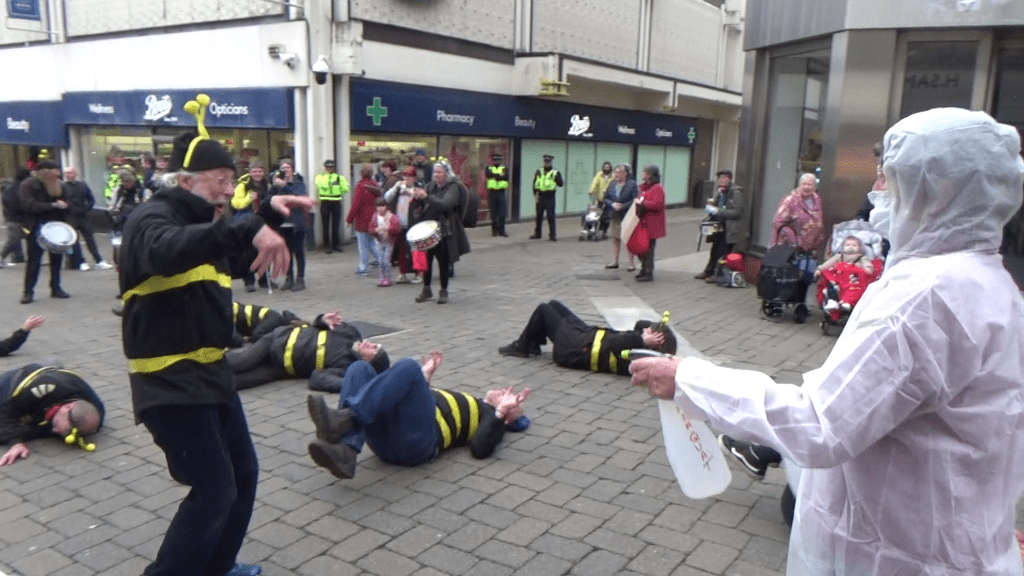
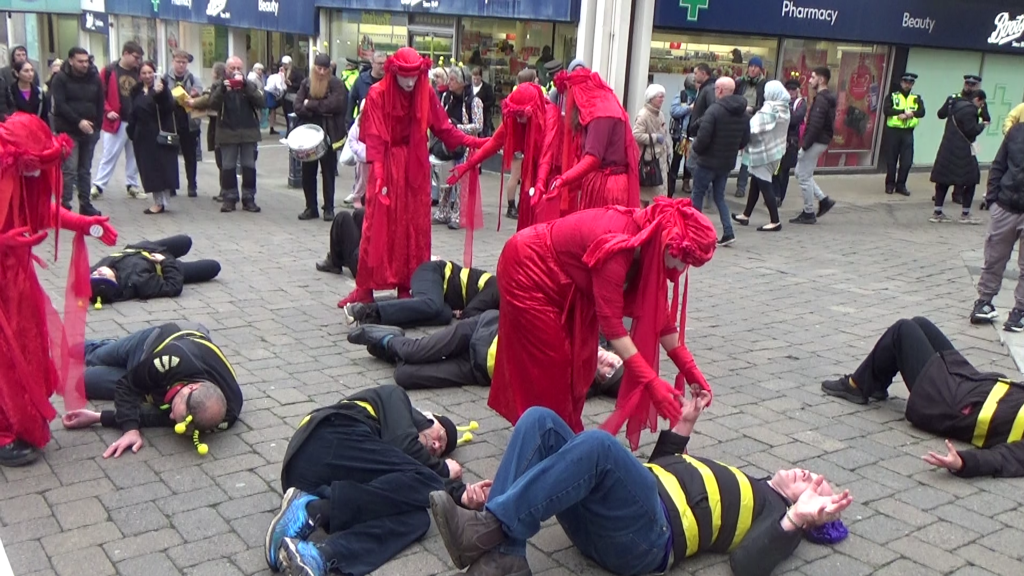
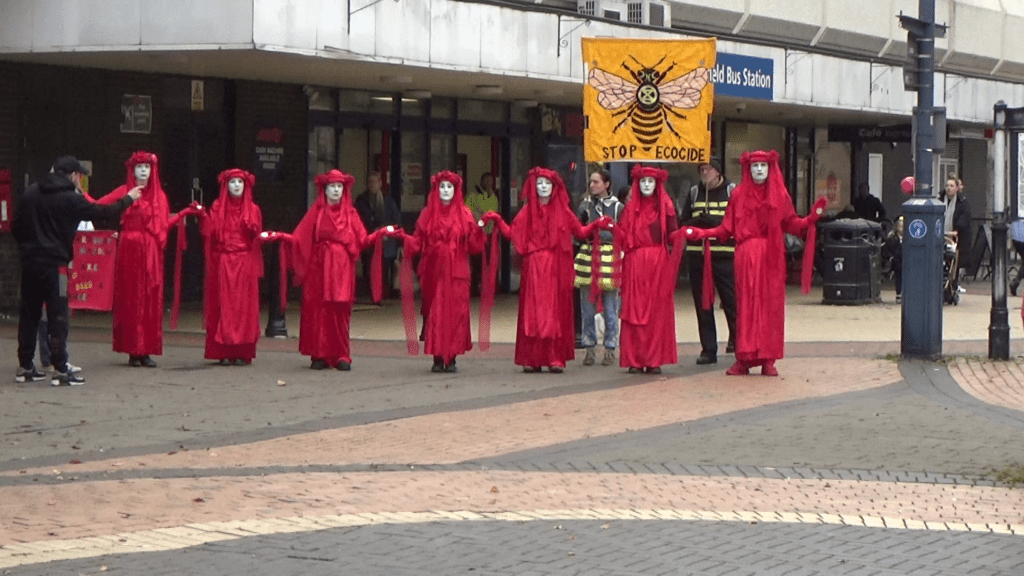
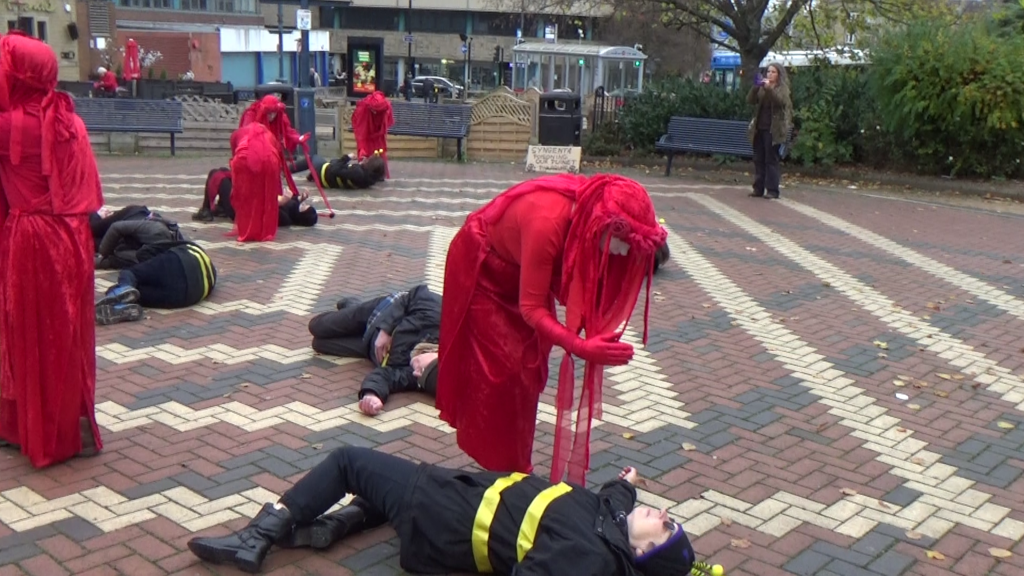
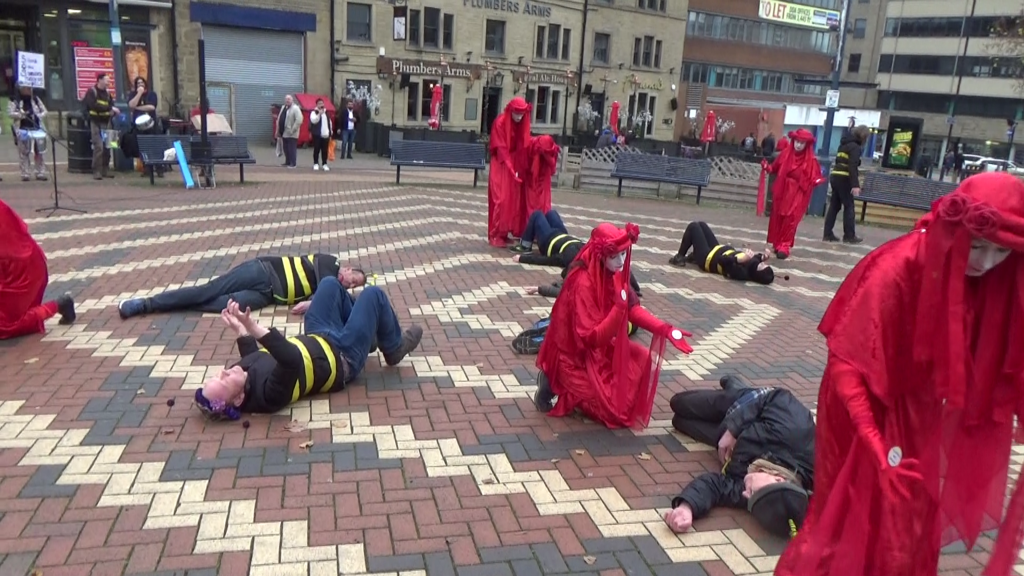
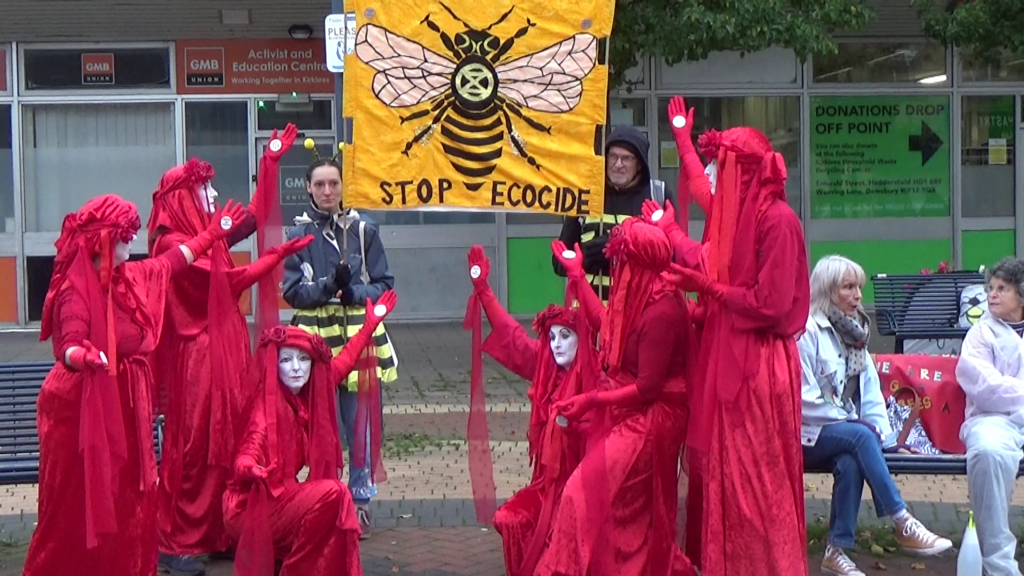
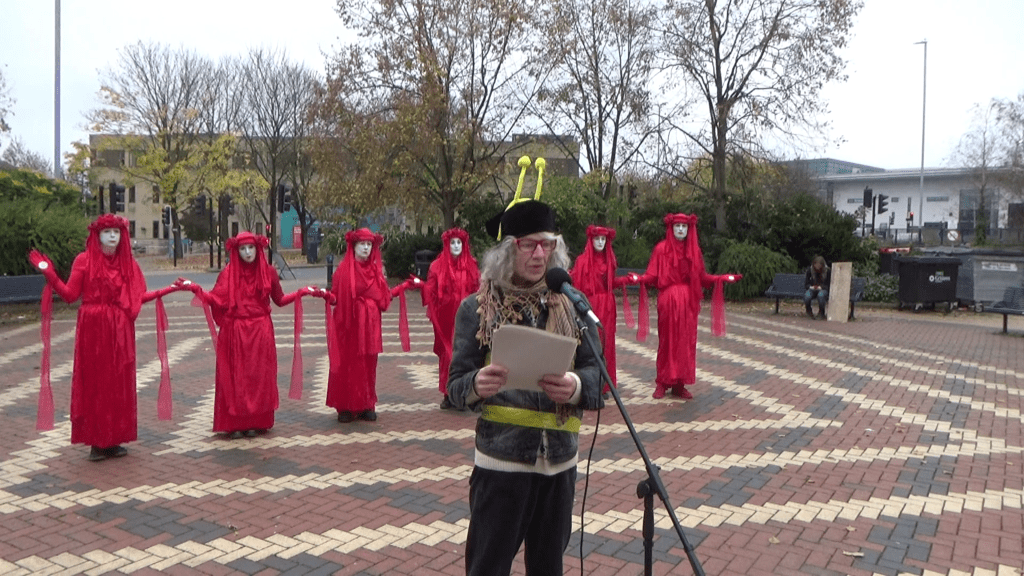
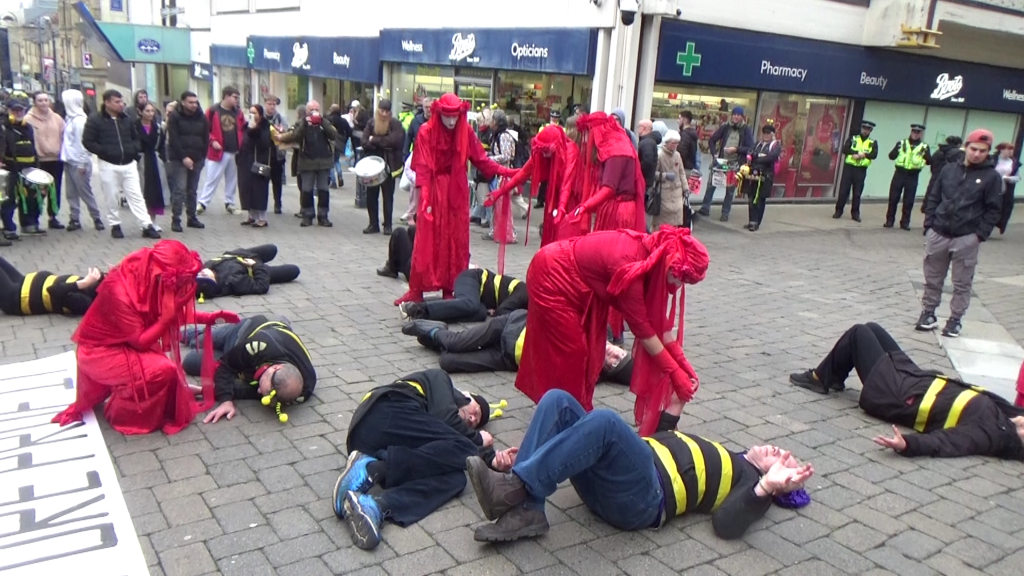
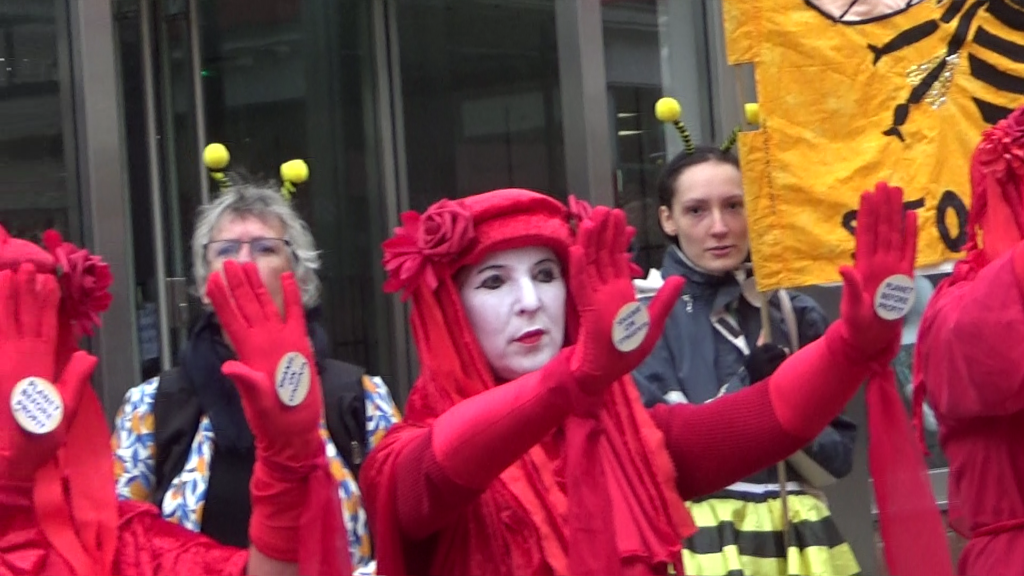
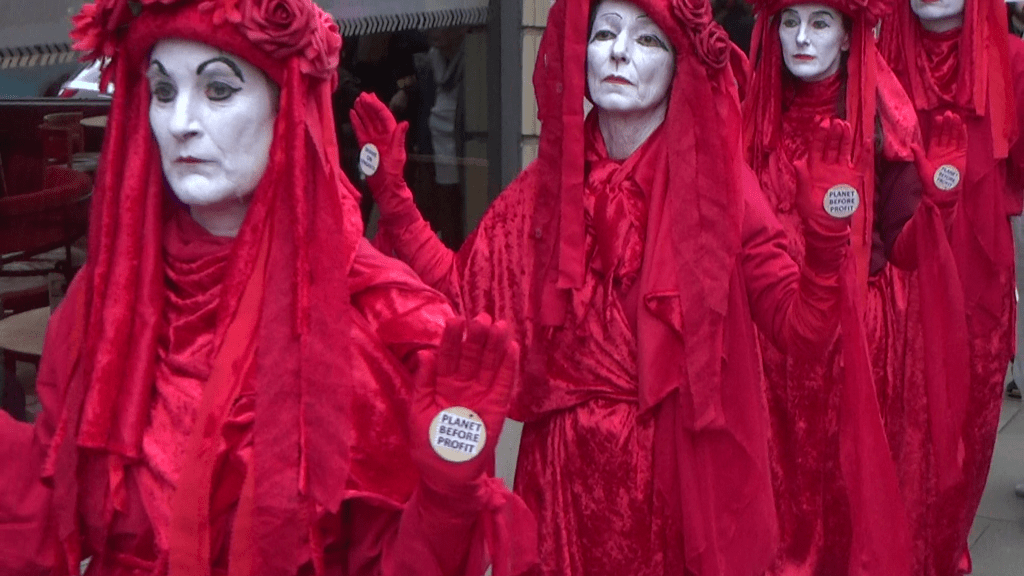
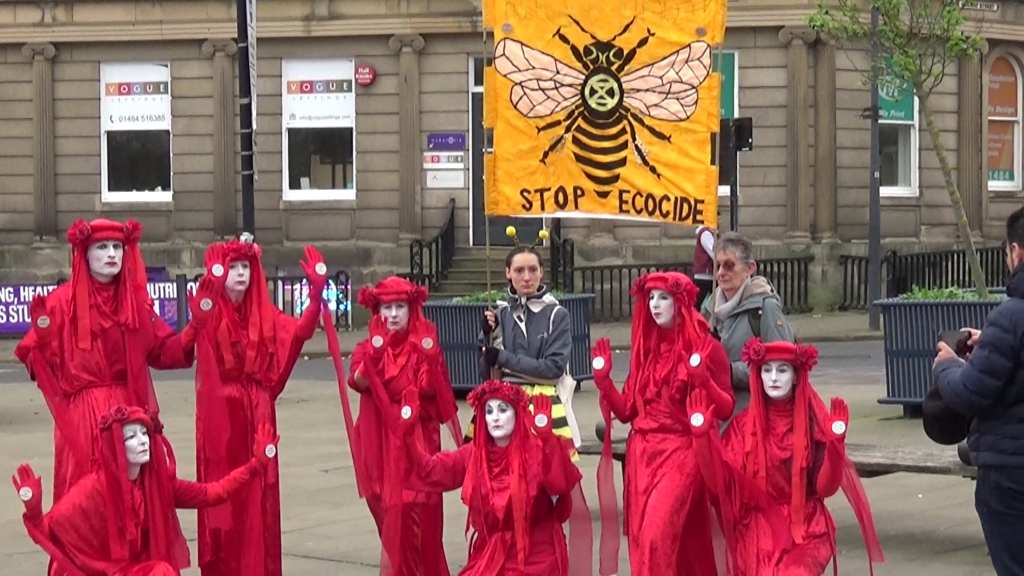
The event included drumming and singing, a bee die-in, an appearance from Extinction Rebellion’s Red Rebels, who came to mourn the bees, and leafleting of the public.
Paraquat, often sold as ‘Gramoxone’, is a weedkiller that has been banned by nearly 60 countries including the UK, yet it is still manufactured in Huddersfield. It is exported to countries with weaker levels of environmental and worker protection.
Clare Walters from Huddersfield Extinction Rebellion said “Ingestion of just a small amount of paraquat can kill humans and there is no effective treatment. Paraquat is also toxic when inhaled or absorbed through the skin. Regular or repeated exposure to paraquat may also lead to chronic health effects and has been linked with conditions such as Parkinson’s disease. Its persistence and toxicity to terrestrial and aquatic environments, also raise serious concerns, with residues ultimately entering the food chain.”
Syngenta is investing millions in the production of a new pesticide called Plinazolin. This is not readily biodegradable and has clear effects on bird reproduction. It is toxic to bees and very toxic to bee larvae.
Plinazolin has not yet been subjected to independent studies to discover how bad it is, but it is suspected to replace neonicotinoids when they are completely banned.
I gave a speech in St George’s Square, reminding people how dire the Nature Emergency is and that our first step in dealing with it should be to stop poisoning nature.
Since my daughter was born 600 million birds across Europe have vanished, including 65% of our cuckoos and 90% of Nightingales.
Since I left school 80% of our butterflies have gone. 19% of our wildlife has been destroyed and 1 in 6 species are now in danger of extinction.
A report in 2023 revealed that the abundance of flying insects sampled on vehicle number plates has fallen by a staggering 78% since 2004. The scientific evidence for this grows stronger every year, as studies are published describing the collapse of monarch butterfly populations in North America, the demise of woodland and grassland insects in Germany, or the contraction of the ranges of bumblebees and hoverflies in the UK. Farmers urgently need to be helped to move to more organic regenerative farming methods.”
Do you remember the days when drivers had to stop to clean the dead insects from the windscreens? It doesn’t happen anymore.
Throughout the world, biodiversity is decreasing and one in four species are facing extinction. This includes 40% of amphibians, 31% of sharks and rays, 27% of crustaceans, 25% of mammals and 14% of birds.
What’s this got to do with Syngenta? The first thing we need to do to counter the Nature Emergency is to STOP POISONING NATURE! Syngenta’s products kill insects. This means other insects, birds and amphibians lose their food source, so it puts them in trouble too. But also the pesticides accumulate in the food chain and do more damage to other creatures and humans.
Paraquat was banned in Switzerland in 1989 and in the EU in 2007 as it is hugely toxic to humans. The Swiss-owned Syngenta factory in Huddersfield has manufactured 122,831 tons of paraquat since 2015 and exports it all over the world, where it is often used by farmers who have no access to health and safety equipment. But it isn’t just developing countries that suffer from these products. We all have pesticides in our urine.
Insects pollinate many of our crops, help fertilise the soil they grow in and help control outbreaks of crop pests and other organisms that cause disease in people and livestock. Insects and other small invertebrates are also important in decomposing and recycling dead organic matter – including animal poo – and are critical parts of food webs in all ecosystems. Imagine a world without insects-there would be poo everywhere and it wouldn’t be recycled to fertilise the soil.
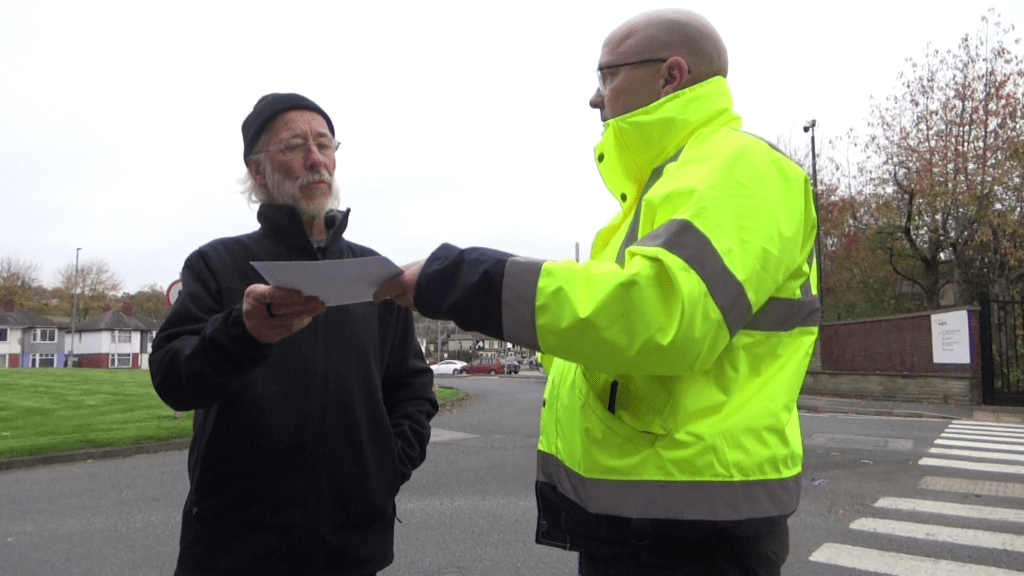
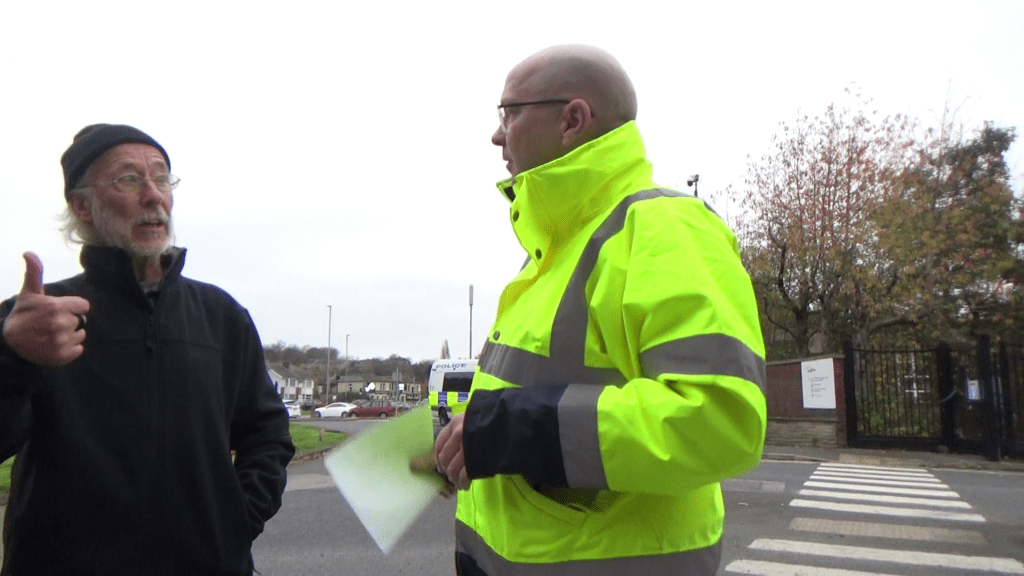
I joined campaigners visiting the Syngenta plant in Dalton and delivered a letter to its Executives. It read
“The UK and the EU have banned Paraquat for very good reasons yet you continue to export it to countries without such sensible legislation. You know very well the effect this is having on biodiversity and human health around the world.
Plinazolin will cause the wholesale death of insects which is unconscionable considering the collapse in numbers we are already witnessing.
We charge you with Ecocide and demand as a first step that you cease production of pesticides that are banned for use in this country.
Please cease the production and export of Paraquat and Plinazolin with immediate effect and publicly declare how you will only support regenerative farming techniques from now on.
Otherwise, we have no option but to step up our Shame on Syngenta campaign.
For more information visit https://stopparaquat.weebly.com/index.html
Discover more from Tell the Truth Sheffield
Subscribe to get the latest posts sent to your email.

One thought on “Shame on Syngenta ”