
A guest blog by Lindy Stone, Coordinator of Sheffield Friends of the Earth.

For most of us, our lives have become much more comfortable over the past few decades and we had become quite profligate with our energy use – until the current crisis pulled us up short.
With sky-high energy bills a reality for all, many of us have been thinking about how to save money on these and taking small steps such as turning the heating down, making sure all lightbulbs are LED and the classic of putting on an extra layer.
Reducing our energy use doesn’t just have the benefit of reducing our bills, of course, but also reduces our carbon footprint which is increasingly important as the world struggles to contain the worst effects of climate change.
The cheapest energy is the energy we don’t use – and that’s best for the climate and our children’s future, too. But can we save significant money and significant carbon while keeping warm at the same time? Yes, we can.
The small household measures listed above regarding lightbulbs, thermostats and jumpers can only go so far. A key issue is how poorly insulated most of our homes and buildings are. It’s been said often enough that the UK has the ‘leakiest’ homes in Europe. We should be really exercised by this and want to do something about it, but too often as householders, we shrug our shoulders with a ‘that’s life’ attitude, feel that we can’t afford to take major action on the homes we already live in or just don’t know where to start.
Improving the insulation and energy use in a house after it’s built is known as ‘retrofitting’ and it’s a term that is used a lot nowadays. Everyone agrees that it’s a good idea but few are stepping up to make it as easy as possible to carry out. Householders can only do so much – we need councils and governments to take the lead on ensuring we have the necessary skilled workforce, access to the necessary finance and that advice and guidance is easily available.
Spending on retrofitting is an investment, not a cost, and should be viewed in this light. Reduced energy bills going forward are a direct consequence of action to improve insulation and reduced energy use helps the UK to meet its commitment to net zero carbon, a key target for our future.
Friends of the Earth has been leading a United for Warm Homes campaign which our local group in Sheffield has been promoting.
Alongside the need for immediate help for people in fuel poverty and a swifter transition to renewable energy sources, the campaign has identified an effective and efficient model of retrofitting on a street-by-street basis, since this is the cheapest and most efficient way to permanently reduce our bills and cut emissions.
Different styles and ages of housing have different challenges and opportunities for retrofit but tackling these on a neighbourhood basis allows for greater efficiency once the key elements are identified.
The United for Warm Homes campaign calls on the government to roll out a rapid, street-by-street insulation programme, coordinated by councils. This should start with the neighbourhoods in the most severe fuel poverty and be provided free of charge in areas where people are living on low incomes.
While the publicly-funded investment would be significant, these are one-off costs to save money and reduce carbon emissions for many years going forward. It is estimated that over a 10-year period, the cost savings to householders would be at least three times greater than the investment.
Friends of the Earth have identified a variety of sources of the necessary funding, including a windfall tax on fossil fuel companies that have been making enormous profits due to the high price of energy since the start of the current crisis which have nothing to do with increased efficiency or operational success.
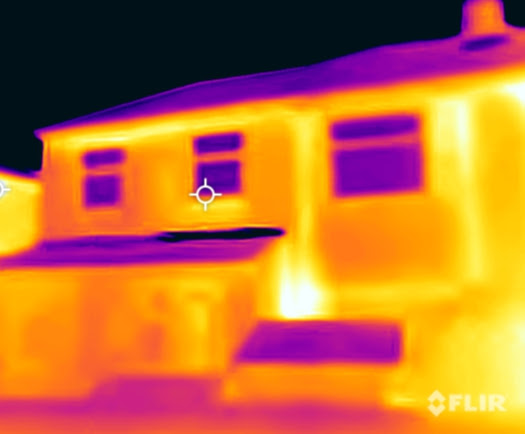
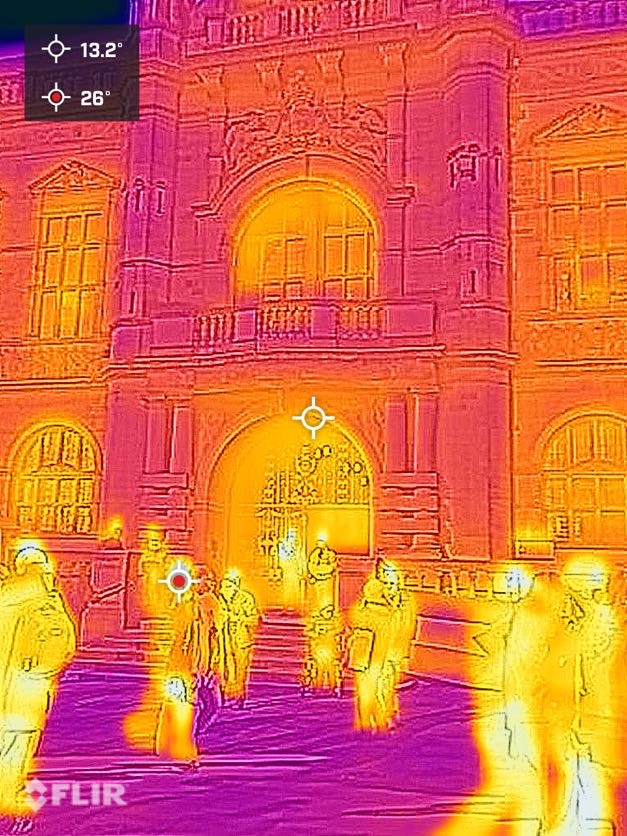
The local Friends of the Earth group has been using a thermal imaging camera to visualise how heat escapes from poorly insulated homes and buildings. Sheffield has 98 areas in an energy crisis hotspot where incomes are less than average but energy bills are higher than average because of poor housing and the group are keen to draw attention to the issues that this raises and is urging local politicians to back significant action.
Local campaigner, Shaun Rumbelow, explained: “Our thermal imaging camera captures heat images using colours to show hot, warm and cold spots. It was a real shock to discover how leaky our homes and buildings are. We are spending money on sky-high heating bills to warm the streets instead of our homes.

It’s not right that so many people across Sheffield must endure another difficult winter because of government failings, while the companies getting rich off soaring energy prices and climate destruction go on profiting at our expense. Everyone deserves to live in a warm, comfortable home and have their basic needs met”.
Further information about the United for Warm Homes campaign can be found on the Sheffield Friends of the Earth website, including the opportunity for community groups to borrow the Thermal Imaging Camera to explore the issues in their own neighbourhood. Take action here.
Discover more from Tell the Truth Sheffield
Subscribe to get the latest posts sent to your email.

Not much point fitting insulation to walls when your windows are rotting to bits and single pane glass.
Windows would need to be double glazed and in GOOD condition before internal ( or external ) wall insulation could be done.
Catch 22 situation.
No help for that and no money as on benefits, due to ill health/disability.
Alleged window grants are a lie as nobody has had one yet, according to energy help team I talked to.
LikeLike