
A guest blog by Ben Bradley, Deepcar, Sheffield
Following heavy rain on Thursday, 27 August 2026, I monitored local sewage discharge data and walked down to our local waterways in Deepcar. What I found was a clear picture of an infrastructure system pushed past its limits.
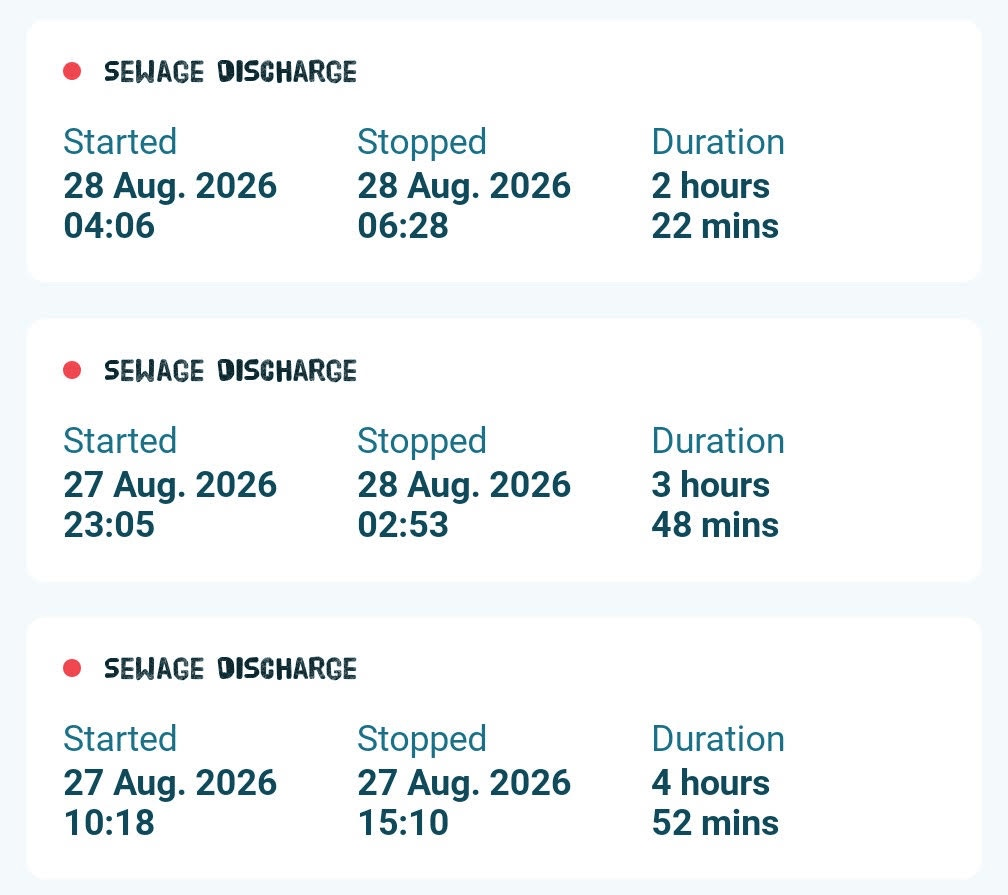
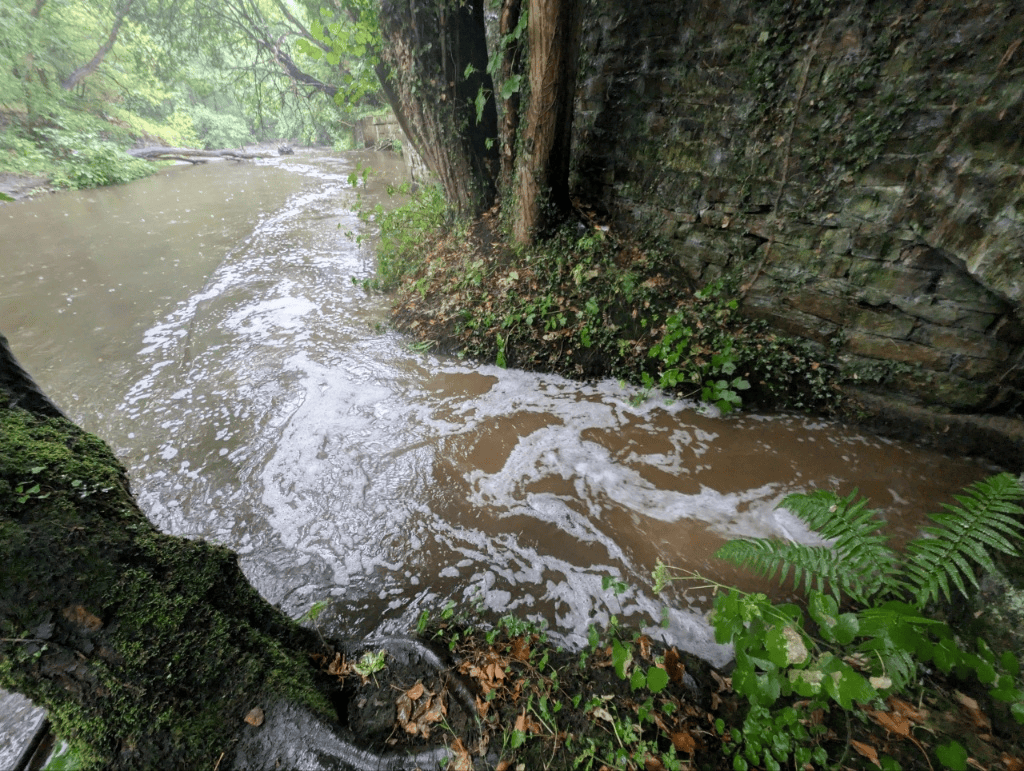
Data from the Safer Seas & Rivers Service revealed that the Manchester Road Weir Combined Sewer Overflow (CSO) was actively discharging sludgy brown water, coated in a layer of soap-like scum, into the river for a continuous 4 hours and 52 minutes in a single stretch. Across a 24-hour period on 27 August, this single overflow recorded a total of 11 hours and 2 minutes of discharge across several separate periods (including an initial 4 hrs 52 mins, a subsequent 3 hrs 48 mins starting from 11:05 PM, and another 2 hrs 22 mins the following morning).
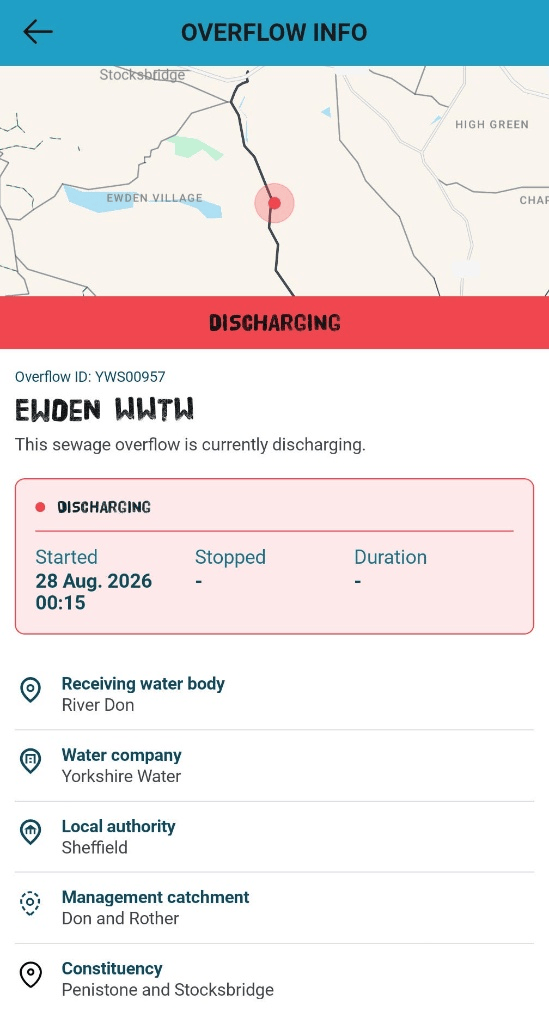
Downstream, the Ewden Wastewater Treatment Works showed a live sewage-discharge alert continuously from 00:15 until 07:47 on 28 August—a total of 7 hours and 32 minutes—following the storm event.
These are not minor or isolated incidents. Yorkshire Water’s own documentation explicitly identifies Manchester Road Weir CSO as a “Significant Water Quality Pressure” on the Little Don, and Ewden WwTW as a “Significant Water Quality Pressure” on the River Don.
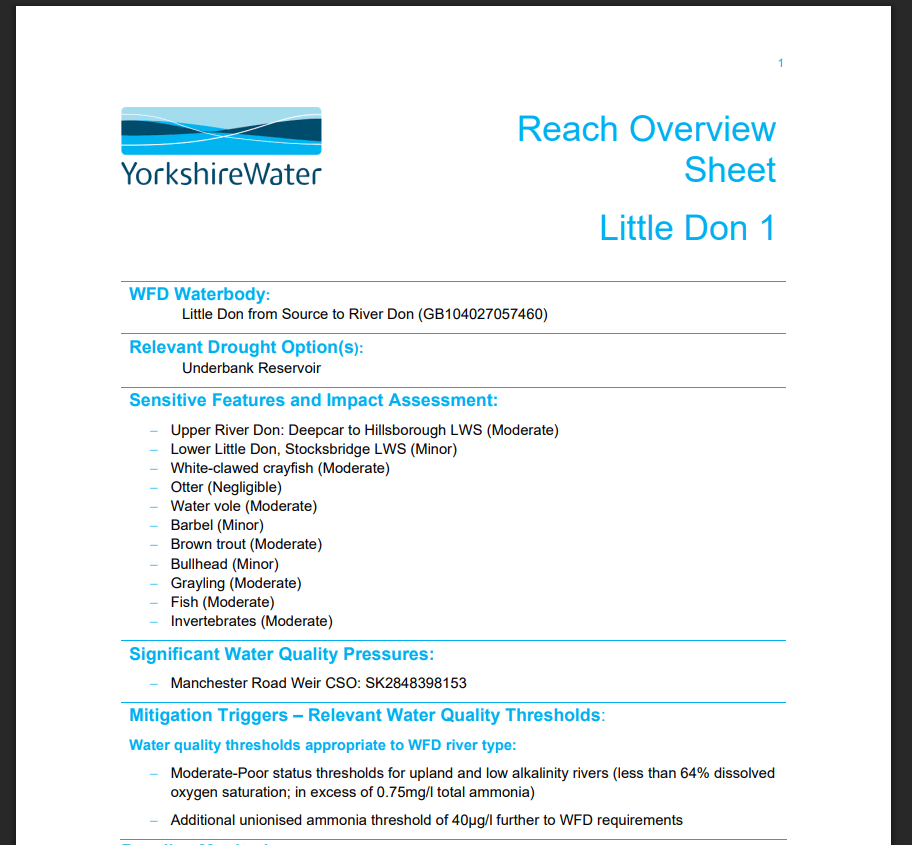
[Significant Water Quality Pressures highlighted in YW document]
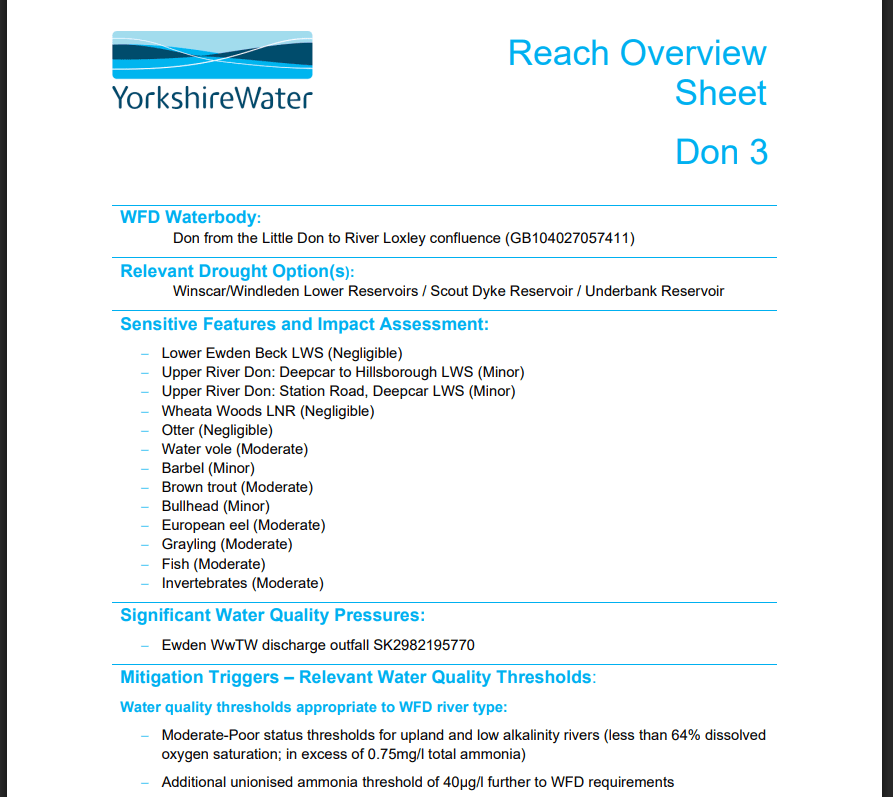
When questioned, Yorkshire Water confirmed that the Ewden discharge was a “genuine discharge” of “heavily diluted sewage” rather than a monitoring glitch and confirmed staff were present on site during the storm event. However, sewage discharges—even diluted ones—contain harmful pathogens, microplastics, pharmaceuticals, and heavy metals that pose serious risks to river ecosystems.
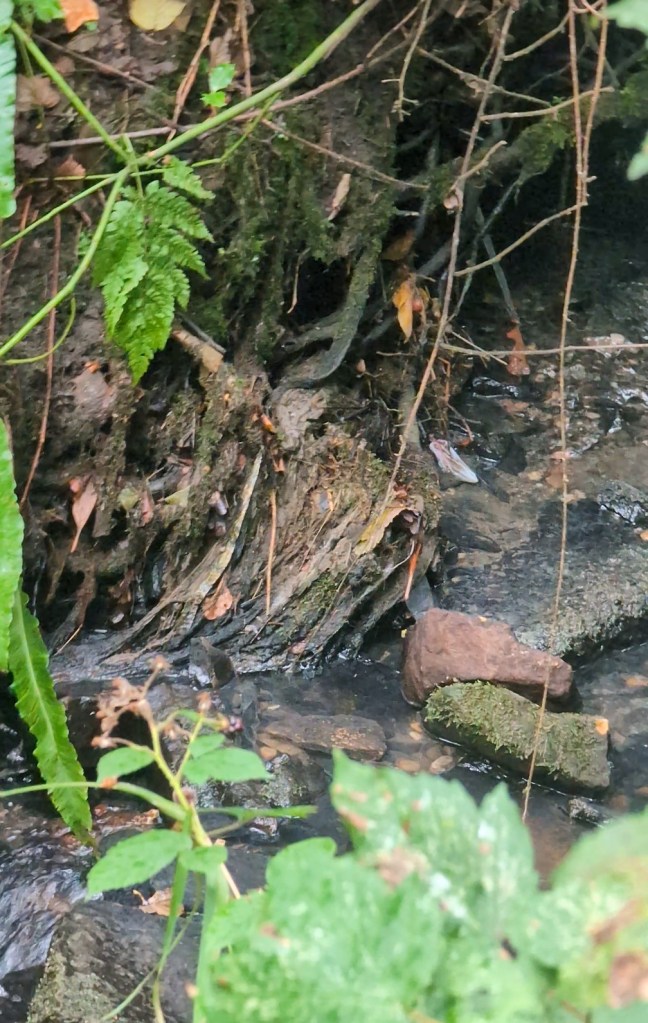
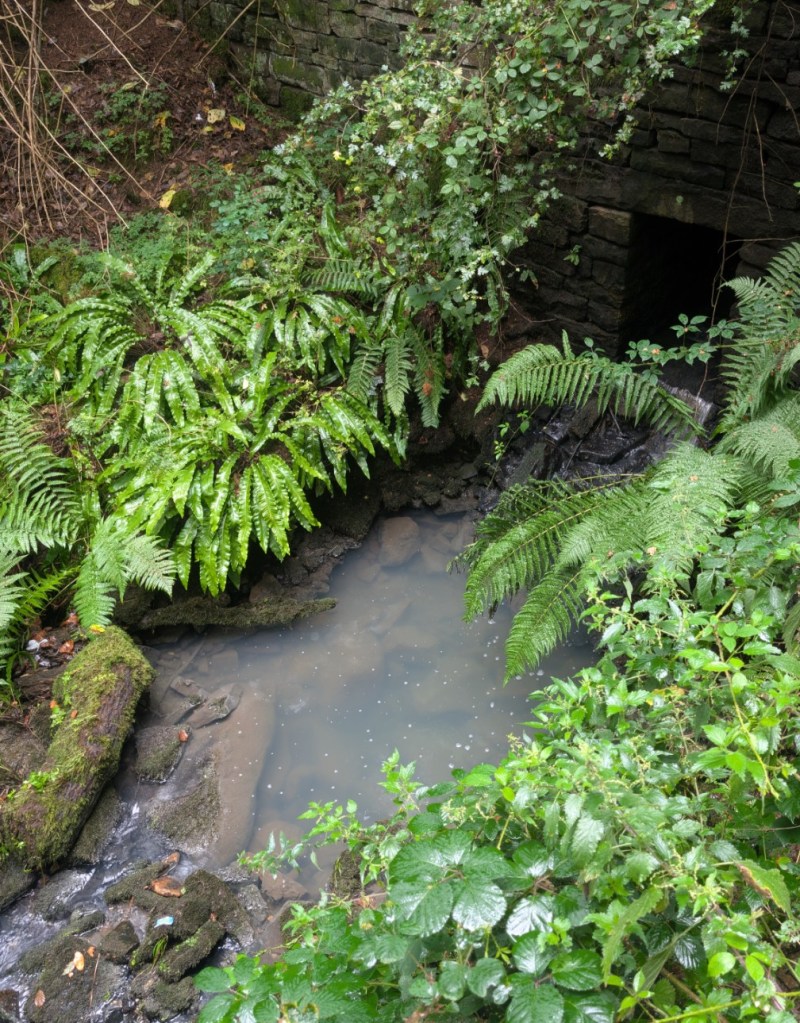
Following up on local resident reports, a check of the stream behind a garage feeding into the Wood Royd Screen revealed discoloured, chalky grey water. Worse still, the riverbanks remain laden with wet wipes and thick clumps of degrading sewage waste clinging to rocks and tree roots.
Stripped-Down Services and the Myth of “Victorian Systems”
We are constantly told by water companies and official spokespeople that the current sewage crisis is an inescapable consequence of relying on “Victorian pipework.” But this is a misleading narrative designed to deflect responsibility—Victorian infrastructure makes up only a small percentage of the modern network.
In fact, that is extremely true here in Yorkshire, where independent analysis of network data (by Windrush Against Sewage Pollution) reveals that only 3.3% of the sewer network managed by Yorkshire Water was built prior to 1901! Across England and Wales, less than 12% of the overall network dates back to the Victorian era, with the vast majority constructed or expanded throughout the 20th century prior to privatisation.
The reality on the ground is that essential services, operational capacity, and frontline maintenance have been systematically stripped out over decades. Privatised water companies have extracted maximum financial returns and paid out billions in dividends while running staffing, physical screen clearing, and monitoring down to the bare minimum before passing assets along.
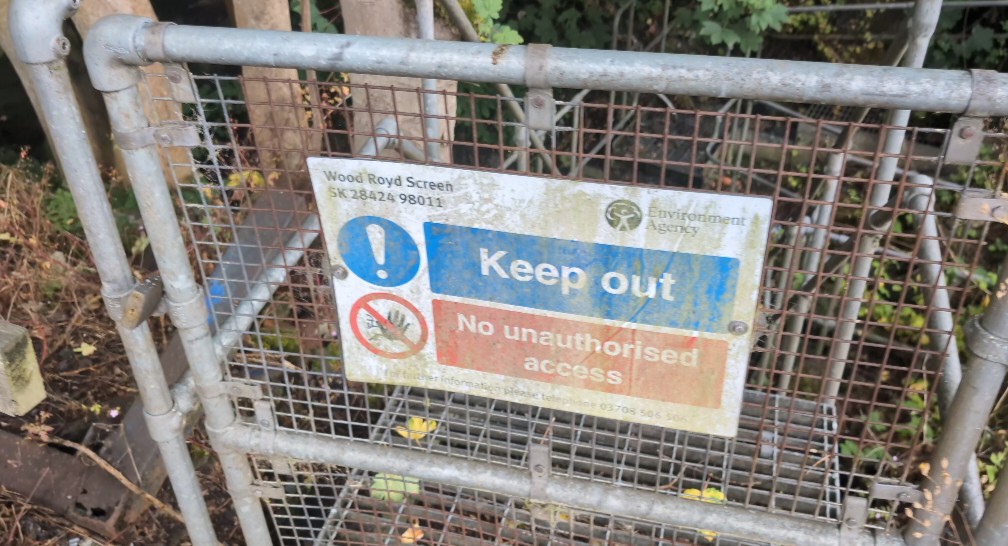
Instead of having human personnel regularly inspecting sites, clearing debris, and managing storm tanks, the system now relies almost entirely on automated sensors. But sensors don’t clean riverbanks, and they don’t fix overloaded treatment plants. We are left with a degraded infrastructure where routine pollution is treated as standard operating procedure because discharging raw or partially treated sewage into public rivers is cheaper than maintaining the capacity needed to treat it.
Why Infrastructure Demands Public Ownership
If you haven’t already, everyone needs to watch Channel 4’s Dirty Business and catch on to what is happening across our water network. Dirty Business laid bare how decades of light-touch regulation, operator self-monitoring, and corporate profit motive have put financial returns ahead of human health and river ecology.
We cannot regulate our way out of a privatised system whose core incentive structure prioritises shareholder yield over public utility. Bringing water back into public control and focusing entirely on infrastructure is an essential requirement to:
* Direct Capital Reinvestment: Divert revenue away from dividend payouts and directly into upgrading treatment works, expanding storm storage capacity, and modernising local pipe networks.
* Restore Operational Staffing: Move away from total reliance on remote electronic sensors and reinstate proper hands-on maintenance, physical inspection, and river cleanup teams.
* Remove Structural Conflicts: Eliminate the inherent friction between corporate profitability and environmental protection.
A Call to Action: Become a Local Water Watcher
We can no longer afford to sit back and assume that water monopolies or regulatory bodies are keeping our rivers safe. It has been left to ordinary citizens, local campaigners, and community groups to uncover the true scale of this scandal.
Here is how you can take action right now:
* Watch Dirty Business: Educate yourself on the structural mechanisms driving the sewage crisis.
* Download the Safer Seas & Rivers Service App: Use the app provided by Surfers Against Sewage to monitor local Combined Sewer Overflows (CSOs) and treatment works in real-time.
* Inspect Your Local Waterways: Pay attention to the physical state of your local streams and rivers:
* Is a CSO visibly leaking or trickling even when marked as “not discharging”?
* Does the water look chalky, cloudy, or grey following a heavy storm event?
* Are there sanitary products, wet wipes, or degrading sewage clinging to rocks and tree roots downstream?
* Report and Campaign: Log every unverified spill or polluted stream directly with the Environment Agency incident hotline (0800 80 70 60), contact your local MP, and support campaign groups like Surfers Against Sewage fighting for full public accountability and river restoration.
We cannot accept a failing sewage system and the pollution of our waterways as an everyday norm. Our rivers, wildlife, and ecosystems deserve better.
Discover more from Tell the Truth Sheffield
Subscribe to get the latest posts sent to your email.
