

By Heather Worden
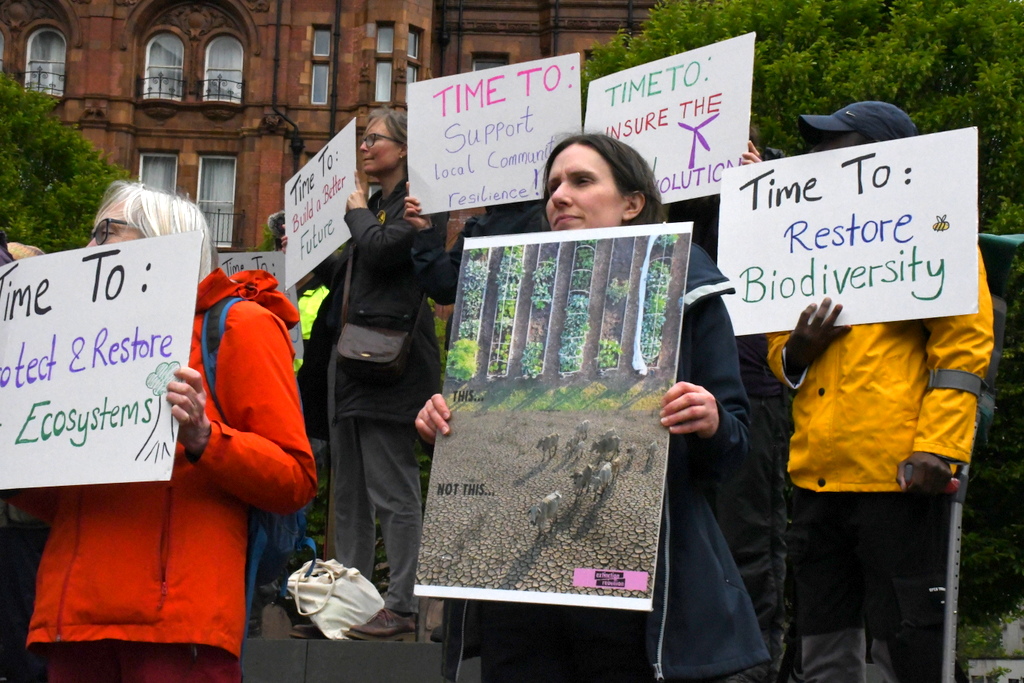
Interested Sheffielders travelled to Manchester on Wednesday, 13th May, to the British Insurance Brokers Association annual conference, to engage with delegates, and to raise questions about the role of insurance in fueling the climate emergency, and related issues. This article focuses on the significance of insurance to climate and nature. Commercial insurance for fossil fuel businesses enables it to take place, as without insurance, activity would have to be put on hold or stopped altogether.
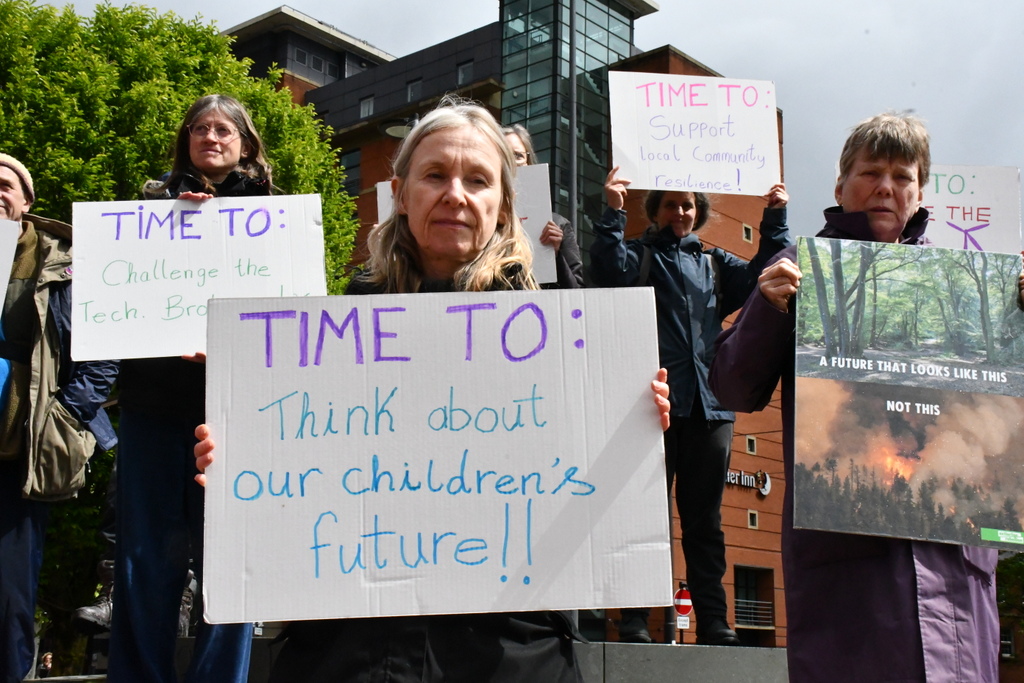
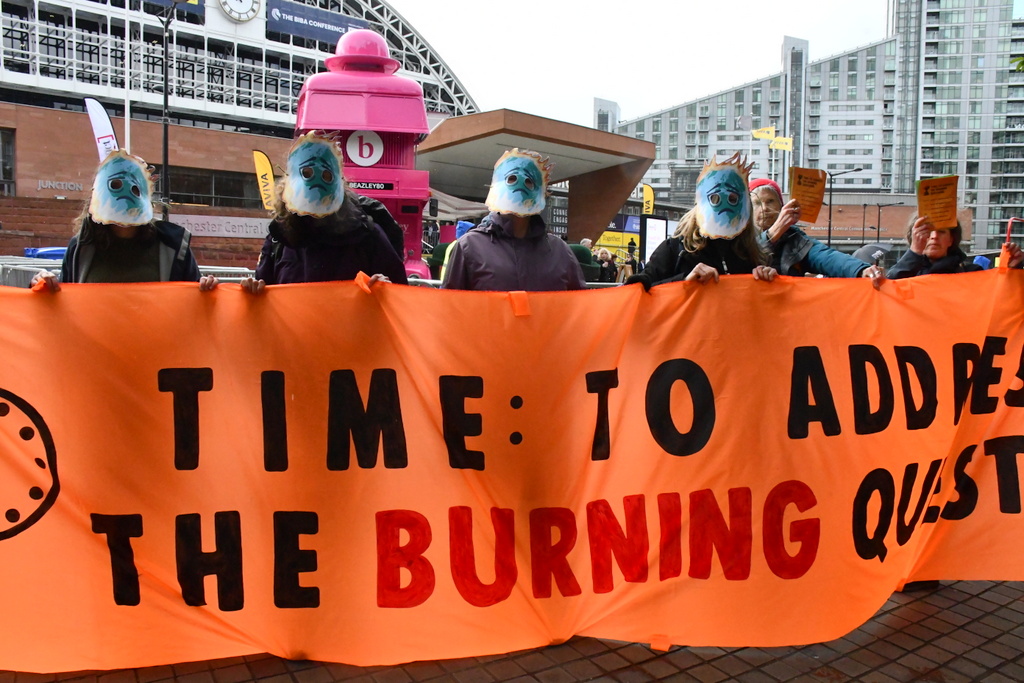
Delegates and passers-by were respectfully asked to consider questions around commercial fossil fuel insurance, climate and nature. They were engaged in conversation, provided with information leaflets, and treated to great rhythms from samba fusion drummers. The grim reaper also made an appearance, with a clock tower signalling the very late hour – a few minutes to midnight – that humans figuratively have left to tackle the concentration of CO2 in the atmosphere.
Questions targeted mainly the host insurance brokers of the conference, and included:
Brokers – time to step up and tell the insurers –
AXA – time to drop climate wreckers?
Allied World – time to stop insuring fossil fuels?
AVIVA – will you lead the change?
Chubb – will you insure our survival?
Intact – will you protect all life?
Markel – will you insure only clean energy?
Targeting the insurance angle on the climate emergency has yielded some good results, with some insurers already ruling out new fossil fuel project insurance, and, for example, slowing down the construction of the East Africa Crude Oil Pipeline. But more could be done by insurers, including ruling out further insurance for existing projects and ruling out investment in fossil fuel projects.
The responses from the delegates varied. Some delegates took a leaflet and thanked the activists for what they were doing. Some denied that there is a climate emergency, which contradicts the evidence – measurable warming, increased droughts and wildfires, increased storms and flooding, slowing down of an important ocean current for the UK’s climate. One delegate agreed that there is a climate emergency and moreover that it is caused by human activities, including fossil fuel burning, but said that businesses will continue to extract fossil fuels, so insurance is needed. This response missed the point, as the activists were clear that continuing to insure and invest in this business is causing it to be able to continue. At suitable moments, the delegates were also advised to attend a screening of the People’s Emergency Briefing, which is a national initiative, to provide them with a realistic view of the climate and nature crisis and promote action.
Climate scientists are clear that the burning of fossil fuels is the primary cause of the climate crisis. As the United Nations reports in its “Causes and Effects of climate change” page, “fossil fuels are by far the largest contributor to global climate change, … the world is now warming faster than at any point in recorded history, … and this poses many risks to human beings and all other forms of life”. The insurance system itself is increasingly risky. Greencentralbanking.com quotes Marina Baldissera Pacchetti, a climate science philosophy research fellow at University College London: “The insurance industry also has a role in helping mitigate the climate insurance gap … [Insurance firms] want to portray themselves as playing this fundamental role in the sustainability of financial structures. If that’s the role that they want to play, then they also need to take some responsibility in this insurability gap”.
Yet insurers have continued to insure and invest in fossil fuels, using their financial holdings. Some insurance companies and brokers, notably Zurich, Munich Re and Probitas, have already understood the risk and/or bowed to pressure, and have ruled out new fossil fuel insurance.
In the system as it is, everyone needs fossil fuels, directly or indirectly. This includes burning, e.g. for powering vehicles, homes and industry, especially for steel, cement production and fertiliser, and also as the source of traditional plastics, including in packaging, clothing, and equipment and for health.
However, for a lot of human activity, fossil fuels or plastics derived from them are not a necessary resource, because human ingenuity has developed alternatives or efficiencies in the form of renewable energy, bioplastics/ seaweed-derived film, and improved insulation. Developing these other technologies changes the calculation of economic viability in favour of more sustainable solutions.
Fossil fuels have become the more expensive option compared to renewable energy in many applications. Renewable energy has also become a more secure option.
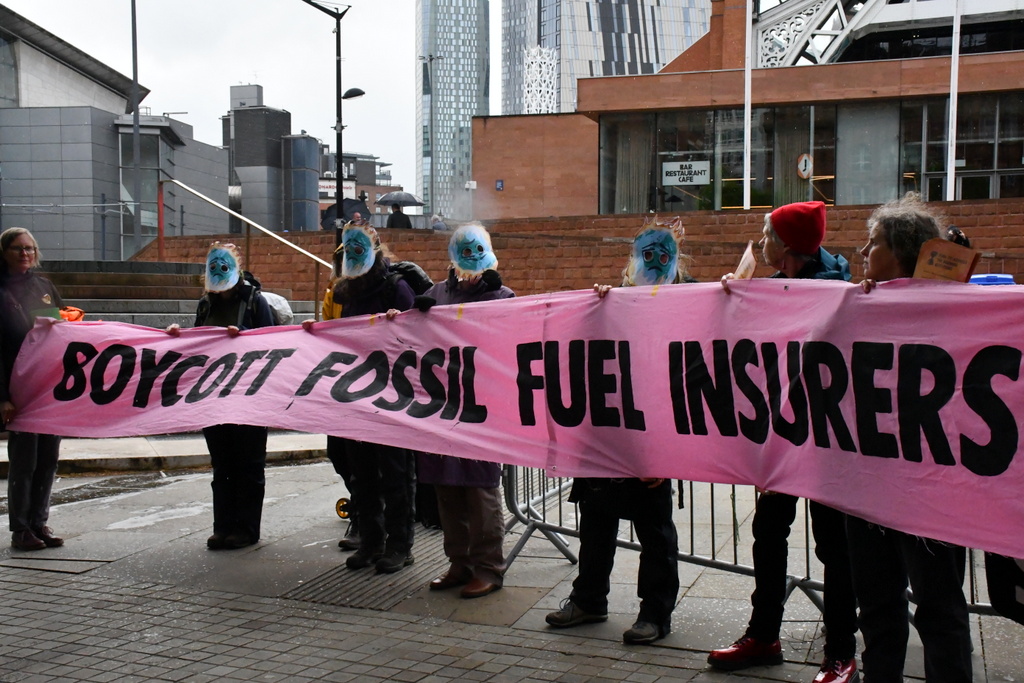
Commercial and general insurers with office bases in Sheffield, including Aviva, Aon and Markel, are still engaging in aspects of fossil fuel business, in the form of insurance or investment or both, and Extinction Rebellion has targeted these businesses directly.
Search on the website Tell the Truth Sheffield for other information on fossil fuels, climate and nature. Look up the film “People’s Emergency Briefing” and attend a screening. Find out what your insurer’s stand is on fossil fuels, climate and nature, and consider writing to them about any concerns, or consider changing your insurer to one which does not insure or invest in fossil fuel business.
Discover more from Tell the Truth Sheffield
Subscribe to get the latest posts sent to your email.
