

by Graham Wroe
What was a Lieutenant General doing speaking at a climate change meeting? At the recent National Emergency Briefing in Westminster Hall, every aspect of the climate and nature emergency was addressed to inform the parliamentarians and other leaders present. And one of the most important aspects is the threat climate change poses to our national security.
Lieutenant General Richard Nugee CB CVO CBE is a former senior British Army officer and leading voice on climate and national security. His 35-year military career included tours in Northern Ireland, the Balkans, Iraq and Afghanistan, where he served as Chief of Staff to NATO’s ISAF Joint Command. In his final year of service, Richard authored the UK Ministry of Defence’s first review on climate risk and now advises governments and organisations on climate-security, net zero, and resilience.
Richard explained, “ NATO Article 3 stresses the need for each country’s ability to withstand and recover from all types of shocks, whether they’re military, natural disasters, or other crises. And common sense demands a resilient homeland from all threats. From cyberspace where we’re being attacked daily, air, land, sea, or space, or, of course, from climate change.”
Climate change is a threat multiplier, making existing threats worse or more frequent and introducing new threats. Climate shocks fuel global instability. When farmers can no longer earn a living, they may well join armed groups. We saw this in Afghanistan and with ISIS in Iraq. Competition for water, food and land is rising. We see this in tensions between Egypt and Ethiopia.
Richard’s experience of fighting in temperatures of 50 °C and 100% humidity in Iraq was telling. The thousand soldiers under his command survived the fighting, but 5 were sent home with heatstroke, and 250 drips were required to keep people alive.
The Arctic is becoming a flash point due to the climate crisis. Sea ice is receding fast. The Russian Duma has claimed it’s a Russian internal sea, whereas we treat the Arctic as international waters. There’s a risk of conflict over access, over resources, and over shipping routes. So the climate crisis is now shaping strategic and military competition.
Acting for peace and addressing the climate crisis are two sides of the same coin.
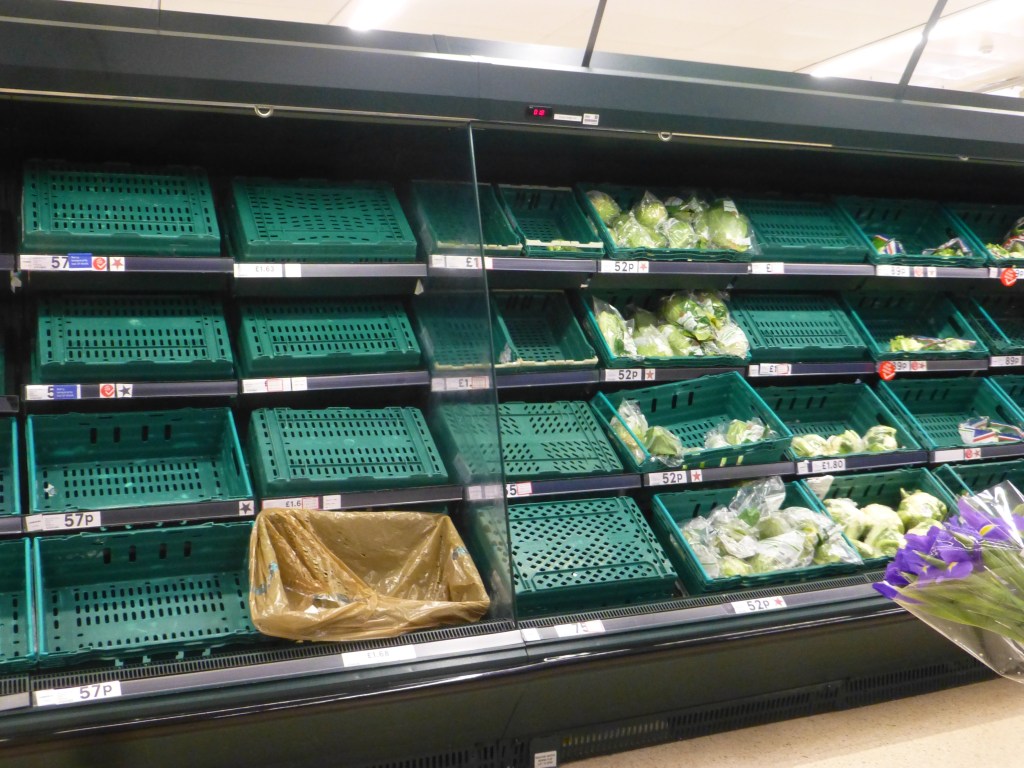
Food shocks also lead to instability. Richard reminded us, “There are only nine meals between mankind and anarchy. We had a tiny flavour of this during Covid with panic buying of toilet rolls and food. We’re seeing a growing need for military support in emergencies, floods, fires, and heat waves. In 2019, in Whalley Bridge, Derbyshire, the Royal Air Force had to send Chinooks to drop concrete and prevent a dam collapse after torrential rain. It wasn’t long after that that two dams collapsed in Libya.” Back in 2007, Sheffield had a near miss when Ulley dam was very close to collapsing. If it had failed, it would have taken out part of the M1 and an electricity substation, not to mention many people’s homes. That is a glimpse of our future if we don’t both cut emissions and adapt our infrastructure.
Climate impacts like food shortages, worsening health, damaged infrastructure, mass migration and extreme weather will make it increasingly difficult for Governments to manage and will make extreme Governments more likely. Richard believes there is a real possibility that Western democratic systems won’t cope, leading to a breakdown of society.
“The encouraging part is that what we need to do on climate also makes Britain safer and more resilient. Take energy independence. Renewables, storage, and a decentralised grid reduce our dependence on foreign oil and gas, and they’re less vulnerable.”
Ukraine is an important example. Russia has targeted its energy network and has taken out about half of it. Power stations are easy to target and destroy, but renewables and storage are decentralised and dispersed. Wind turbines can’t be destroyed with a single missile. Some use the threat from Russia as an excuse not to worry about climate. But tackling climate is central to our national resilience.
“In the military, you learn a clear principle. Face the threat that is in front of you, not the threat as you would wish it to be. We have to plan realistically for a future others cannot see or would rather not wish to imagine, a future which would have untold consequences if it came to pass. And just because you don’t like the risk does not mean it will go away or can be ignored.”
“But there is also a good opportunity. If we do treat this as a security challenge, the solutions make us stronger. We end up with more secure energy, more resilient infrastructure and a safer, more stable society. And important to me, a stronger democracy.”
As commentators and politicians call for increased spending on weapons, it is vital we listen to Lieutenant General Richard Nugee and prioritise tackling the climate and nature crisis. Is it too much to hope that world leaders can grasp the enormity of this task, abandon their warmongering and instead of investing billions in war and destruction, invest in making the world a better, safer more sustainable place?
Please sign the petition to Parliament to Fund a National Climate Resilience Plan: protect communities from climate impact
Discover more from Tell the Truth Sheffield
Subscribe to get the latest posts sent to your email.

