
A guest blog by João Craveiro.

The global plastics industry (mostly overlapping with the fossil fuel industry) has pretended for decades that the plastics issue can be recycled away. It can not.
We all consume plastic. By this I don’t mean consume in the sense that we use it – I mean that we eat it, breathe it and drink it. Humans are being born with it already present in their system. For example, a study widely reported at the end of last year has even shown our brain’s total weight is now 0.5% plastic.
This accumulation of plastics in our bodies and nature is especially aggravated since only 9% of all plastics ever produced have been recycled. Even though the different plastic types in usage are theoretically recyclable, most aren’t either because they have been contaminated by the product they are storing (eg. food), or due to difficulties separating them from other types of rubbish. For example, Sheffield only recycles plastic bottles, any other product will find its way to the incinerator, leading to a small proportion being dealt with properly. But even if recycled, this is typically a one-time thing due to their deterioration into microplastics over time, leaving the material in bad conditions and unfit to be repurposed.
In most cases, plastic is simply exported to other countries because this is much cheaper than recycling it. The UK pays countries such as Malaysia, Indonesia or Vietnam, to take its plastic and keep it in massive landfills, where it will sit, putting out fumes into the environment and the atmosphere for the next hundreds of thousands (or even millions) of years.
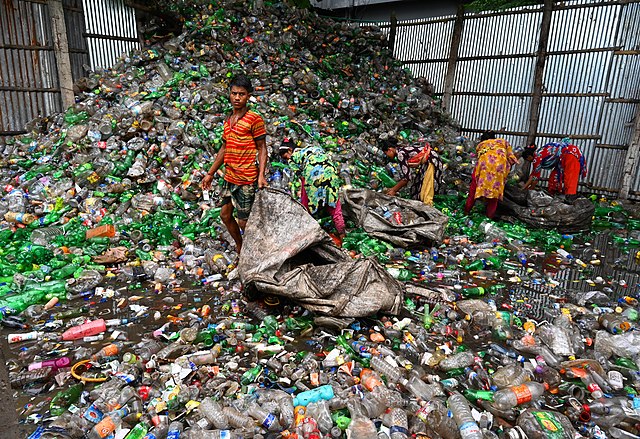
This waste produces massive toxic fume clouds. In the BBC podcast “The Climate Question”, released on the 16th of December last year, a Malaysian citizen was interviewed in the clinic that he visits multiple times a week due to his lungs collapsing – all because of the waste fumes he has inhaled. In a short and harrowing interview, we hear how the UK and other countries have ruined this poor man’s life. Although we aren’t living in quite as bad conditions, the reality is that we are still living surrounded by it, mindlessly using it even in circumstances where it could be replaced or cut off. If the fumes it releases can lead to collapsing lungs, what might eating and drinking it do to our bodies (and minds) across decades?
Of course, it is practically impossible not to use plastic and lead a normal life. But it is time we all recognise the lie we have been told. The truth is that plastic is not currently recycled in enough quantity to make a difference to this global crisis. Although this is mostly avoided in the UK, in many countries, it remains in landfills, frequently ending up in the oceans, and its constant deterioration results in our bodies accumulating microplastics. If it isn’t properly dealt with, it will likely still be here even once the human species ceases to walk on this planet.
Because of this reality, we need to reduce and reuse much more than we need to recycle. The three Rs are not equal when it comes to plastic. We must reduce its production massively (a recent study by the Guardian suggested a 91% reduction) and reuse the essential objects we need to produce. It bears mentioning that this is not a column against recycling as a whole – paper, glass, aluminium, and so forth, can and should be recycled. The petrol companies have simply managed to piggyback on the good examples of recycling to make it sound like their poisonous product is in the same boat as the other materials.
Okay, plastic isn’t as innocent as we thought. What can we, as citizens, do? Firstly, we can buy as much as possible from zero-waste shops (in Sheffield: Trixie’s Pantry (Broomhill), Unwrapped (Crookes), The Bare Alternative (Abbeydale Road), Our Zero Waste Shop (University of Sheffield) Hillsborough Refil Hub (Hillsborough) and It’s all about Eco (Dore). Supporting them, giving them business and making them thrive would be a great way to help remove most of the plastic used to package our food – and demonstrate to the major sellers that there are profits to lose in all of this unnecessary (and frankly disgusting) plastic being used to package our food. Secondly, if you don’t live close to a zero-waste shop, you can avoid products commonly sold wrapped in single-use plastics. These are the worst offenders and don’t need to be used at all in most cases. And finally, let independent sellers know that you would prefer the absence of plastics when you are buying their products, if enough customers express this, it might induce some change where it is possible.
However, we must not make the mistake of taking responsibility for it all. Major corporations and governments need to take it seriously and tackle the issue head-on. It must be one of the focal points in the political discourse – this is a major crisis and it needs to be taken seriously by politicians. A Global Plastics Treaty has been in the works for some time now, it needs much more attention from the media and much more pressure from the public if it is ever to get to the finish line.
Take Action
Support the call for a Global Plastics Treaty
Download the ebook Plastic makes us sick: A parent’s guide to reducing exposure to help reduce exposure.
References
[1] Ragusa A, Svelato A, Santacroce C, Catalano P, Notarstefano V, Carnevali O, Papa F, Rongioletti MCA, Baiocco F, Draghi S, D’Amore E, Rinaldo D, Matta M, Giorgini E. Plasticenta: First evidence of microplastics in human placenta. Environ Int. 2021 Jan;146:106274. doi: 10.1016/j.envint.2020.106274. Epub 2020 Dec 2. PMID: 33395930.
[4] https://www.sheffieldtribune.co.uk/data-investigation-a-year-in-the/
[5] https://www.sciencefocus.com/science/is-it-possible-to-recycle-plastics-an-infinite-number-of-times
[9] https://www.theguardian.com/us-news/2024/feb/15/recycling-plastics-producers-report
[10] https://www.globalplastictreaty.com/
Discover more from Tell the Truth Sheffield
Subscribe to get the latest posts sent to your email.

