
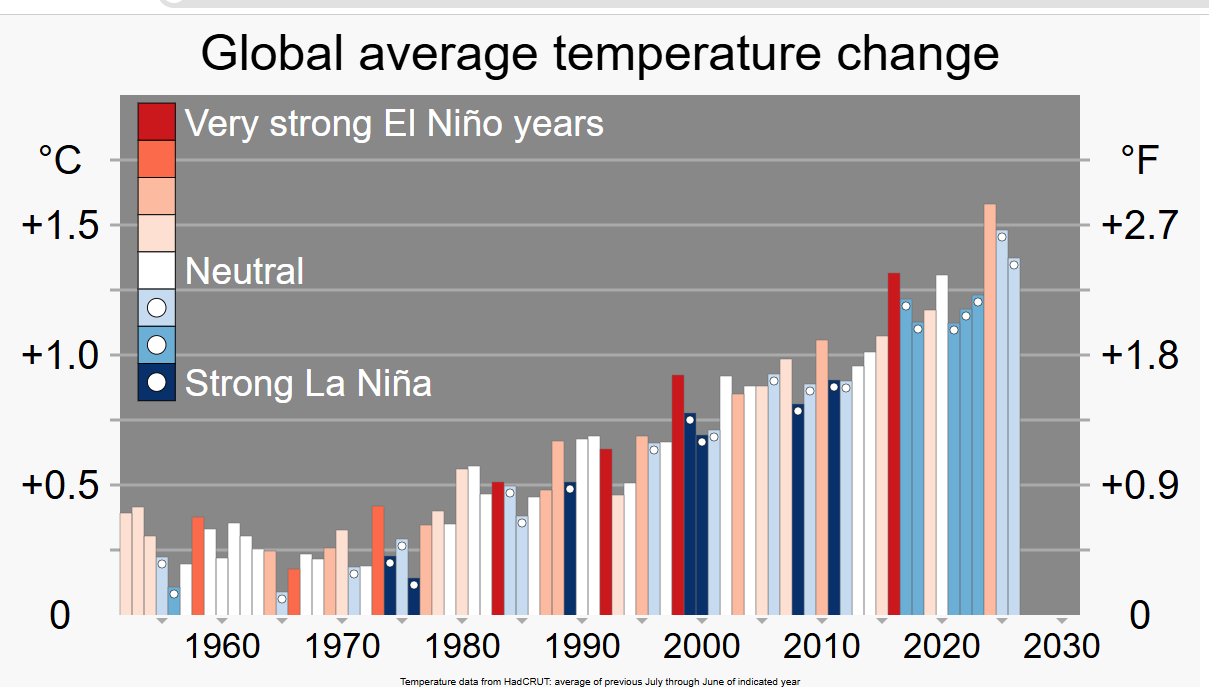
The National Emergency Briefing recently issued a warning about severe weather that is very likely this winter as a result of climate change amplifying the effects of El Niño. They warn of floods, international food shortages, and high food inflation, which will impact the poorest most. The media has mainly ignored this, hoping it will go away.
So what is El Niño ? Professor Hayley Fowler explained
“It’s a natural cycle in the Pacific Ocean that occurs about every 3 to 8 years when the trade winds weaken, which causes temperature anomalies.” Currently, it is much hotter on the eastern side of the Pacific Ocean and much cooler near Indonesia and Australia. This affects weather patterns worldwide.
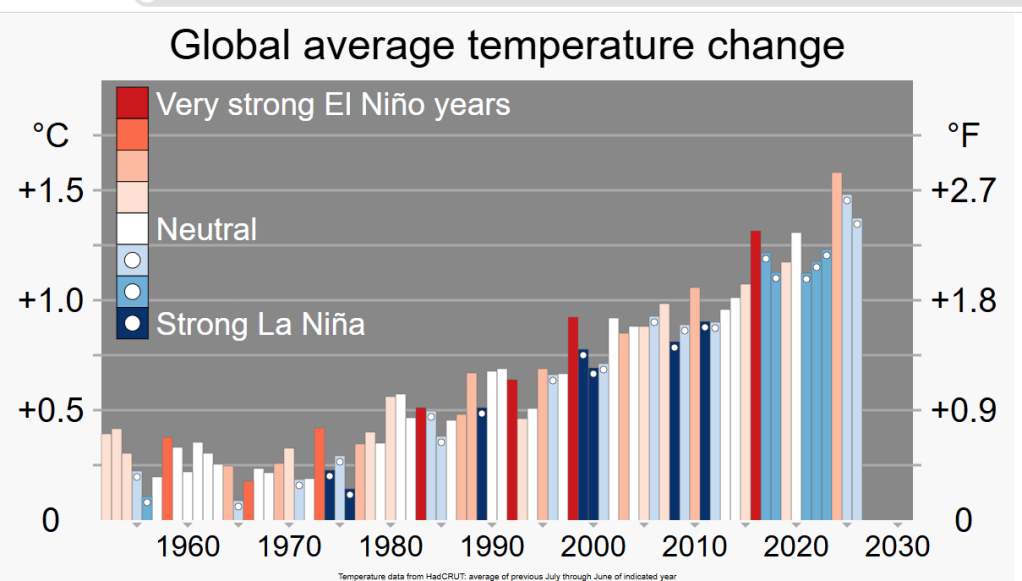
This year we have a super El Niño. What’s special about this one? Well, it’s highly unusual. It’s incredibly strong. It’s broken the temperature records for El Niño already, but It won’t peak until December. There are already higher temperatures in the Pacific than we’ve ever seen before, but it’s still got two months to go. It will likely release a much larger amount of heat into the atmosphere than previous events.
How is that going to affect us here in the UK? It’s not a simple relationship but El Niño usually makes our winters wetter and stormier than usual. The Met Office indicates that a warm and wet autumn is about one and a half to two times more likely than normal this year, and there’s a much increased chance of windy weather. Floods are more likely. We’ve seen huge droughts and heat waves already this year, and it’ll take a while for soil moisture to return. We need rain to fill our reservoirs because we’re seriously lacking water at the moment, but we should expect severe downpours and damaging storms.
Australia, Brazil and India can expect droughts and much drier conditions and a failure of the monsoon. This will impact food production in many parts of the world, leading to food shortages and high food inflation.
What foods will be affected? We’re thinking about rice, palm oil, which is in most processed foods, asparagus, avocados, blueberries, bananas, pineapples, grapes, citrus fruits, coffee, tea, cocoa, and cane sugar. We’ve already seen increases in cane sugar prices and prawns.
A super El Niño is likely to increase global temperatures next year by 2 or 3 degrees. Our infrastructure systems in the UK are not prepared for our current climate, never mind our future climate. We can’t rely on the Government to save us; they haven’t got our backs, so it is time to start preparing ourselves. Two things I have done recently are to purchase a wind-up radio, so in the event of long power cuts I can still find out what is going on, and I am gradually increasing my home stores of dried and tinned food.
Governments and Councils should be preparing for food, energy and transport disruptions from storms. El Niño is coming on top of many other geopolitical pressures, such as the blocked Straits of Hormuz, the Red Sea, and the war in Ukraine, all of which already have serious food impacts.
Sheffield Council is trying, with the limited resources they have. Cllr Alexi Dimond, Chair of the Sheffield Council Transport, Regeneration and Climate Committee, said, “The council sustainability team is accelerating work on climate adaptation and mitigation – following on from the work done around schools (see Built for Change pilot project and climate toolkit for schools) and flood defence work – to look at how we support residents during extreme heat, drought and floods and we will be looking to progress this work across all committees.”

The government should be bringing together the various different authorities and regulators who can think about the potential impacts this winter. The Met Office, the Environment Agency, the water companies, local authorities, etc.
Many people in the country are very hard up, and food is a large percentage of their disposable income. The lowest 10% of income earners around the country spend 20% of their disposable income on food. El Niño could push them from “just coping” to being unable to cope. What is the Government going to do?
Here is the full briefing.
Discover more from Tell the Truth Sheffield
Subscribe to get the latest posts sent to your email.
