
A guest blog by Chris Broome, a campaigner with South Yorkshire Climate Alliance

There has been much excitement in the region about the prospect of reopening Doncaster Sheffield Airport. Following negotiations, South Yorkshire Mayoral Combined Authority (SYMCA), is set to announce a new operator imminently and commit £138 million to the venture in January.
There are confident claims that 5000 direct jobs and £6.6 billion will be added to the economy. These have been questioned because the business case has been kept confidential and previously, economic claims by operators of other airports have not been realised.
As climate campaigners, we at South Yorkshire Climate Alliance are also concerned about another factor. How can re-opening an airport be compatible with addressing a climate emergency?
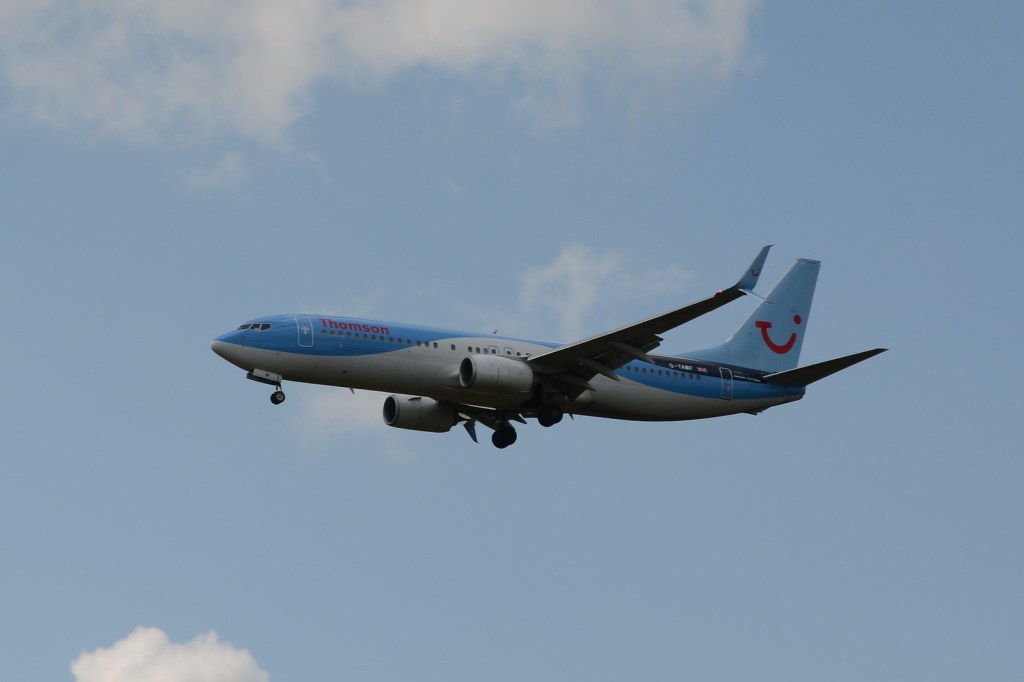
Aviation’s climate impacts are substantial. Flights are responsible for around 7% of UK carbon dioxide (CO2) emissions. Other less understood non-CO2 effects, largely caused by contrails, cause around add two to three times that global warming impact. Yet despite it being less critical to our basic well-being, fuel for road vehicles is heavily taxed whilst that for aviation is exempt. It is important to understand how well decarbonisation of the whole economy is progressing – both generally and for considering the relative place of aviation within wider efforts.
SYMCA, like numerous regional and local authorities, declared a climate emergency in 2019. It set itself a “carbon budget” – a maximum level of CO2 emissions the region can afford to emit before becoming “net-zero” carbon by its 2040 target. Around half of this was exhausted by around the end of 2023, just four years from its start date. Despite the significance, the Combined Authority has never reported this. We agree there was a climate emergency in 2019. There is an even worse one now.
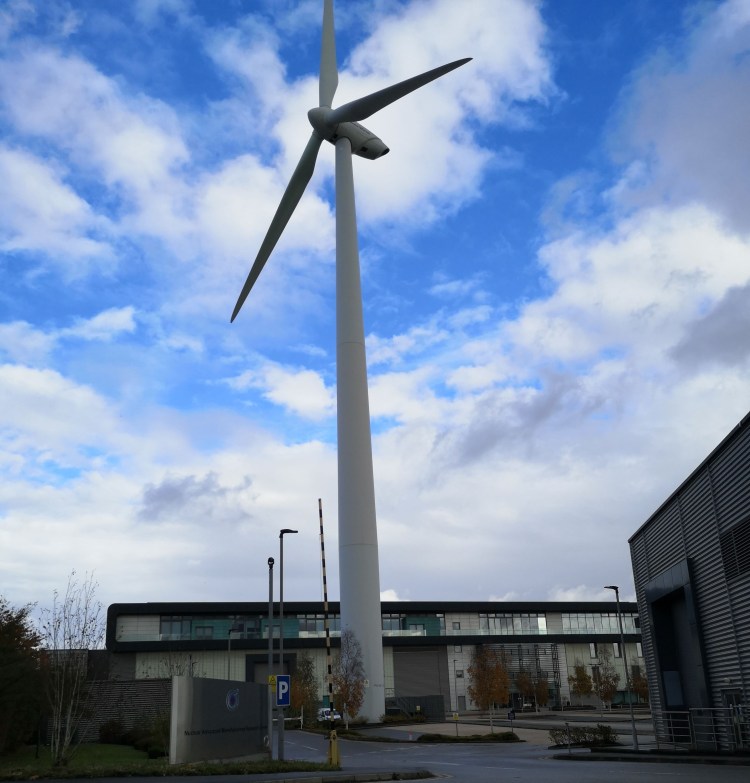
To be fair to our own regional leaders, the rest of the country is doing just as badly. Last May, the High Court found the previous government’s climate strategy failed to meet legal requirements because of inadequate measures across the board. The present Labour Government needs to revise it by this May. Another legal challenge and similar judgment appear likely. The reasons involve a longer story. The most high-profile and generally positive recent initiative, the “clean power by 2030” target, still involves significant delivery risks and some distinctly dubious technologies favoured by the fossil fuel lobby. Home energy efficiency measures are way behind target and surface transport emissions hardly reducing at all, with measures to reduce car travel continuing to prove controversial. The Government’s legal obligations are measured against much laxer carbon budgets than our regional ones. These were set to meet the Climate Change Act of 2008. They were originally designed to limit average global temperature rise to 2C but those running up to 2032 have never been revised to reflect the latest climate science urging that efforts be pursued to limit temperature rise to 1.5C. Yet already we have hit a temperature rise of 1.5C extending well over a year, albeit during a warmer part of the climate cycle.
The Government’s independent Climate Change Committee has advised “There should be no net airport expansion unless the carbon intensity of aviation is outperforming the Government’s emissions reduction pathway and can accommodate the additional demand.” Local politicians have pointed out Doncaster’s airport would be less congested than others, meaning flights to and from it would use less fuel than those at airports from which it could win passengers. Further that it would be good for levelling up. These points are reasonable to raise, except that other expansions, notably at London City and Stansted airports, are proceeding across the country using purely private investment.
Government policy is to rely purely on technical advances to allow us to take ever-more flights. Airlines are required to massively increase their use of sustainable aviation fuels (SAF) to reduce emissions. They are pressing for production to be stepped up accordingly. But all feasible supplies of its raw material will be limited with waste cooking oil being an obvious example. The EU is already having to source it for road vehicle fuel from distant and less well-off countries. In parts of Asia, such oils are sold locally for animal feed. Soon, local farmers could be priced out of the market by European buyers of oils for SAF.
Supporting South Yorkshire’s Advanced Manufacturing Research Centre where, SAF and more advanced, lighter, aircraft material are being developed, is put forward as a reason to re-open the airport. Whilst this research is valuable, it does not rely on reopening a local airport.
Many independent experts have stressed the urgency of reducing the total number of flights, with consultants Chatham House noting “the political disdain for constraining demand”. With 70% of flights taken by just 15% of the population, a frequent flyers tax would be a fair and balanced approach to this.With more serious flooding in Yorkshire last month paling into insignificance against some far worse global weather events in 2024, we hope our political leaders will focus with more conviction on creating urgently needed jobs in genuinely sustainable activities, in place of their plans for the airport. In view of the extreme severity of the climate crisis, the Combined Authority should also be questioning national policymakers about how any other airport expansions can be justified.
Don’t miss a post from Tell the Truth Sheffield. Please subscribe for free today.
If you value the work of Tell the Truth Sheffield please support us with a regular donation. We are run entirely by volunteers and have various expenses to pay.
Make a one-time donation
Make a monthly donation
Make a yearly donation
Choose an amount
Or enter a custom amount
Your contribution is appreciated.
Your contribution is appreciated.
Your contribution is appreciated.
DonateDonate monthlyDonate yearlyDiscover more from Tell the Truth Sheffield
Subscribe to get the latest posts sent to your email.

3 thoughts on “Don’t Reopen Doncaster Airport”