
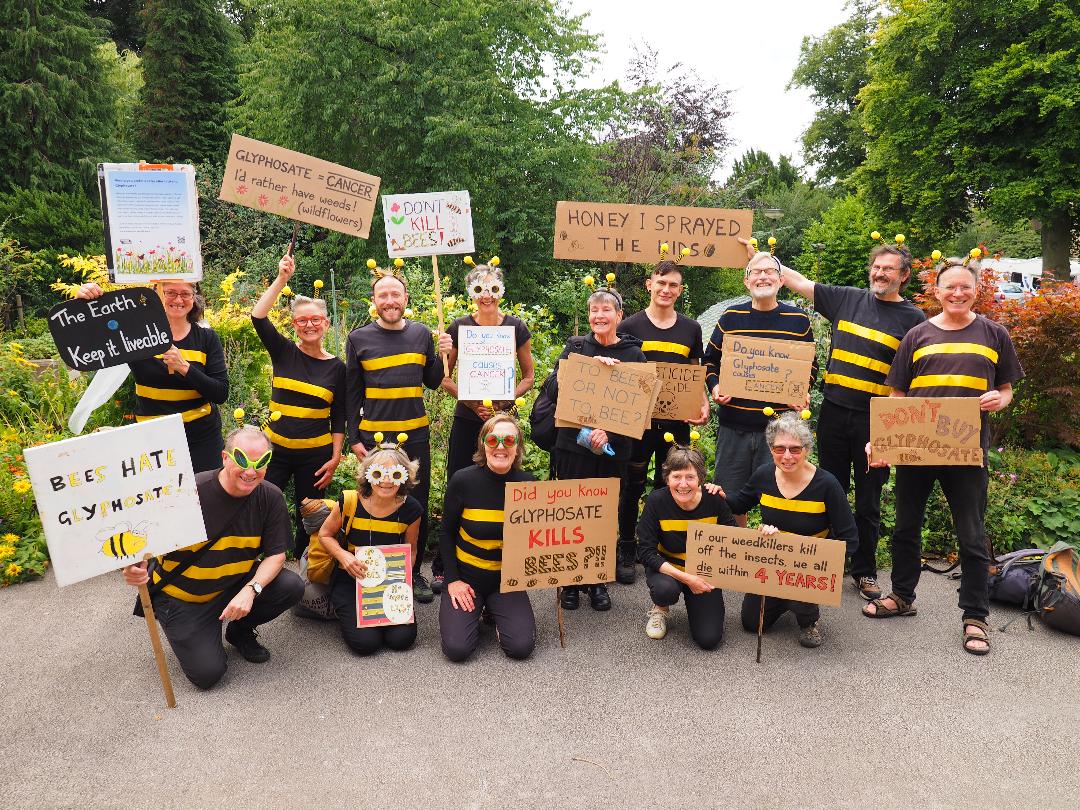
Extinction Rebellion Sheffield has issued the following press release.
Climate activists are calling for Sheffield City Council to stop using the herbicide glyphosate.
Extinction Rebellion Sheffield (XR) has been calling for Sheffield City Council to stop using glyphosate on our streets and housing estates with studies showing the disastrous environmental effects on insect, animal and human life. However, a recent report shows that glyphosate isn’t even effective at doing the job as a weedkiller. When used in successive years in the same area it becomes ineffective. XR calls for the council to cease the use of glyphosate immediately.
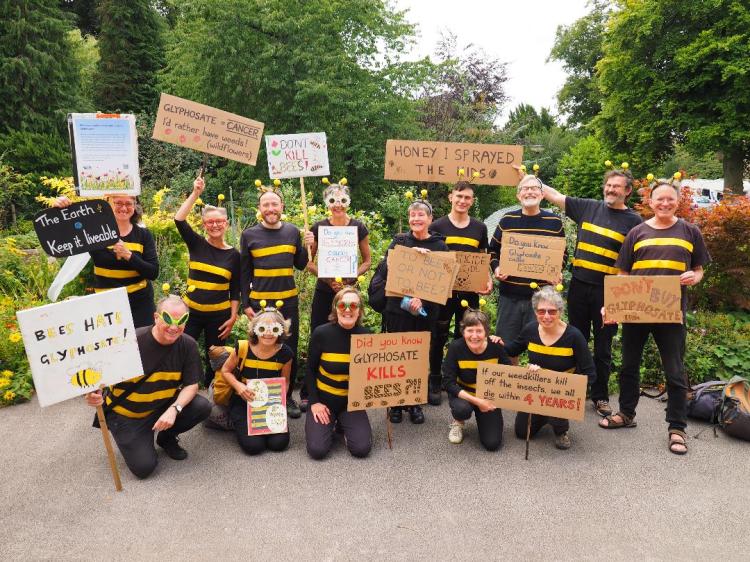
Extinction Rebellion Sheffield spokesperson Dale Le Fevre said: “I mean, what do we have to do to get the city council – as well as the country and world – to stop using this dangerous and ineffective chemical?”
At first, the herbicide glyphosate was called a ‘silver bullet’ for crops such as corn and soybeans that were engineered to tolerate the herbicide. It successfully provided very strong weed control in the first few years of use. However, weeds appeared to begin to adapt in just a few years. After a decade, “weeds were up to 31.6% less responsive to glyphosate, with further linear declines as time went on” according to Lauren Quinn, University of Illinois at Urbana-Champaign.
A study by the USDA-ARS (US Dept. of Agriculture – Agricultural Research Service) and the University of Illinois Urbana-Champaign examined the ability to produce a desired or intended result of engineered crops that were commercialized. What the researchers found was a “significant and rapid decline in glyphosate control for all seven major weed species they examined.”

Chris Landau, postdoctoral researcher for USDA-ARS and first author of the paper commented “Our analysis represents one of the largest cumulative measures of how weed communities have adapted at an unprecedented scale throughout North America.” In short, nature adapted.
In essence, the herbicide glyphosate became less and less effective at controlling weeds. Its continued use is now called into question based on its decreasing effectiveness in doing what it’s intended to do.
There are other unintended and serious effects – the killing of insects, including vital pollinators, and the birds who eat the affected insects. We are losing our pollinators at an alarming rate, and as they go, so do our food crops. There has been a credible amount of evidence to suggest it causes cancer, though this is not yet conclusively confirmed.
Using glyphosate on a continued basis on crops for weed control is not only an ineffective means to proceed in the long term, it is dangerous to insects, birds, and perhaps people.
A conclusion reached by the scientists who conducted the studies is pretty clear that ‘silver bullets’ for weed control don’t exist. What the researchers recommend are what sounds like more traditional methods of “diversification in chemistries, including soil – and foliar-applied products; crop rotation patterns; and mechanical controls.”
These scientists caution us about the next ‘silver bullet’ to come along, based on what has happened with glyphosate. Natural organisms adapt. “Why would we think nature would behave any differently? It won’t,” said Aaron Hager, professor and faculty Extension specialist in the Department of Crop Sciences and Illinois Extension, part of the College of Agricultural, Consumer and Environmental Sciences (ACES) at the University of Illinois
- For more detailed information, see the original article, https://phys.org/news/2023-12-silver-bullet-wasnt-glyphosate-declining.html
Discover more from Tell the Truth Sheffield
Subscribe to get the latest posts sent to your email.
