
by Rosalind Dean
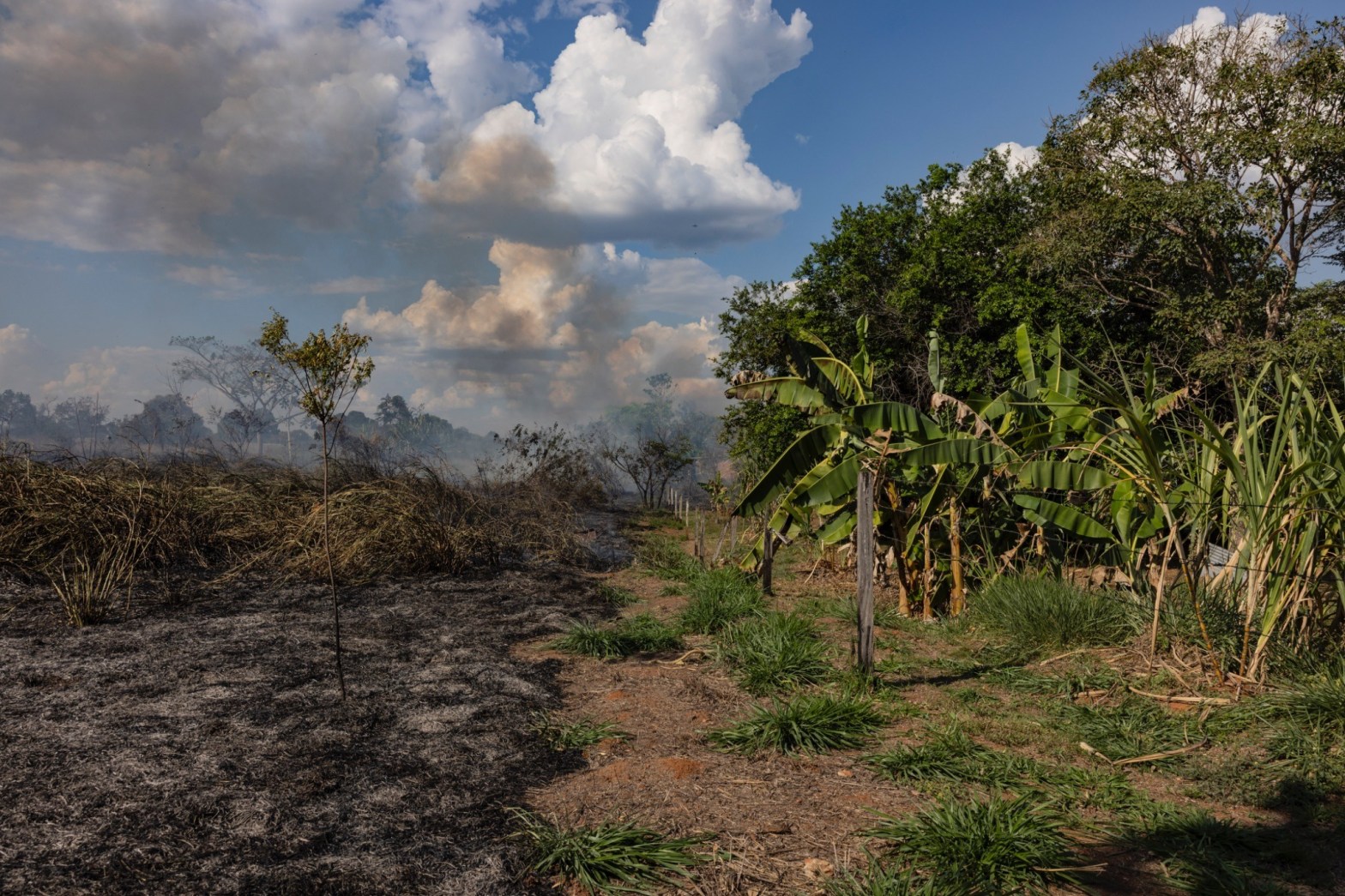
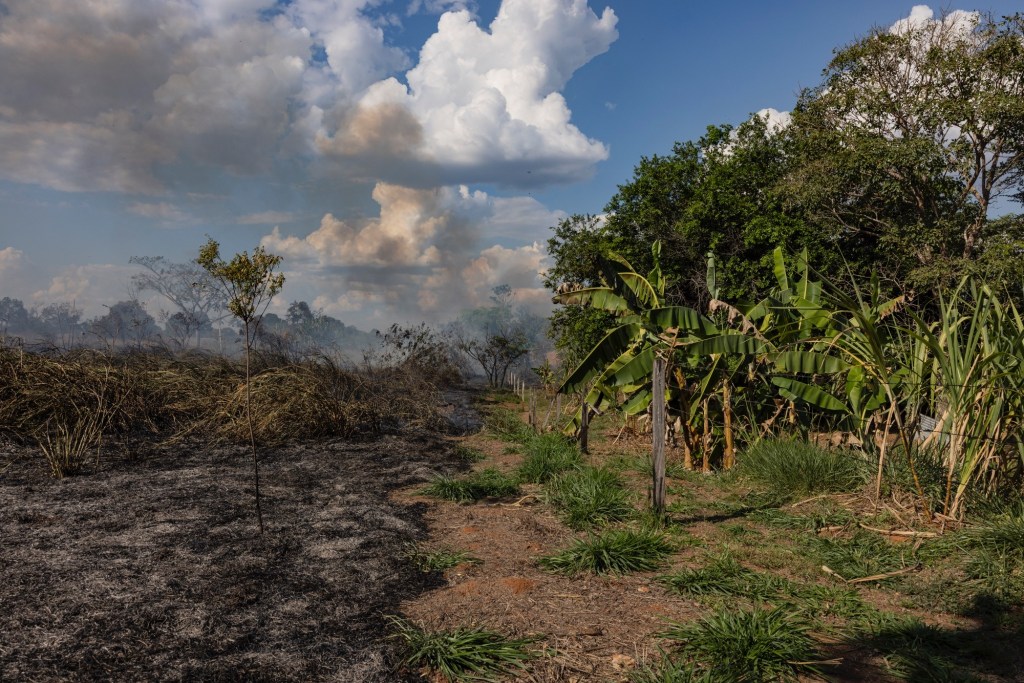
This year, Earth Overshoot Day falls on Thursday, July 30th. This marks the date when humanity has exhausted nature’s budget for the year. For the rest of the year, we are going into deficit, liquidating resources and accumulating carbon dioxide in the atmosphere. We are using as many ecological resources as if we live on 1.7 Earths. We are busting our budget. This cannot go on. There is no Planet B.
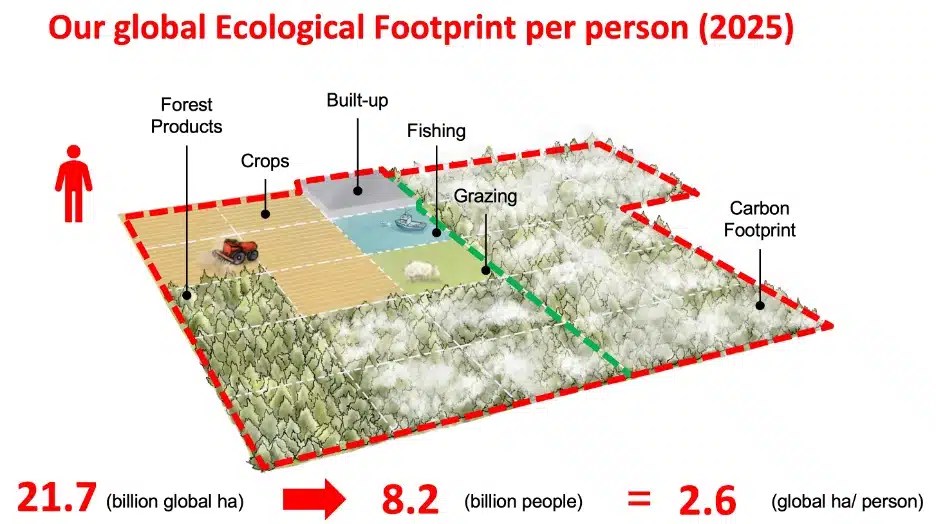
This sounds dramatic, because it is dramatic. But behind the headlines is a lot of detailed work, comparing the resource demand of individuals, governments, and businesses against Earth’s capacity for biological regeneration. We have a finite amount of land, which can provide us with all sorts of biological services, but there are competing uses for it, especially:
● providing food, fibre, timber, minerals
● accommodating roads and buildings
● enabling energy production
● absorbing or neutralising economies’ waste, including CO2 from fossil fuel burning or steel production
● providing crucial biological services like fresh water and clean air.
We live on a massively overused planet. There are some who say the answer is to go into space and find another planet. My response is, if we have not learned how to manage one planet, for goodness sake, let us not risk ruining another world.
The amount we extract from the planet has two elements: how many of us there are and how much we consume in material terms. Providing all the women who want it with safe, accessible family planning helps enormously in stabilising population, and switching our priorities to non-material goods that we value, like health, education, leisure and culture, could help reduce our demands on the natural world.
Of course we must make sure that everyone has enough material goods for a decent life, like nutritious food and a warm, secure home. But a good life also includes a meaningful way to earn our living, time with our family and friends, and a society that respects us.
There is a finding in economics called the Easterlin Paradox that shows when people get richer, they are happier for a time, and then it drops away. Probably because the people they compare themselves to are also getting richer. However, the same Mr Easterlin also found that happiness can be increased, even at quite low levels of Gross Domestic Product (GDP), by policies promoting full employment and a strong social safety net.
Governments pay a great deal of attention to economic statistics, such as GDP, but these measures do not include ecological imbalances, and they only include some of the things that make our lives feel worthwhile – the ones that are paid for. It seems that we pay a lot of attention to the things we count, so it is an urgent job to find new or additional measures of social progress. And to make sure that Governments pay attention to these broader statistics that incorporate our sense of well-being.
This is a challenge, but work is being done by the UN and others to find ways to measure things like food security, health, education, political voice, social networks and housing.
● The UN Human Development Index includes life expectancy and education as well as per capita income.
● Most countries in the UN have also adopted the 17 Sustainable Development Goals that aim to increase well-being without eroding humanity’s long-term resilience.
● The Wellbeing Economy Alliance (WEAll), founded in 2018, is a global collaboration of organisations, movements, and individuals working together to transform the economic system to prioritise social and ecological wellbeing over mere financial growth.
● An index of Gross National Happiness has been developed in the Kingdom of Bhutan.
● Doughnut Economics looks at the space between a social foundation, meeting 12 essential needs, and an ecological ceiling in which there are 9 planetary boundaries that cannot be safely breached.
The UK’s own Earth Overshoot Day this year fell on May 16th. Our country’s ecological footprint is the equivalent of about 2.3 Earths per year. As a country, we are about twice as rich as we were 40 years ago. Do things feel twice as good? Maybe it is time to pay more attention to those things we cannot touch but help us feel secure, engaged, effective – and part of something bigger than ourselves.
Discover more from Tell the Truth Sheffield
Subscribe to get the latest posts sent to your email.
