
By Darcy White
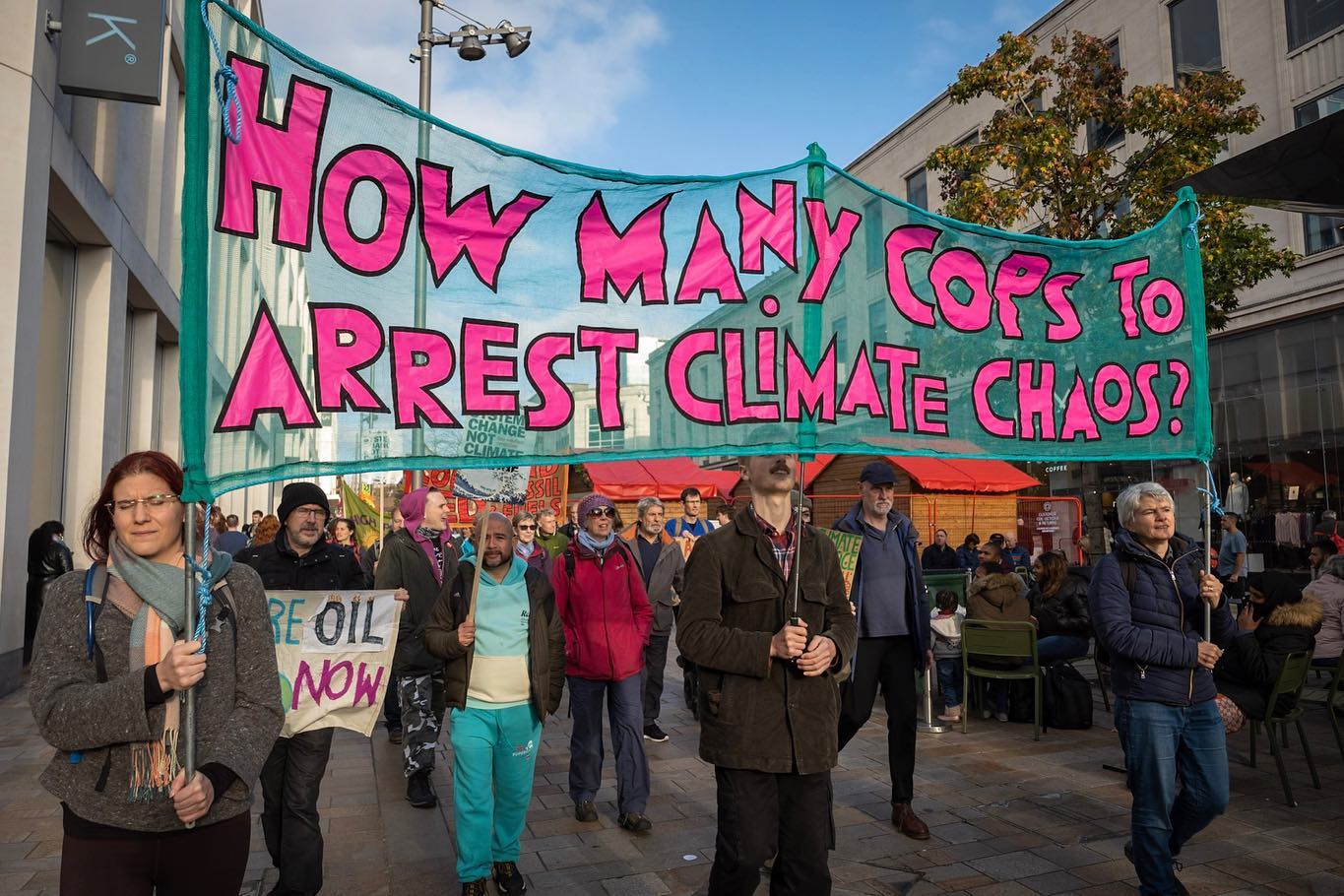
COP30 has arrived. The annual global climate conference will once again be a test of how our governments are doing in the struggle to address profound environmental breakdown.
COP gets its name from the‘Conference of the Parties to the United Nations Framework Convention on Climate Change’ (UNFCCC). The 30th COP takes place from 10 to 21 November in Belém, in the far north of Brazil, sometimes referred to as the ‘gateway to the Amazon’; a site of extreme deforestation with planet-wide consequences.
These conferences come around with disconcerting frequency. Yet we are seriously off-track for meeting crucial targets set ten years ago in the 2015 Paris Agreement. The past month has been particularly dire for environmental events and tipping points. Hurricane Melissa was Jamaica’s strongest ever storm, and typhoon-winds and flash floods have recently devastated the Philippines. Seven of the nine identified planetary boundaries have now been crossed; the latest being ocean acidification.
Moreover, 1.5°C above pre-industrial levels was breached for the whole of 2024. 1.5°C was the agreed uppermost limit to which average global warming should be allowed to climb. This development has been strongly flagged by climate scientists for a considerable time, but it was only recently confirmed by UN Secretary General António Guterres.
The aim now will be to keep it ‘well below’ 2 degrees. This new ‘average’ is hugely problematic for the entire planet but catastrophic for the Global South because in this region, the average annual rise in temperatures will be around 5°C. This will dramatically increase devastating weather conditions such as extreme heat, droughts, wildfires, hurricanes and flooding.
Will countries be ambitious enough?
In preparation for COP30 governments that are signed up to the Paris Agreement are required to submit new climate plans; known as ‘Nationally Determined Contributions’. Only 64 have been submitted and, when considered collectively, there are deep concerns that there is a significant shortfall between these contributions and the targets that are gravely needed.
Climate finance; a core focus
The ability of the poorer nations of the Global South to act on emissions reduction, adaptation and resilience, as well as dealing with the impacts of climate events, will depend upon finance.

Brazil and Azerbaijan (last year’s host) have developed a strategy to encourage countries to contribute towards an agreed, yet barely financed, climate finance goal of $1.3 trillion per year. This strategy is known as the ‘Baku to Belém Roadmap’. Previous financial commitments have fallen far short of the anticipated costs and, even then, have not always been honoured. This should concern us all.
Transitioning away from fossil fuels
Another focus will be the urgent need to transition away from fossil fuels as our main energy source. Agreements at COP28 indicated that by 2030 renewable energy would triple and energy efficiency improvements would double. However, the mechanisms for ascertaining genuine progress on such goals remain highly controversial. It will likely be necessary to establish additional targets and robust checks.
Brazil calls for action
As host nation, Brazil intends to steer the process firmly towards its ‘Action Agenda’, urging governments to commit to concrete and ambitious measures. However, Brazil’s leadership may prove to be undermined by its own government’s conduct. President Lula is still actively pursuing oil production, including in the Amazon.
Other seemingly intractable issues trouble the COP process. The USA, the second-largest emitter of greenhouse gasses, will be absent. President Trump has twice removed the country from the Paris Agreement claiming that climate breakdown is a hoax. There are concerns that his hostile stance will influence other nations.
Furthermore, the presence of an army of fossil fuel lobbyists at every COP will once again undermine the potential for real progress on climate action; last year 1,700 fossil fuel lobbyists attended the COP.
To date, the implementation of the Paris Agreement is significantly behind on all targets. This COP must be about taking action! We need structural changes, but if the COPs continue to be under the influence of those invested in the fossil fuel industry, meaningful change is a distant hope.
However, as Ana Toni (CEO of COP30) has said, the COPs are just a ‘moment in the year’. More important is what is done the rest of the time.
‘Global mobilization’
The Brazilian administration says it is inviting the ‘international community to join Brazil in a ‘global “mutirão”’ (mobilization); a term rooted in a Brazilian native indigenous concept referring to ‘a community coming together to work on a shared task’. This “mutirão” is ‘against climate change, a global effort of cooperation among peoples for the progress of humanity’.
What can ordinary citizens do?
We can put pressure on our leaders as well as making changes in our own lives, workplaces and communities.
On Sat 15th there is a COP30 ‘Global Day of Action’ rally and march in Sheffield. Meet at 11am at Devonshire Green. This will be followed by a public event in Victoria Hall, from 1pm with stalls, music, refreshments.

You can also lobby your MP to attend the National Emergency Briefing, taking place on 27 November at Westminster Central Hall. All MPs have been invited but few have signed up. Check here to see if your MP will be attending: https://www.nebriefing.org
Some further reading on COP 30 (from Graham)
This one is a long read but includes all the latest climate statistics. If I had to pick one fact from it it would be the richest 10% of the world’s population have caused 2/3 of the global heating.
Climate Scientist Kevin Anderson interviewed on Radio 4 Today programme on 7th November. Starts at 2:36:30. They discuss the Brazil COP and how the so-called “cost of living crisis” is being (mis)used by leaders & hi-emitters to avoid taking meaningful action on climate change.
https://www.bbc.co.uk/sounds/play/m002lpnc
Discover more from Tell the Truth Sheffield
Subscribe to get the latest posts sent to your email.
