
By Darcy White
Over the course of my life, I’ve had several stark wakeup calls about the profound loss of biodiversity we are facing. One was about 25 years ago whilst on holiday on the remote Llyn Peninsular in north Wales. Another was this summer whilst holidaying in Dumfries and Galloway, on the south-west coast of Scotland.
In each place I experienced what felt like a throwback to my childhood in rural Suffolk during the late 1960s and 70s, amidst an abundance of wildlife. My parents told us that they had moved to Suffolk to get back to the more rural experiences they had known in the 1940s and 50s living in the outer parts of east London, and as children we enjoyed the benefits.
We were familiar with all kinds of wildflowers and trees, small mammals, birds and amphibians, and a wide range of butterflies and moths. Grasshoppers and crickets abounded. Also, ladybirds, earwigs and stag beetles. We would sit among dense clumps of tall grasses with so many different characteristics that, as children, we were familiar with the play-potential of many different species. With some we stripped the seed heads to use as confetti, others could be plaited and woven, and we knew the ones to avoid, with their razor-sharp edges.
In Llyn, and Dumfries and Galloway, I experienced some of this abundance once again.
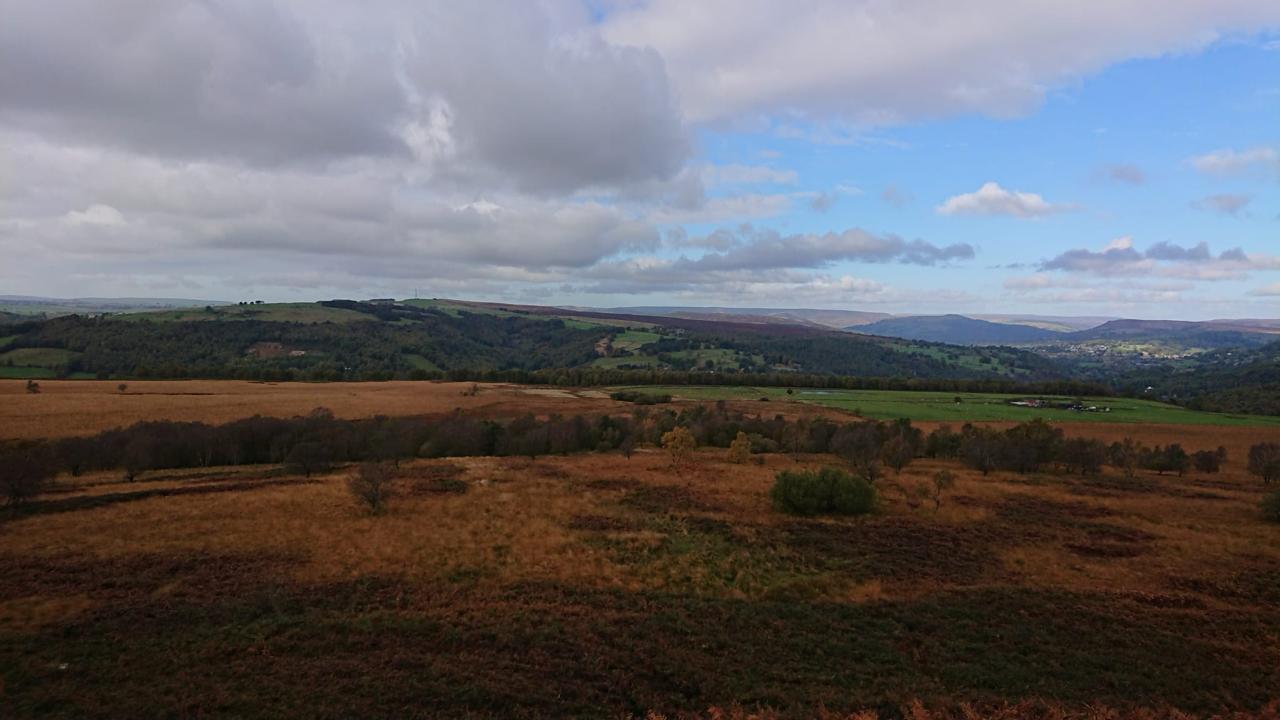
In the 1980s I came north for university and stayed on, attracted by the ease with which you could travel out of Sheffield and into the vast areas of hills and moors of the Peak District. Many of us think of this as natural, unspoiled terrain. Yet we know that it has been heavily altered by human activity; due to land clearances and enclosures, by over grazing, grouse rearing for game shooting, and of course climate change. Each has severely degraded the natural habitats in our National Park. Indeed, all UK uplands now lack the species diversity they once had; with few trees and vastly reduced plant diversity and wildlife.
Yet somehow the beauty of the purple heather in July, the golden colours of bracken bathed in autumn sunlight, and the dramatic rocky heights, fool us into experiencing the landscape as unspoiled.
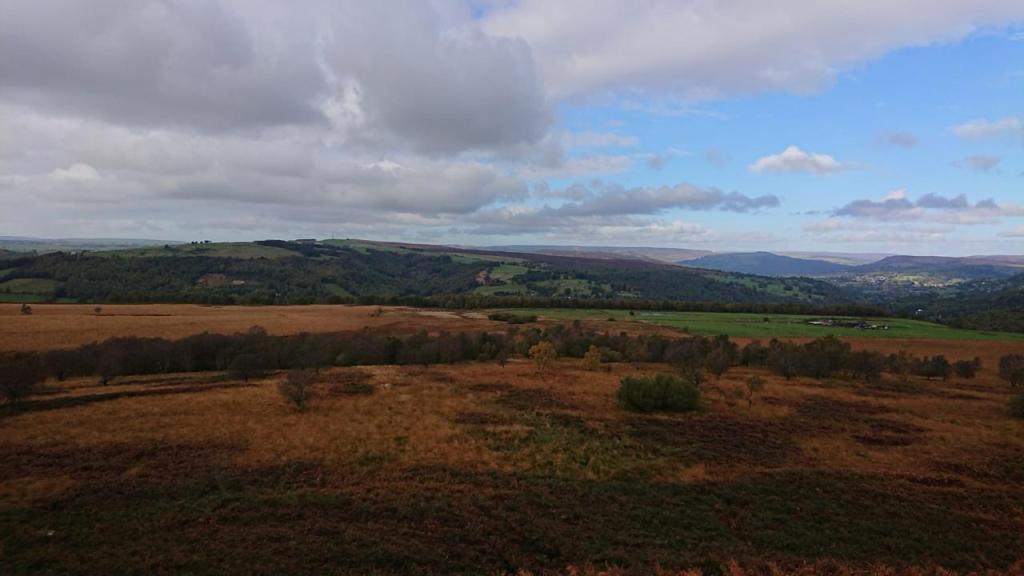
What can seem like a healthy environment to us now, was once far more diverse; our baseline has shifted.
This pervasive phenomenon is known as ‘shifting baseline syndrome’. It describes the fact that each new generation experiences the environment that it has grown up in, as ‘natural’; assuming that it is how it has always been. Sadly, this creates lower expectations for our ‘natural’ environment with huge consequences for conservation and restoration.
According to biodiversity expert Rob Dymott, “We’ve forgotten how our landscapes should look” (YouTube channel “Leave Curious”)
There are few genuinely natural environments left in the UK and biodiversity has been steadily eroded over centuries. Alarmingly, on average a further 19% of monitored species have been lost since 1970.
But why have these baselines shifted?
For the past 50 years nature has been treated as a commodity to be traded, allowing unchecked development, such as roads, car parks and warehouses. Hedgerows have been grubbed out to make way for monocrops. Any protective legislation is considered an obstacle to developers.
Consequently, our baseline for abundant nature will be this moment when the UK is one of the most nature-depleted countries. This will have catastrophic implications for future generations, without pollinators and with denuded soils.
A new ‘Planning and Infrastructure Bill’ is being taken through parliament. It proposes to replace current legislation with something that will be even more damaging to habitats and ecosystems. If successful, developers can opt to pay a ‘nature restoration levy’ for which they are allowed to disregard any ecological damage and habitat destruction, on the basis that at some future time, the levy will be used to compensate. However, this levy must not be so high as to make the development economically unviable.
Furthermore, planners will no longer be required to carry out an ecological survey prior to development. This begs the question: if there is no record of the ecological baseline before development how can we be sure that full restoration takes place?
Experts argue that the Labour government’s decision to roll back environmental laws, in its bid to drive economic growth at any cost, will put the UK’s most precious sites at risk.
We’ve already lost so much but even more will be lost. The planet isn’t capable of keeping up with growth at any cost. Nature needs to be a valued part of our lives. The good news is that when nature is properly protected it can be restored, sometimes very quickly.
A report on ‘Shifting Baseline Syndrome’ (2018), made four recommendations: restore the natural environment, monitor and collect data, reduce the extinction of experience, and educate the public.
To ensure that we can protect and restore biodiversity we must recognise the problem of ever-shifting baselines. We need a clearer picture of past environmental conditions to establish an appropriate baseline against which to judge the current state.
By becoming more aware, sharing our experiences and listening to the experiences of others, we can hold our political leaders to account.
Further reading on Shifting Baseline Syndrome
Soga, M and Gaston, KJ (2018), Shifting baseline syndrome: causes, consequences, and implications. Front Ecol Environ 16: 222-30
Discover more from Tell the Truth Sheffield
Subscribe to get the latest posts sent to your email.
