
It’s been a strange summer with hardly any rain. I started picking blackberries in July, which is unheard of. Many of my pears are already harvested, the apples need picking too, and it’s only mid-August!
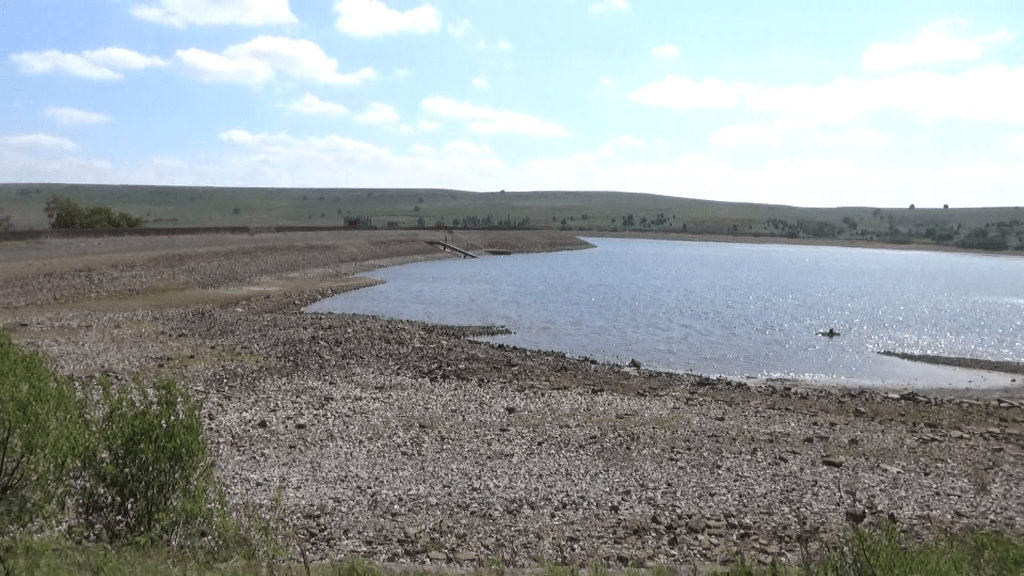
With reservoirs at record lows and stream flows exceptionally low, England is desperate for rain. Dave Kaye, Yorkshire Water’s director of water, told customers, “We’re now down to 44.7% across the reservoirs. From February through to June, five months, it was the hottest and driest period in 132 years. So that had a big effect on reservoir levels”
The government has announced a “nationally significant” water shortage in England, which means the whole country is at risk of running out if the dry weather continues. Households and businesses could face sweeping restrictions and standpipes. If next year does not bring above-average rainfall, shortages will bite, and farmers may be unable to irrigate.
Yorkshire Water customers appear to be complying with the hosepipe ban, resulting in a decrease in water demand. But some companies continue to use massive amounts without restriction, such as power stations and big data centres that need to cool the microprocessors that power AI, social media and online games. We could all save water by reducing our internet usage.
There are so many things we should have been doing over the last 50 years to prepare for this, but our privatised Water Companies have concentrated on dividends for shareholders and bonuses for directors.
Water companies in England and Wales lose about 1 trillion litres of water through leaky pipes each year. About 20% of all treated water is lost to leaks. The water firms have pledged to halve leakages by 2050. Meanwhile, the annual pipe replacement rate is 0.05% a year across all water companies. Much of the sewage system in Sheffield, for example, has not been significantly updated since it was built in the 1850s. Despite a rising population, we haven’t built a new reservoir in the last 30 years.
Water companies take unsustainably large amounts of water from our rivers and aquifers, which has a dreadful impact on nature. The Environment Agency (EA) assess that 15% of surface water bodies and 27% of groundwater bodies in England have unsustainable levels of abstraction.
What needs to be done? You’ll have seen lists of how you can save water so I’m not repeating that.
Authorities could help nature by reintroducing beavers to our uplands. Their amazing engineering skills stop water from flowing so quickly into the valleys, keeping rivers flowing and preventing flash floods.
Planning legislation should insist that all new houses are equipped with rainwater harvesting for flushing toilets. All houses with gardens should be equipped with water butts to keep the plants growing.
We must take the Water Companies back into public control and end the scandal of massive bonuses to failing directors.
Sir David King, a former UK chief scientific adviser who chairs the Climate Crisis Advisory Group, said: “Drought in England is no longer a warning. It is a clear signal that climate collapse is unravelling our water, food and natural systems right now.
“This crisis demands a fundamental shift that places real value on our planet and environment, invests in nature, restores water cycles and transforms how we use every drop. If we rise to this moment, we can turn crisis into opportunity, delivering economic resilience, ecological renewal and climate leadership.”
Our lack of rain is a massive concern, but other countries have had it far worse. Devastating wildfires in France, Spain and Portugal have belched so much smoke into the atmosphere that it reduced temperatures here by blocking the sunlight. There were more than 300 deaths due to flooding in Pakistan, and more flooding is expected. There’s alarming news as record-breaking Hurricane Erin threatens Caribbean islands.
I’d like to say, because of Climate change, this is the new normal. Unfortunately, that would be very misleading. Climate change is speeding up, so we should be planning for far worse.
American climatologist James Hansen issued a severe warning recently. “We’re already at about 1.6°C of warming. (You may have seen lower figures, but it depends on how the moving average is calculated.) With current policies, we will exceed 2°C in little more than a decade. By the end of the century, we’re staring down 4°C or more — a world where ice sheets collapse, oceans rise, coastal cities are drowned, food systems break under heat and drought, and mass migration is the norm.”
4°C is the global average. Over land, and especially in the interiors of continents, including life-giving breadbaskets, that’s more like 6–8°C. Whole regions become unlivable and ungrowable.
This is physics. More heat in the system changes everything: storms, rainfall, agriculture, ecosystems, economies, politics. And with the planet warming faster than models predicted, “later this century” is rapidly becoming “within our lifetimes.” Tipping points, such as the shutting down of the Atlantic Meridional Overturning Circulation, may be much closer than scientists previously thought.
So to protect our water supplies, we don’t just need more reservoirs and investment to renew leaky pipes, we need urgent action to reduce fossil fuel use to stabilise the climate.
Discover more from Tell the Truth Sheffield
Subscribe to get the latest posts sent to your email.
