
A guest blog by Darcy White
Last week, in this column, I reported on a conversation with Ci Davis who had recently returned from the ISEE-Degrowth conference in Norway. Supporters of degrowth embrace a fundamental challenge to the current growth-based economic system which has vastly exceeded planetary boundaries whilst also deepening inequality.
In this continuation of our discussion, Ci and I discuss examples of what can be thought of as ‘Real Existing Degrowth’ here in Sheffield. Initiatives that prefigure alternative ways of being that are better for the planet and fairer for its inhabitants.
Degrowth is concerned with both environmental and social issues and promotes democratic decision making by ordinary people. Studies show that around 80% of people in the UK are concerned about climate change, yet our current economic system continues to hasten the crisis. At the same time inequality is on the rise.
How does degrowth approach these crises?
“Degrowth recognises that these crises are connected to the economic system that operates globally. No-one really wants to discuss this, because of an entrenched narrative about growth, but tragically this system is designed to serve only a very few.”
“The mainstream economy works on the notion that things are only of value if they can be traded for money. We’re expected to be consumers above all else. But degrowth is about more than the economy; it touches all aspects of life, including community relationships.”
Are there examples of degrowth working in Sheffield?
“Yes, there are many people doing things which are degrowth related who may not use that term. They might talk about cooperatives, mutual aid, or community energy for example.”

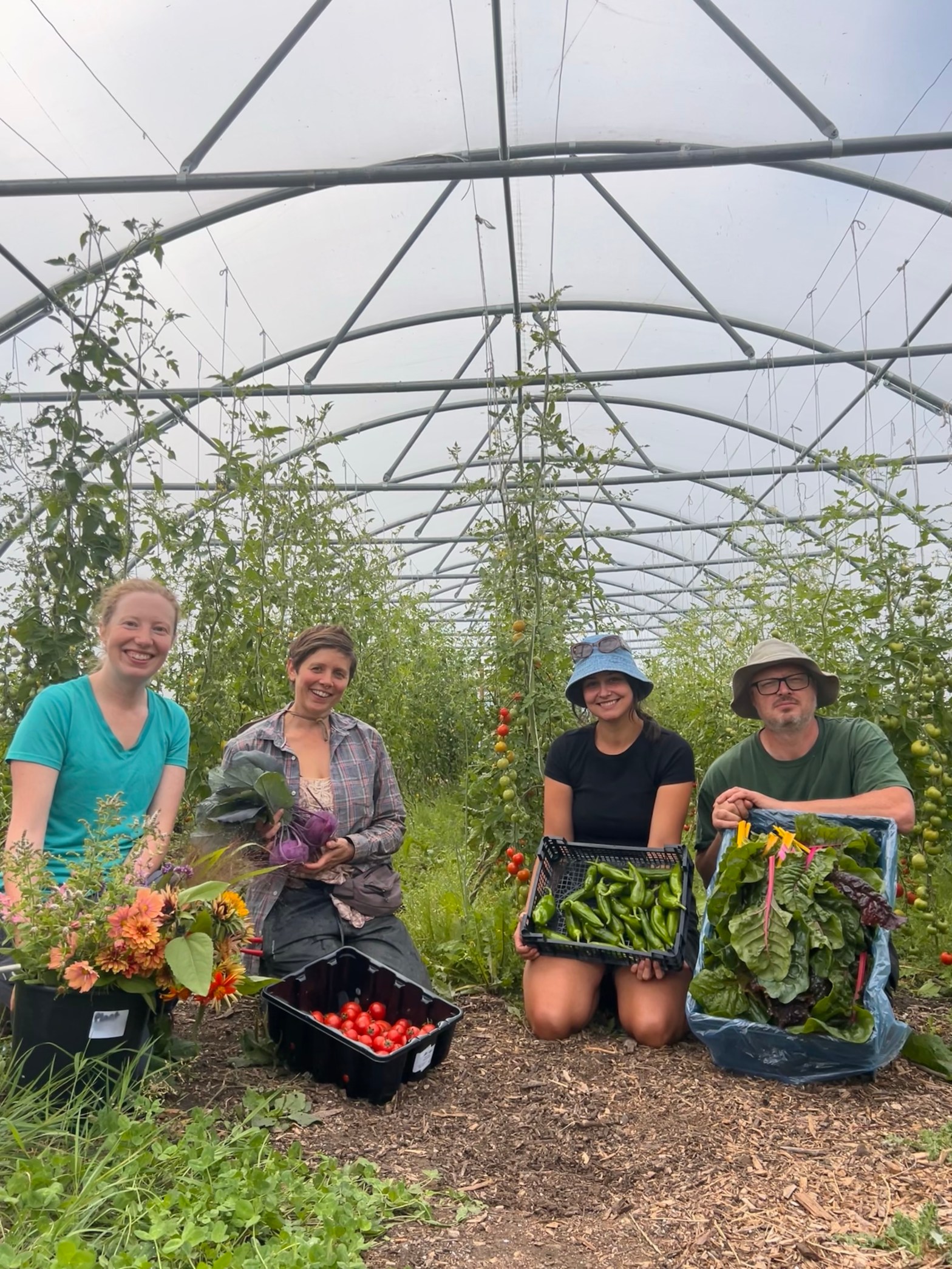
One important area is food production. Degrowth favours locally produced, nutritious food, with a low carbon and ecological footprint. It is also pushing for changes in work practices and property ownership; workers co-operatives are good examples. ‘Regather’ is a 15-acre organic farm in the Moss Valley on the south side of Sheffield. It is an excellent example of how food can be grown locally and sustainably using the values of cooperative organisation. It also offers community outreach, enabling others to learn from its practices. “You could say that it is prefiguring how society might work if degrowth principles were followed.”
Mutual aid is another very good example of real existing degrowth, because “mutual aid is about solidarity”. In fact, degrowth is often thought of as a solidarity economy. This can include housing cooperatives, credit unions, community fridges and food banks, and community-controlled energy. “Initiatives which give power back to local people.”
‘SY Ecofit’ is a social enterprise working with communities to improve the energy efficiency of homes through insulation and retrofitting work, whilst developing local skills and helping South Yorkshire to meet its net zero target.
‘Sheffield Community Energy’ works to create electricity through solar panels or wind turbines on rooftops and small plots of land. This brings local decision making. The community can decide what they want energy for and how much they need. This democratises energy and contributes to decarbonisation.
Local people can visit the new ‘Sheffield Energy Hub’ on Cambridge Street; a ‘one-stop-shop’ to learn about energy across all sectors. This important community driven, collaborative initiative, with its tagline ‘sustainable energy, warm homes’, helps people reduce their energy use; another core degrowth principle.
All this sounds quite serious; what about leisure and conviviality?
“This is so important. Degrowth uses the term ‘conviviality’; that’s about well-being and enjoyment.” The vision is to work less, produce and consume less, and to live better lives with more time for family, friends and leisure.
“A key question for society is: what do you do with your surplus? It could be invested it in the weapons industry, but the approach taken by degrowth says, ‘Why not have a fiesta or a party?’”
Every year Sheffielders come together to organise festivals of entertainment and creativity: Abbeyfield Park Community Festival, Sharrow Festival, and Radical Pride, spring to mind. Only last month Tramlines had a festival fringe which provided over 400 music and entertainment performances around the city, free of charge. “This turns it from a money-making thing to fully accessible community enjoyment.”
“It’s a misconception to think there is only one way in which society can operate. I see degrowth practices being adopted more widely; fitting in as part of a tapestry of alternatives that already exist. The problem is that, at present, it’s all quite small scale.”
What’s next for degrowth in Sheffield?
“We need to make these small-scale initiatives more widespread and applicable to most people’s situation. Moving away from consumption as the primary basis for defining wellbeing to finding more convivial means of satisfaction.”
“There’s no blueprint for how this is done. There’s just a recognition that if we carry on the existing trajectory, we’re going to overheat the planet and destroy the lives and the livelihoods of people everywhere.”
“I think it’s important that we develop something in Sheffield, to help to make degrowth an acceptable idea; to move our local government, but also one another, into thinking there are other ways of being. It’s clear that we all need to be able to think beyond the existing paradigm.”
Local group contact: degrowthslowdown@gmail.com
Discover more from Tell the Truth Sheffield
Subscribe to get the latest posts sent to your email.
