
A guest blog by João Craveiro

Artificial Intelligence is here to stay, we are constantly told. But should we welcome it with such open arms when it might accelerate the destruction of our world?
Every day, I read or hear a new opinion on what the world will look like once AI “takes over”. Some think Artificial Intelligence is wonderful because of all the possibilities it unlocks for medicine or other areas of scientific discovery. Others will tell us to be pessimistic because it will replace us all. While the first of these needs to be celebrated, and the second one planned for properly so that it can be avoided, its environmental impact keeps being underlooked. What kind of world will these changes even take place in?
Impact
When we think about the impact AI will have on the environment, we must consider its energy and water consumption.
AI uses up about thirty times more energy than a simple online search [1]. Yearly, if five per cent of global internet searches use Generative AI – such as ChatGPT – it would require the equivalent of annual electricity consumed by 108,450 households [2]. Their need for non-stop energy has overloaded existing infrastructure, leading to some cities, such as Amsterdam [3], and countries, such as Ireland, effectively banning the construction of new centres [4].
Then, there is the water consumption AI needs to cool the data centres powering it. One estimate says that the average data centre uses three hundred thousand gallons of water daily to keep cool, roughly equivalent to water use in one hundred thousand homes [5]. A more conservative estimate says it would require over fifty million gallons of water yearly (or about one hundred Olympic-sized swimming pools) [2]. Regardless of the exact numbers, it seems clear that Artificial Intelligence will deepen our chronic water issues. This is because most of the water evaporates, and the water that doesn’t ends up in sewage tanks [6]. We need to remember that, as it is, many countries are already suffering from a water shortage [7] – and many more will soon be suffering from it [8]. We are already in a climate crisis.

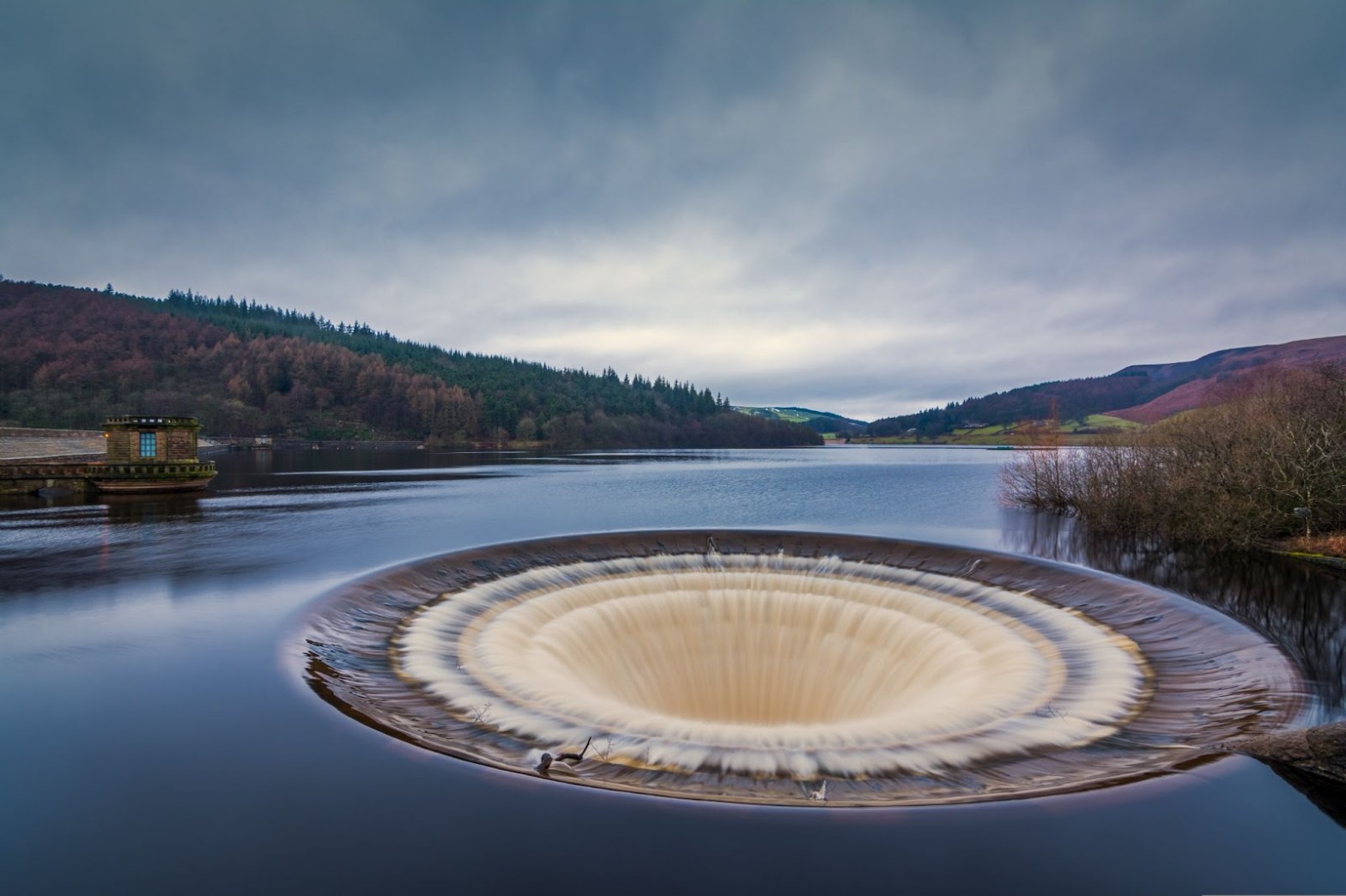
Water Reservoirs, like Lady Bower, could be used to cool down data centers.
Image by Tim Hill, from pixabay.com
Crisis
With the world already feeling the impact of climate change and many countries already suffering from the climate crisis, are there any solutions that can be implemented fast enough? One possible solution to its energy consumption, which a lot of companies are already looking at, is renewable energy [9]. Although generally welcomed, this investment is using up finite renewable energy resources that could make other existing usages greener, contributing indirectly to the increase of carbon emissions, not the reduction. However, not all of the energy used by these centres will be renewable. They are active 24/7, meaning that some of these centres have already caused fossil fuel power stations to stay open and produce more energy than planned to ensure their continual activity in case renewables are not available. One possible solution to these issues that can end up having a local impact are Small Modular Reactors, proposed by the prime minister recently [10] and being developed in South Yorkshire [11]. These are smaller than those we are normally used to seeing in the media (they have about half of the power output) and can be built much closer to the area where their energy is needed. Because of this smaller size, they would allow companies to power themselves, but they are also a very new and unproven technology that will take years to implement, which is why these companies are also relying on fossil fuel-powered stations for now. Here, increasing the efficiency of the data centres would likely not solve the issue because whenever a technology becomes more efficient, we end up just using it more, leading to overall bigger consumption.
For the water issue, a few solutions have been proposed. The most notable of these has been Microsoft’s breakthrough in which it found it could cool systems much more efficiently (reportedly not losing any water at all) by passing the water through microchannels within the chips themselves [12]. This is a massive breakthrough and has the potential to reduce both the usage of water and energy by a very significant amount. However, these technologies take a long time to come into effect. This particular solution requires chips to build the microchannels into it and seems to be particularly difficult to implement, so it might take a long time before it is widespread.
Time
The issue here is time. With the climate crisis not only at the door but already in the house, these solutions are needed yesteryear. Yet, they are still not close to being in mainstream use. Because of this, it seems that AI will only accelerate our existing problems of water shortage and Climate Crisis. In January, we found out that the government is betting on AI to increase economic growth. When asking if we can afford it, we should not be thinking of money. We should, instead, ask if we can afford to use up the water it demands and the heating its carbon production generates. The short answer to this question would be a definite “No”.
References
[1] https://www.scientificamerican.com/article/what-do-googles-ai-answers-cost-the-environment/
[7] https://www.wri.org/insights/highest-water-stressed-countries
[8] https://www.statista.com/chart/26140/water-stress-projections-global/
Don’t let the tech oligarchs control what you read. Get every post from TelltheTruthSheffield.org in your inbox for free!
Please help TelltheTruthSheffield.org cover its costs.
Make a one-time donation
Make a monthly donation
Make a yearly donation
Choose an amount
Or enter a custom amount
Your contribution is appreciated.
Your contribution is appreciated.
Your contribution is appreciated.
DonateDonate monthlyDonate yearlyDiscover more from Tell the Truth Sheffield
Subscribe to get the latest posts sent to your email.
