
People often ask me “How do I keep going?” Isn’t it too depressing to keep writing and thinking about climate change? What boosts me, I tell them is getting close to nature and seeing the amazing wildlife on our doorstep.
So as I stepped out to join the local RSPB group for their monthly walk, this month around Rother Valley, I hoped not to be disappointed. Sure enough, I wasn’t. In just one morning we found 40 different species of birds. The experienced birders were most impressed by the Goldeneye ducks but for me the highlights were the Woodpecker and the Little Egret. I missed the Kingfisher though, he was too quick for me.
Later in the week, the Sheffield RSPB group hosted a speaker on Zoom, James Pearce-Higgins from the British Trust for Ornithology (BTO). He has been researching Birds and Climate Change and you can read a summary here. There is also an amazing tool to see how birds are doing in your area, which have disappeared, which are declining and which are doing well.
James examined how climate change is affecting a range of British bird species. Some are doing well as they haven’t been knocked back by cold winters like they used to be. Herons and egrets are obvious beneficiaries with Spoonbills, Cattle Egrets and Great White Egrets all breeding regularly in the UK now. Others are holding their own and some are struggling for survival.
The research shows that the timing of bird breeding and migration have both become earlier. These shifts in timing have averaged one to three days per decade. Climate change is driving a consistent poleward shift in the distribution of bird species, with the rate of change exceeding 11 km per decade. Globally, bird population decline has been greatest where warming has been most rapid. Climate change is driving large-scale shifts in bird communities across the globe. Migratory bird populations are declining widely around the world and migratory birds may be particularly exposed to the impacts of climate change.
James spoke about species responses to climate change, how things may change, which are the most vulnerable species, which might do well and what are the implications for how we manage conservation. People thought in the past that climate change meant we had to throw out a lot of good practice in terms of conservation but actually, it makes conservation, intervention, protected areas and active management even more important.
I love going to Bempton Cliffs to see the Puffins. Soon 90% of Puffins could be lost forever. Puffins are struggling due to the lack of sand eels which is what they eat. This also affects Kittiwakes. Rising sea temperatures are thought to be responsible for the decline in sand eels, as well as overfishing. Sand eels used to be caught for fishmeal but thanks to a big campaign by Greenpeace the UK has now banned sand eel fishing.
See this short Facebook video from the RSPB on the decline of Puffins https://www.facebook.com/share/v/18fgZLEwFv/
The effects of climate change on their food source are not restricted to sea birds. The Cuckoo is struggling because of the lack of moths.
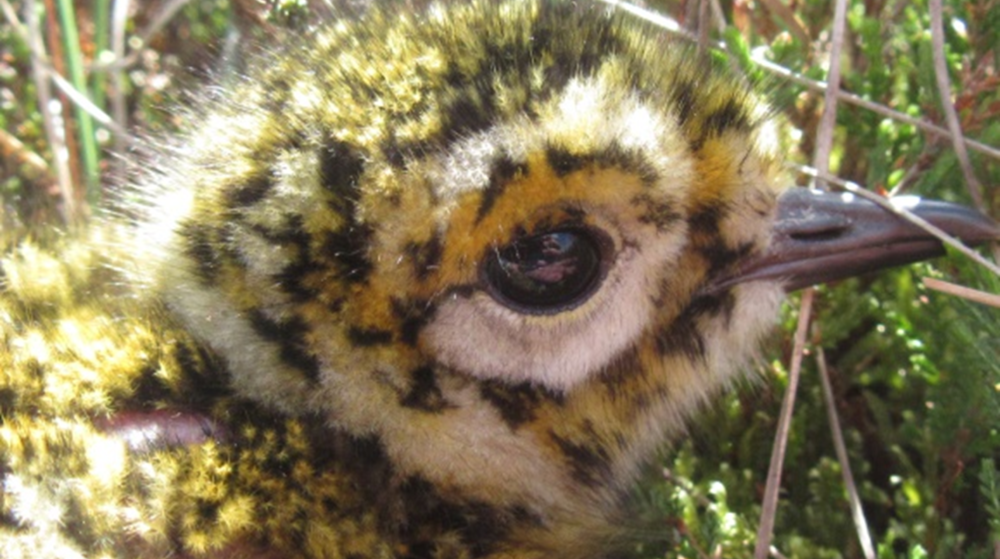
Golden Plovers, and other upland breeding waders, are particularly at risk from climate change. Like the Puffins and the Cuckoo, they are struggling for food at key points in the breeding season. The burning and drying of the peat moors – managed primarily for driven grouse shooting – has caused a big drop in the numbers of insect prey, such as Crane Flies, that they need to survive and feed their young.
Conservation organisations like the RSPB and the National Trust block drainage ditches to restore water levels and rewet the peat. This protects the habitat of these vulnerable species by maintaining those wet peatlands. It also protects the carbon that’s locked away within them so it’s a win-win.
Upland waders also show strong avoidance of woodland, making them highly vulnerable to large-scale tree planting in the uplands. They also show avoidance of wind turbines, with population declines within wind farm areas following construction, although this has more to do with the bird’s dislike of the turbines rather than collisions.
Golden Plovers are a key species for our area in understanding what’s going on. Like many upland breeding waders, Golden Plovers show strong avoidance of woodland, making them highly vulnerable to large-scale tree planting in the uplands. They also show avoidance of wind turbines, with population declines within wind farm areas following construction. (This has more to do with the bird’s dislike of the turbines than collisions.) This might appear to be a big conflict for climate activists, who want to see many more trees planted and many more wind turbines to stop our reliance on fossil fuels that are the main contributors to climate change. But James explained that by mapping the areas where the birds breed they can be spared from development. So you can have renewable energy while minimising the risks to vulnerable birds.
Raising the height of wind turbines can help, as many birds fly quite close to sea level. Bigger turbines reduce the overlap between them giving birds the opportunity to fly safely through the area. Power companies generate more energy with fewer big turbines, so it’s better for the energy companies too. So you can have renewable energy while minimising the risks to vulnerable birds.
James also explained that mapping the areas where the birds breed can help spare them from new wind farm developments and tree planting. The BTO use sensitivity mapping to show which areas are vital for the conservation of declining species. That information is provided to bodies like Natural England, the Forestry Commission and NatureScot. This vital work will be key to helping vulnerable species as the climate continues to warm.
International cooperation is vital to ensure wind turbines aren’t located on migratory routes that could have a big impact on bird populations. The Convention for Migratory Species (part of the UN) met recently in Edinburgh and BTO provided evidence about the impacts of climate change on migratory species. This should then be considered when deciding locations for new wind farms.
Recently our government showed immense disrespect for bats and newts which doesn’t bode very well for nature conservation. Are there any signs that the government are taking sensible advice on where to plant trees? James thought it too early to say what extent this is influencing planting on the ground.
The best way you can help is with monitoring. Whether it’s counting birds in your garden, or whether it’s Garden Bird Watch, whether it’s using Bird Track to record sightings when you are out, providing the data through to BTO or even taking part in monitoring schemes. That’s a really good way in which you can tell BTO how things are changing in your area and then data gets flowed through various sources to local decision-making, to the national picture to influence policy.
Find out more. Read James Pearce -Higgins research.
Get active. Join the Local RSPB group on their walks.
Find out about Birds on your doorstep
My list of Birds found in Norfolk Heritage Park is now up to 25. Are you aware of any I haven’t spotted yet? It will be interesting to see what the RSPB group find when they visit on 10th December!
Don’t let the billionaire’s algorithms control what you read! Subscribe to TelltheTruthSheffield.org for free today.
Discover more from Tell the Truth Sheffield
Subscribe to get the latest posts sent to your email.
