
A guest blog by Karine Nohr
When I worked as a Sheffield GP, the breaking of bad news was hard. Often the response from patients was “Please tell me the truth”. This would allow people and their loved ones to fully engage, speak their own truths, show their love, and decide on their priorities, thus building their own and their family’s resilience, particularly for when the going got tough. Family, friends and neighbours might all share the care, working in community with each other.
On the other hand, for those patients that did not ‘want to know’, when the situation deteriorated, they were not prepared and relationships could get very awkward, with much pretence and mistrust, and care could be less than it might have been. Denial had not made the problem go away.
Similarly, when a patient developed a serious health problem, they invariably asked what they could do to mitigate its risks, often becoming experts in their disease. Contributing lifestyle choices (such as smoking, diet etc) might change overnight. High standards of care would be expected from their healthcare providers who it would be hoped would talk and work together. Patients would want to be fully informed, discuss options, have explanations and make plans.
If we transpose this experience of facing life-threatening illness to our attitudes to the climate crisis, what do we find? UNICEF UK reports that 95% of British children are worried about climate change and 85% believe that not enough is being done. In a Statista 2023 survey of UK residents, more than 80% had some concern about climate change.
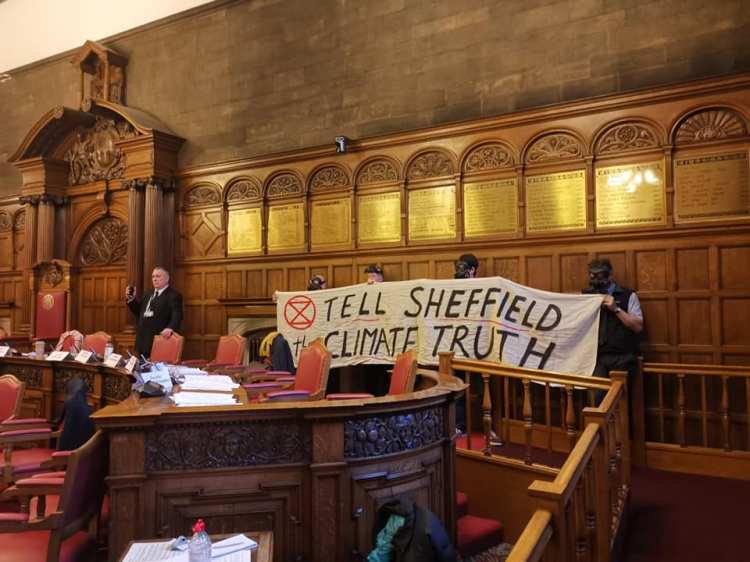
We are up against criminal Governmental failure to respond even remotely adequately, to ANY issues of our multiple crises, other than by scapegoating the least powerful members of our society, even taking decisions to exacerbate the situation (such as licensing more oil exploration). The maximum temperature rise of 1.5 degrees set by the Paris Agreement will soon be surpassed. We live on a finite planet and we expect unlimited growth from it. And we haven’t yet learned that that is impossible. The fallout is manifesting abroad and at home and is set to increase at breathtaking speed. A small proportion of people take to the streets for direct protest. But the majority of people who are concerned are yet to find their feet in how to respond.
Although worried, many people feel impotent, or out of their depth in discussions, or deep distrust of what information to believe, or a lack of awareness of the scale of change that needs to be implemented. Many feel overwhelmed by the magnitude of what they hear needs to be done. Many grasp the soothing messages that tell us that everything is going to be alright and that innovative technology is going to get us out of this mess. People want to believe it because the alternative is so damn scary.
A common theme of clarity runs through these five observations. So it is incumbent on all concerned to Tell the Truth. We have to understand the problems if we are going to come together to address them. We must be properly informed and nurture honest conversations with each other, with our communities and with our movers and shakers, that truly engage with the word EMERGENCY, called out by a multitude of scientists, and ironically confirmed by local and central government agencies. We must DEMAND Truth from all of our politicians and leaders in public office, catalysing a new political culture of awareness and understanding, so that those in power have a clear mandate for seriously addressing the issues. This silent majority is actually far more powerful than they currently perceive because they CAN demand this standard of those that they elect, be it their MP, their councillor, their pension provider, their Bank, or where they spend their hard-earned cash, or wherever they have agency, be it surrounding Nature, Schools, places of work, or anywhere else they can have a say. Ask these people and institutions; “How are you addressing the climate emergency?” We should expect serious answers, not waffle, not greenwash, not nonsense.
Although the telling of truth can be distressing, we need to know. The distress is already there, as exemplified by the rising tide of climate anxiety. Appropriate responses, that address the grief invoked, will need to be developed, in our schools, communities and therapeutic services, in order to then go on to build resilience, imperative if we are to have any reasonable chance of addressing the issues coming down the line. Open and honest discussion will give space to understand what needs to be done and what role we all can play. We need to be able to create credible plans to address a huge range of issues such as transportation, fuel needs, food provision, biodiversity loss, pollution, satisfactory housing and more. We must build connections at all levels of every Service and System that can strategise and coordinate plans. Grit and resilience within communities is going to be essential. We must talk about what really matters, what our priorities are and how we protect them. We absolutely need to be ahead of this curve.
Discover more from Tell the Truth Sheffield
Subscribe to get the latest posts sent to your email.
