
A guest blog by Karine Nohr

When I used to go shopping with one of my dear friends, we always had a laugh, because I spent all my money on food (food is my passion), whereas she spent all her money on cleaning products (cleaning is hers). But in more recent times I have become increasingly aware of environmental considerations in the choices that we make. There are so many issues around this, that when we sit down to think about it, we can be really taken aback by the harm that we might be contributing, to both ourselves, our families and the greater environment.
Then recently my dear old school friend Sue came to stay for a while. She has lived many years in Italy and she told me how all the Italian ladies in her village are crazy about white vinegar. Not for their tomatoes, oh no, for ALL of their cleaning! But I’ll come back to that in a little while.
In terms of the environmental harm caused by many of our household cleaning products, there are 3 key aspects to consider; the plastic packaging of the products, the chemicals in the products (that can be toxic to our health and toxic to the environment) and the use of palm oil in multiple products. There is also the ethical consideration of whether these products have been tested on animals.
We’ve talked about plastics before. 13 billion plastic bottles are used in the UK every year and it is estimated that only 7.5 billion of those are recycled. The rest end up in landfills where they take hundreds of years to degrade, or in the sea, causing terrible pollution and catastrophic harm to marine life.
The chemicals and surprisingly even the fragrances in the cleaning products can be harmful to the user, with toxic health hazards that vary, from rashes, allergies and dermatitis to chronic lung and breathing problems. The take-home message of an American Medical study on the effect on the lungs of using domestic cleaning products was that in the long run cleaning chemicals very likely cause rather substantial damage to your lungs,” and that “These chemicals are usually unnecessary;”.

Additionally, the environmental harm caused by the products being washed down the sink or the toilet can cause terrible problems in our rivers and waterways, such as pollution and overgrowth of algae. Some products may enter the food chain, therefore eventually entering our food too.
Many cleaning products contain Palm Oil. The trouble with palm oil is that it is often closely linked to massive deforestation and also to human rights abuses.
Finally, in times of increasing financial stress for many households, the cost of cleaning products can be problematic. According to analysis of data from the Office of National Statistics, the average UK household (based on an average of 2.3 people in that household) now spends £140 per year on cleaning products.
So what alternative is there?
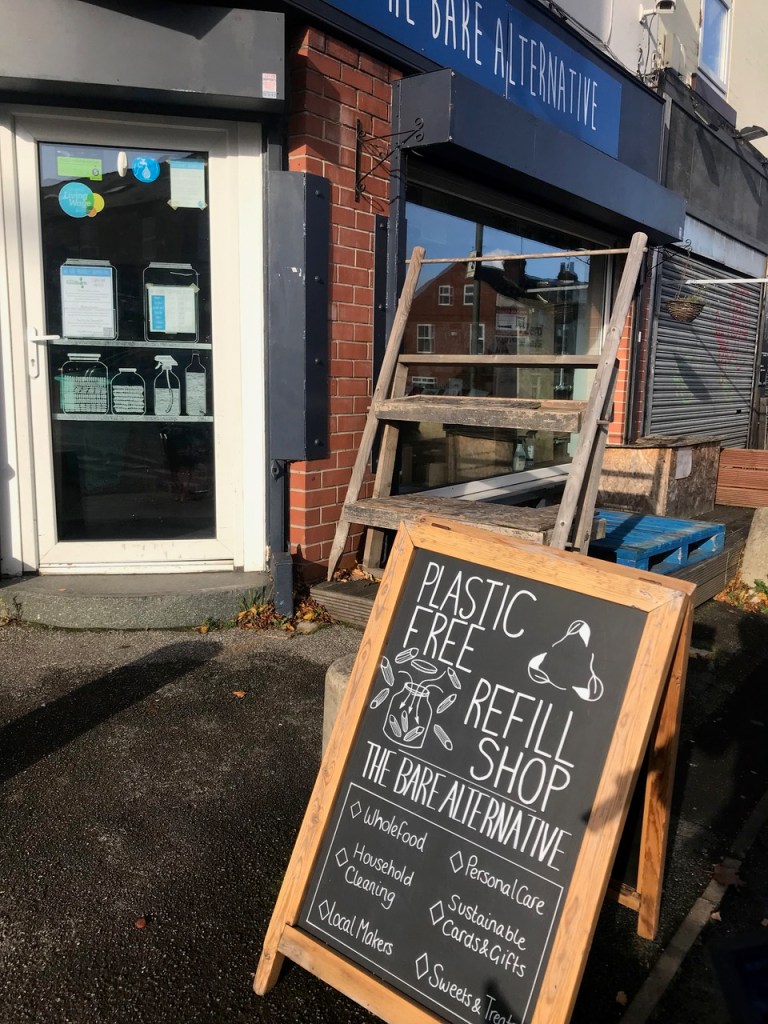
One possibility that certainly overcomes some of these problems is the increasing availability of refill shops. There are at least half a dozen of these now scattered around Sheffield, such as in Hillsborough, Crookes, the University, Sharrow Vale Road, Abbeydale Road, Nether Edge and Dore.
The Bare Alternative Abbeydale Road
Our Zero Waste. Shop University Students Union
Refill Tree. Sharrow Vale Road
You can go with your empty containers and get them refilled with cleaning products (as well as many food products). Their cleaning products will avoid the nasty toxic chemicals that can cause harm and are often in cleaning products, such as triclosan, parabens and phthalates (all potential hormone disruptors, phthalates also possible links to breast cancer, fertility problems, obesity and asthma).
Another option is to make your own cleaning products. This is super-quick (as in seconds), easy, cheap and effective. I was sceptical about whether it would work as well as shop-bought products, but when one of my girlfriends, Sue, came to live in my house for a while and used these, I quickly saw how wrong I was.
I suggest you buy a very large bottle of white vinegar, as this is used in homemade cleaning products. It’s as cheap as chips (actually a lot cheaper than chips). Save your spray bottles and use them for the all-purpose cleaner.
All purpose Cleaner.
Mix 1 cup of white vinegar with 1 cup of water. Put it in your spray bottle.
If you want it to have a nice perfume, you can add 10 drops of an essential oil that you like the smell of, such as lavender oil.
Simple as that. It’s ready for use.
I haven’t found that it damages anything at all, and I use it everywhere in the house. But if you are worried, do a test patch.
Floor cleaner
Add half a cup of white vinegar to your bucket of hot water and it’s immediately ready to wash your floor whilst, in the words of Freddy Mercury, you are singing ‘I want to break free’. You can use this on your lino floor, your wooden floor and your tiled floor.
Toilet Cleaner
Put a couple of tablespoons of bicarbonate of soda in your toilet and then ½ a cup of vinegar and enjoy the fizz! Leave it for half an hour. And then scrub it with a toilet brush. It works really well.
Can you support the work of Tell the Truth Sheffield?
Make a one-time donation
Make a monthly donation
Make a yearly donation
Choose an amount
Or enter a custom amount
Your contribution is appreciated.
Your contribution is appreciated.
Your contribution is appreciated.
DonateDonate monthlyDonate yearlyDiscover more from Tell the Truth Sheffield
Subscribe to get the latest posts sent to your email.

2 thoughts on “Can we do less harm with cleaning products? Yes, we can and it’s easy as pie!”