
A guest blog by Karine Nohr

Last month, a young Sheffield resident, Justin Espoir Machongo, flew to Burundi, to start an Environmental Project, that was to lead to an immediate and fantastic impact on a very beautiful part of the World; Lake Tanganyika.
Lake Tanganyika, West Africa is one of the great African Lakes, the second-oldest freshwater lake in the world and the second largest by volume. Its borders are in Burundi, Tanzania, the Democratic Republic of Congo and Zambia.
The 10 million people who live in the Lake Basin depend on the Lake as a source of water, food and income from tourism. However, over the last 4 decades, the high altitude of the Lake has made it very vulnerable to climate change. These vulnerabilities include biodiversity loss, soil erosion, pollution and habitat destruction. This in turn has led to rising water levels and extreme winds, which have resulted in recurrent floods, destruction of property, landslides, and death of people and aquatic life. Additionally, the extreme weather events have wiped out agricultural fields and destroyed food sources for 90%of the population depending on subsistence farming. Burundi is a tiny landlocked country and it is ranked as the second-poorest country in the World.
Justin came to Sheffield from Burundi as part of the Refugee Resettlement Scheme. He was born in the Congo, but due to the war, fled from there at the age of 5, with his lone surviving close family member, his grandma. The two of them made their way to Burundi, to a Refugee Camp. There, Justin went to school and got himself educated and qualified with Teacher training.
He came to the UK in 2017 and went to University to study International Development.
Subsequently, he set up a charity, ‘Stand As One’ (sao.org.uk), to support education, training and community development for refugees in South Yorkshire.

But he has also been striving to reduce the vulnerability of people in the country that offered him refuge when he was fleeing war. Here Justin and a colleague present at the workshops.
The last time that Justin had visited Burundi, he had become particularly aware of the plight of disabled people and their vulnerability in the floods. The lack of equipment and infrastructure support had meant that people were drowning in their own houses, and Justin very much wanted to grapple with this. Additionally, he was struck by how little people understood about the causes of the environmental crisis, because their access to information was so limited. Determined to do something, he applied and was successful in getting some funding to try to begin to address the problem.
Setting off for Burundi, he organised a series of workshops for Burundi community leaders and youths to come together and learn about the Climate and Ecological Crisis and the impact it was having on the Lake. Altogether, 350 people came. He ran the workshops for a week and found that people were really eager for the opportunity to learn.
Subsequent to this, the classes were broken down into smaller groups of people, who put their heads together to identify practicable and workable solutions.
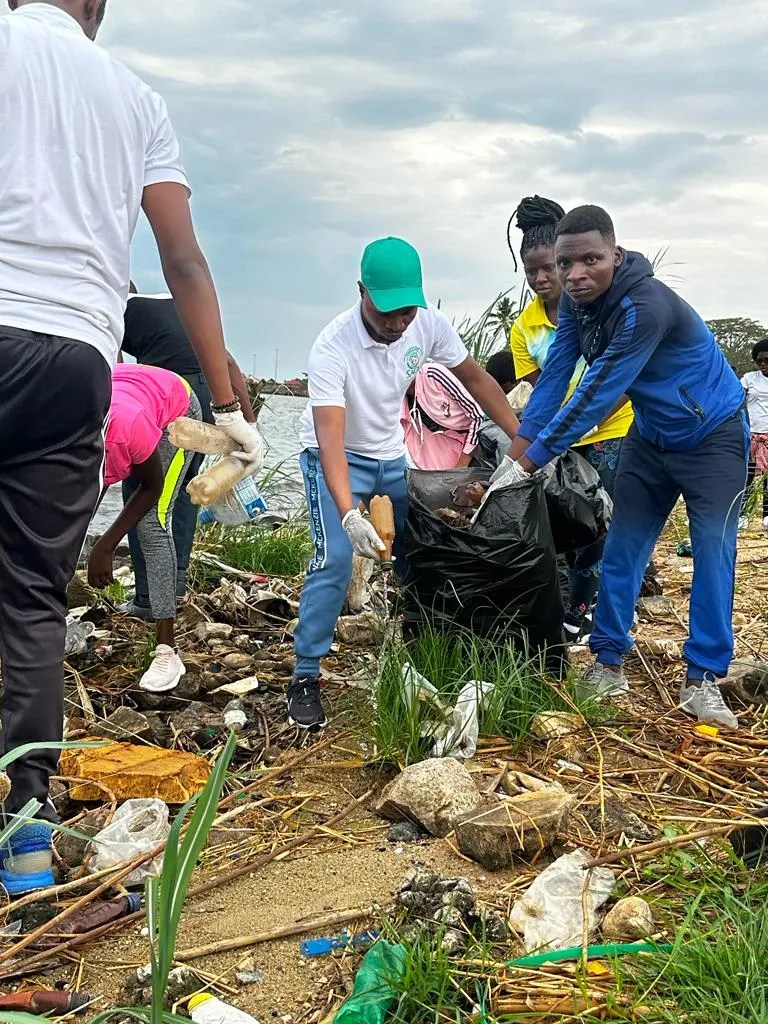
The collective decision was made, to collect the plastic rubbish around the Lake.
Plastic hangs around in the environment for ages, threatening wildlife and spreading toxins. Plastic also contributes to global warming. Almost all plastics are made from chemicals that come from the production of fossil fuels (the nonrenewable fuel sources such as coal, oil and gas, the burning of which are leading to the rise in greenhouse gases, which are raising the temperature of the planet).
The prevalence of plastic waste on the shoreline meant that wildlife was swallowing the plastic. This can cause animal intestinal blockage, but if the animal or fish was able to break it down with their stomach juices, then it was being absorbed into muscle, contaminating the food chain, or being excreted into the lake, causing further pollution.
Large numbers of young volunteers were enlisted to collect the plastic rubbish around the Lake.
Justin liaised with very supportive Burundi Government officials, including two Government Ministers, to take the gathered rubbish to a Dump.
He then organised for the community leaders to come together again and discuss what they had done and how they wished to take this action forward. The young people who took part in this project learned an enormous amount and are really eager to continue to do what they can, to protect their Lake, their fields and their ecosystems.

If you would like to support the work of Tell the Truth Sheffield please consider making a donation to help cover the costs.
Make a monthly donation
Make a yearly donation
Choose an amount
Or enter a custom amount
Your contribution is much appreciated.
Your contribution is appreciated.
Your contribution is appreciated.
DonateDonate monthlyDonate yearlyDiscover more from Tell the Truth Sheffield
Subscribe to get the latest posts sent to your email.
